Midfield Ponding Rings
Dirt rings mark low spots far from any drain, where the deck sags between joists. Silicone and extra build go where those rings repeat.

Benson roof coating for large warehouses near Interstate 10, where water sits midfield on long roof runs. We map every ponding ring before choosing a coating.
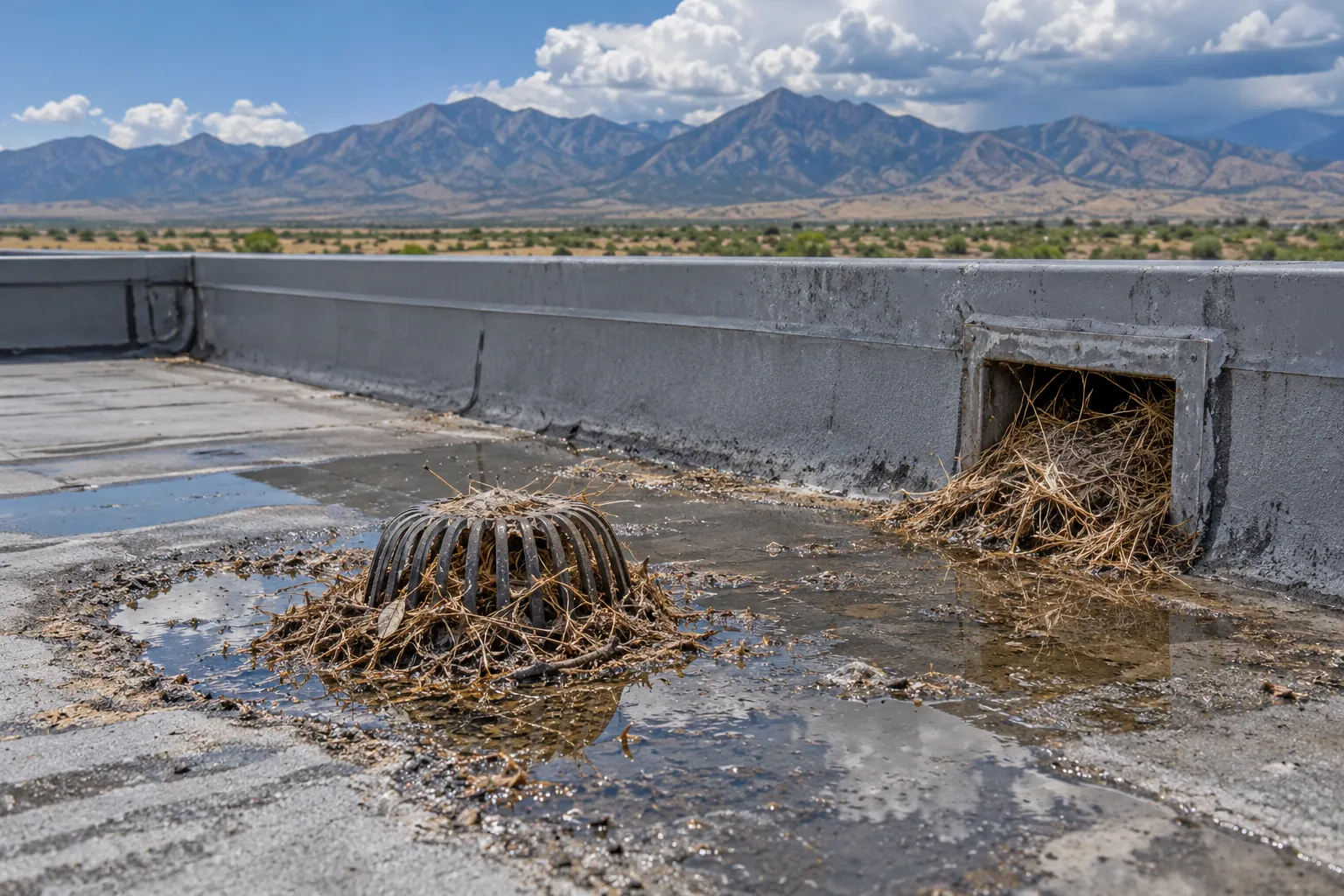
Large warehouses near Interstate 10 in Benson carry long roof runs to the drains. On a wide low-slope roof, water that should travel to a drain often stops midfield and sits for days after a storm.
Where that water sits decides the coating. We map every ponding ring and its depth, then choose silicone where water lingers and add build where rings repeat.
Big roofs collect water and dust in their own patterns. These six conditions decide the plan on a Benson warehouse.
Dirt rings mark low spots far from any drain, where the deck sags between joists. Silicone and extra build go where those rings repeat.
Long runs carry grit to every drain, and baskets clog during monsoon storms. Testing each drain shows which ones back water across the field.
Water that sits long enough finds a seam, and the insulation below gets wet. Core cuts under the rings check before coating seals anything in.
Sheets that run the full width move as they heat and cool, and seams across the field open over time. Each split gets fabric and sealant in the detail pass.
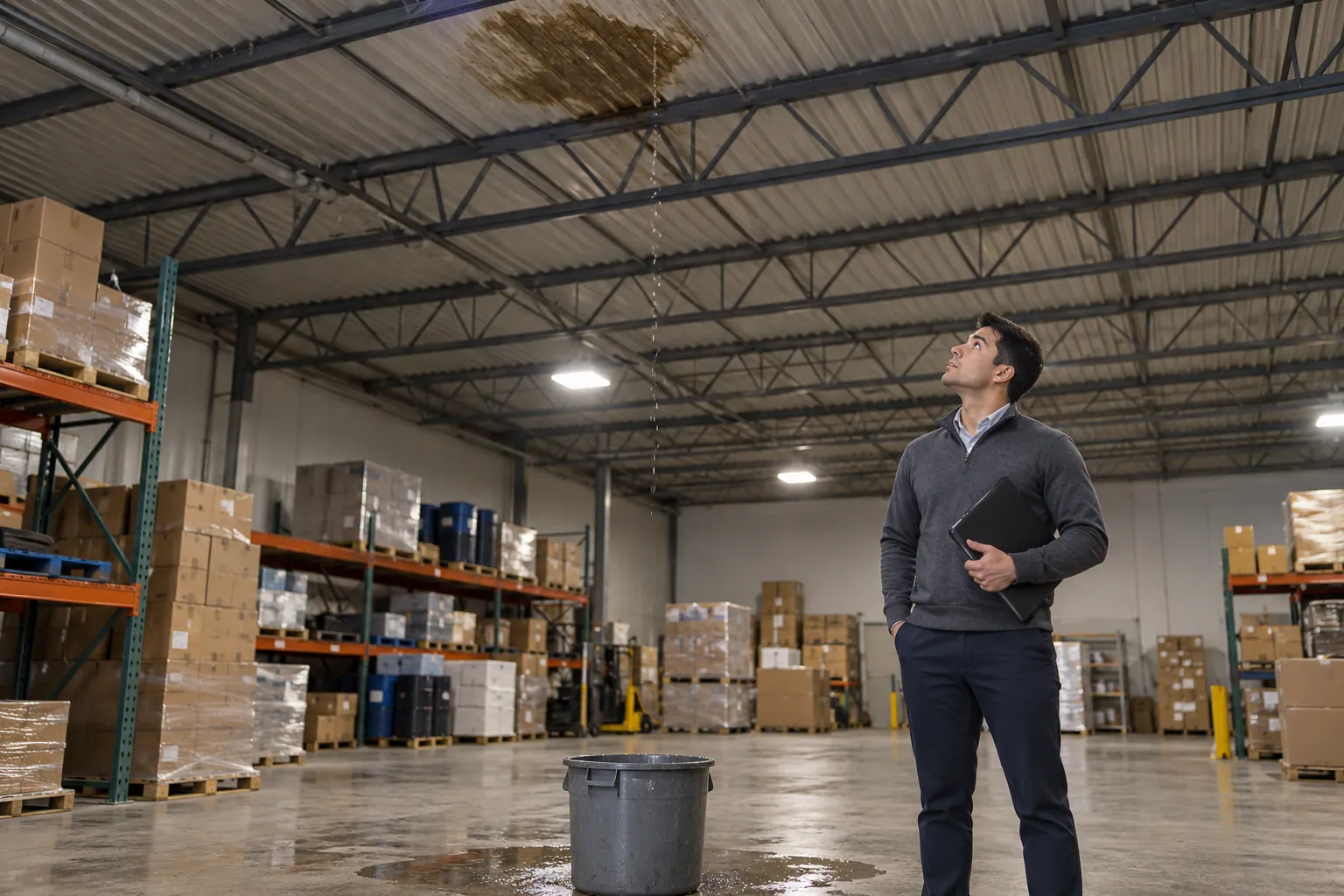
Drips in a warehouse land on pallets and racking far from where water entered. Tracing the path on the roof protects the stock below.
Big roofs carry skylights and vents across the field. Their curbs collect water on the uphill side and get resealed before the field coat.
On a long warehouse roof, coating has to handle water that stays. These gains assume the boards under the rings test dry.
Silicone holds up where water sits midfield after storms, and extra build at repeat rings covers the spots that wear first.
Sealing seams and curbs across the field protects pallets and racking under a roof that once dripped in several places.
Coating moves across the roof in sections, so loading, receiving, and staff below keep working through the job.
A white roof surface reflects summer sun off a big building, which helps where the warehouse runs cooling or has heat-sensitive stock.
Two systems handle most Benson warehouse roofs where water stands.
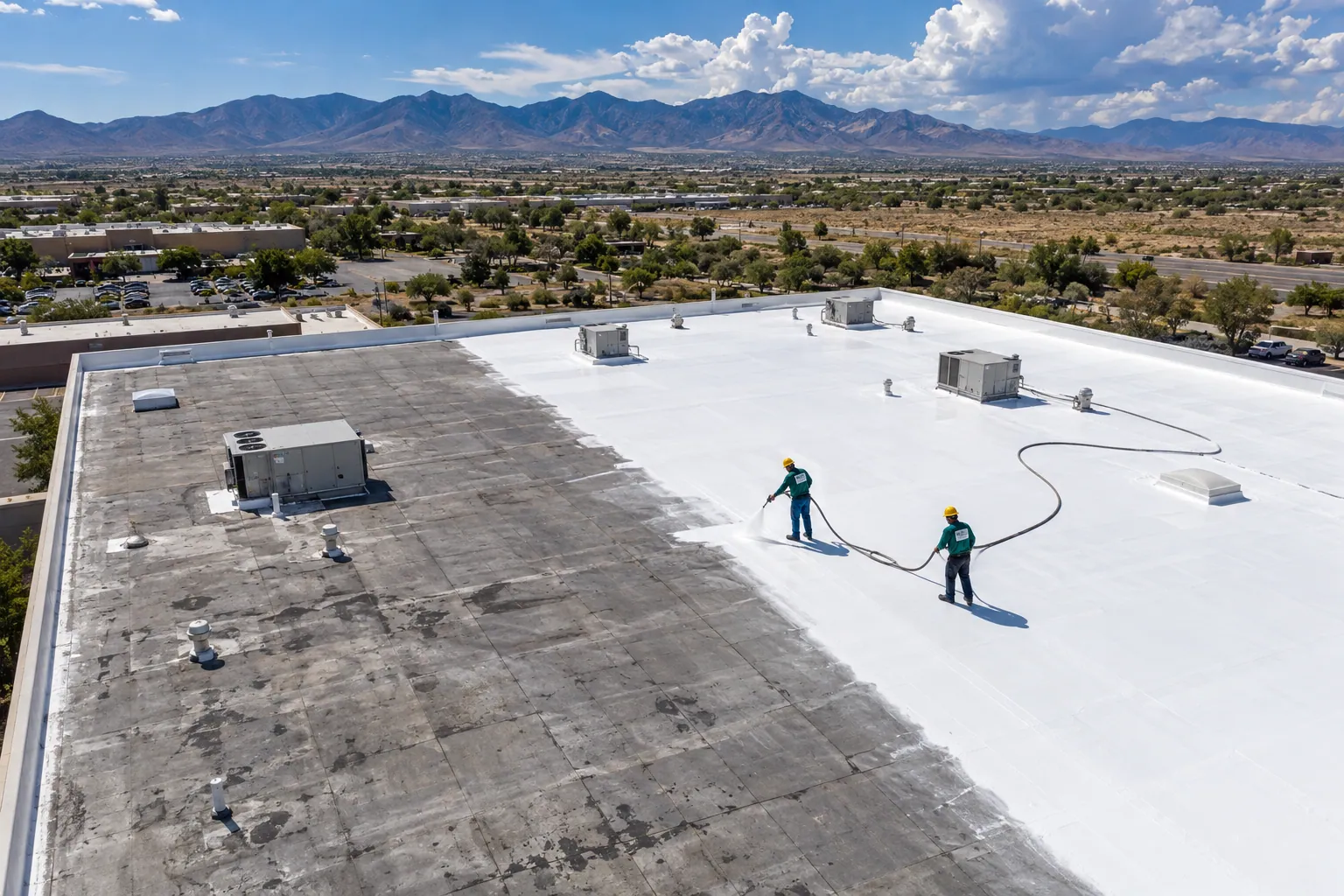
Silicone is the main pick where water sits midfield, since it keeps working under ponding that softens water-based coatings.
Silicone Roof Coating details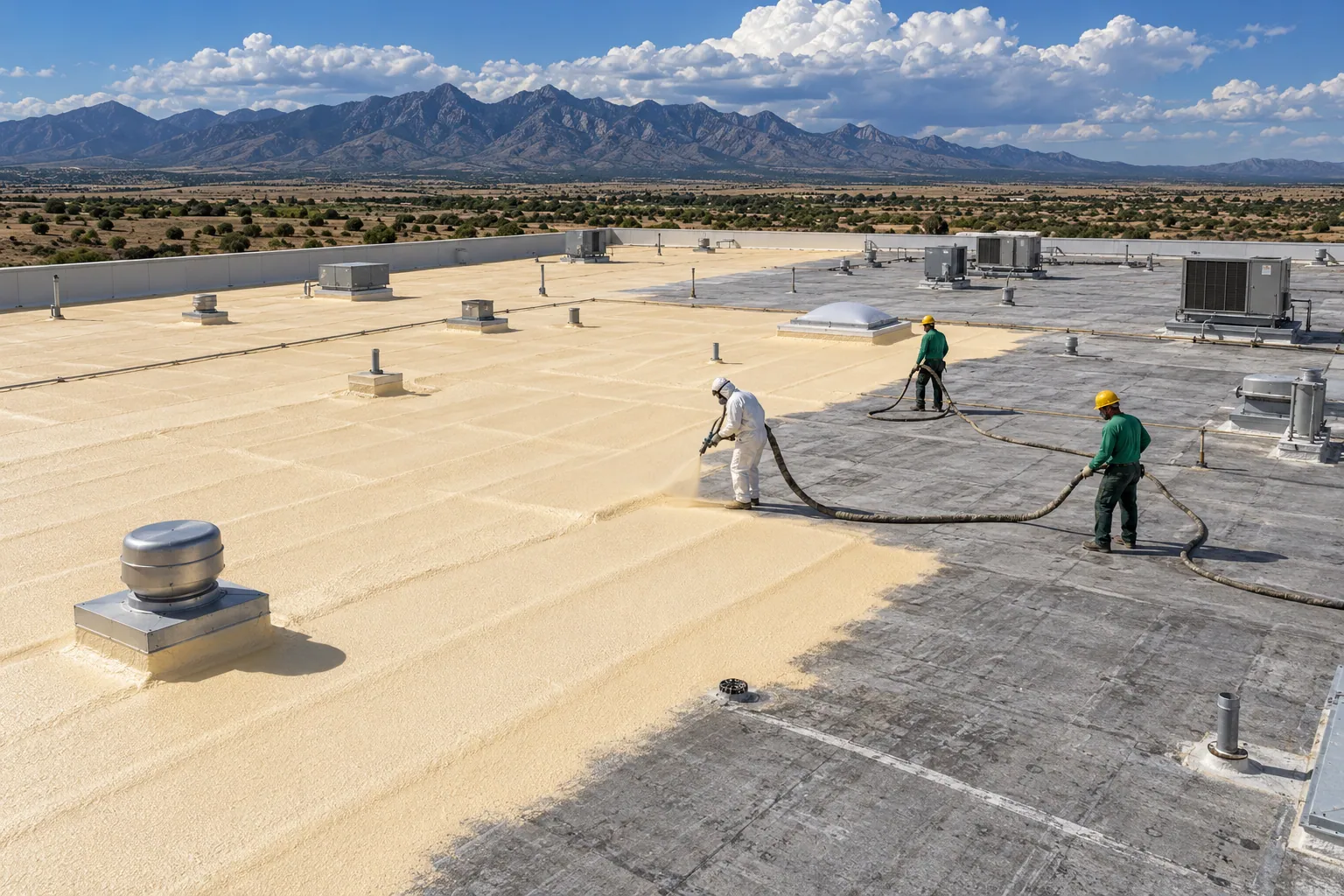
Spray foam can fill low areas between drains and add insulation, then takes a silicone topcoat over the new surface.
Spray Foam Roofing detailsCall and tell us how many days the water stays and where the drains are, and we will plan the survey.
Call UsMapping water comes first on a big roof. The rest follows in four steps.

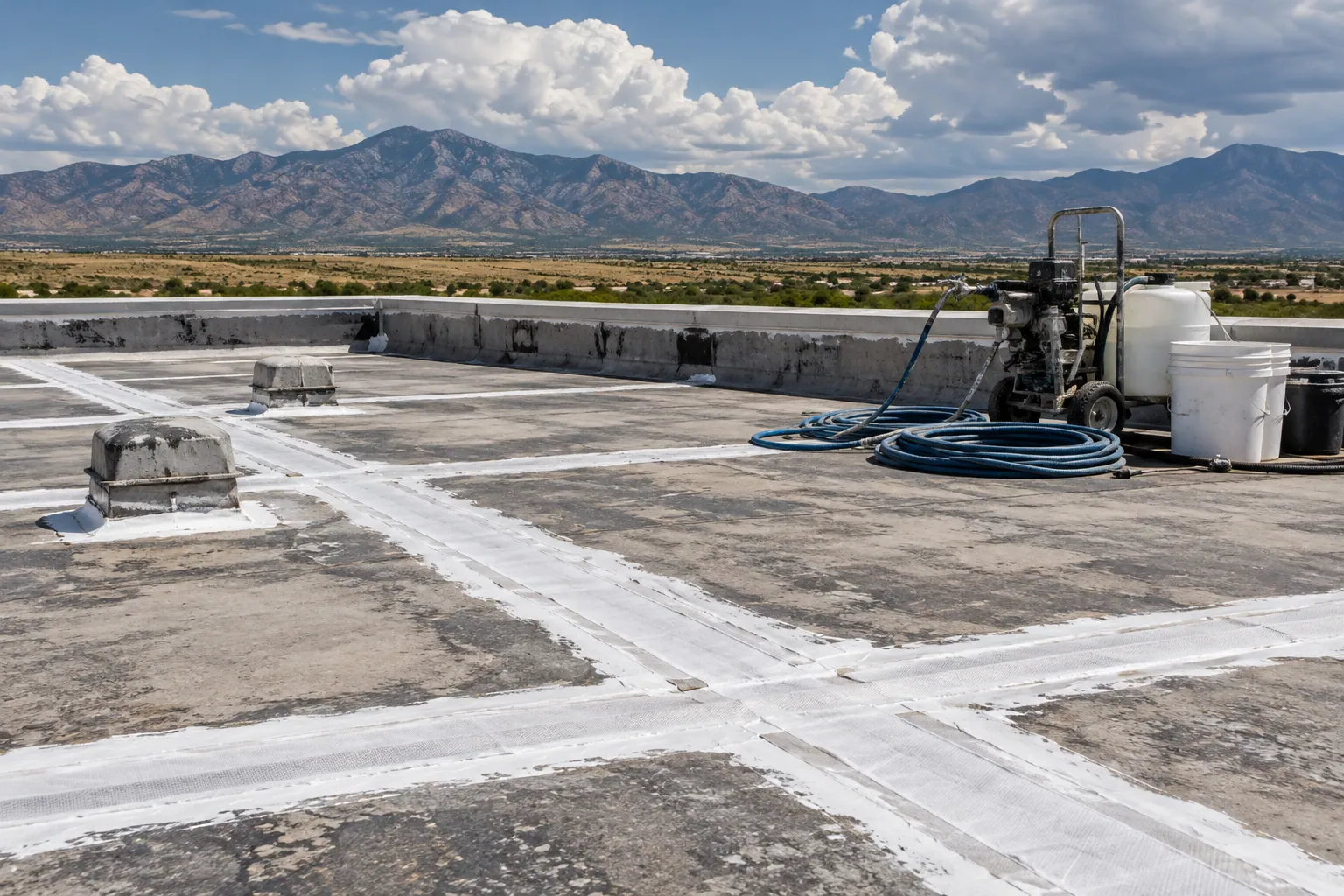
We map every ponding ring and its depth, test each drain, run core cuts under the rings, and trace any interior drips back to the roof. You get a marked roof plan with photos.
Clogged drains and scuppers are cleared, wet insulation under the rings comes out, and split seams are reinforced. The roof is washed and dried.
Where the plan calls for it, low areas get extra coating build or foam to move water toward the drains. Curbs and skylights get their detail coat.
The field coat goes on section by section across the long runs, to the mil spec, with gauge checks as each section closes. Loading areas get scheduled around.
Benson sits on Interstate 10 at the north end of our service area.
Whetstone lies south on SR 90, with metal shops near the SR 82 junction.
Tombstone is south on SR 80, with parapet storefronts under historic review.
Sierra Vista is farther south on SR 90, where every coating system we apply is in use.
Answers for owners of large warehouse roofs around Benson.
Roof size sets the baseline, and condition moves the number most. Wet insulation, blisters, and open seams add work, silicone and foam carry different material costs, higher mil specs use more material, and access, penetrations, and distance change setup. Prep labor often outweighs the coating itself.
The City of Benson Building Department covers properties inside the city. Permit needs depend on the scope, so confirm with that office before work starts.
A coating handles ponding rather than removing it. Silicone keeps working under standing water, and added build or foam can raise low spots. Water caused by a sagging deck or a blocked drain still needs that cause fixed.
Most coating work happens on top of the roof with the deck intact, so stock stays covered. Where wet insulation comes out, the opening is closed the same shift, and we flag areas where you may want to move pallets.
It gets coated in sections. Each section is cleaned, repaired, primed, and coated before moving on, which keeps the open work area small and lets loading docks run on their normal schedule.
Check them in spring before monsoon season and again in fall after it, and after any big storm. Long roofs carry grit and debris to every drain, and one clogged basket can back water across a wide area.
Coating weighs little compared with the water it replaces in a ponding ring. Spray foam adds more, so a deck that already sags gets checked from below before foam goes into the low spots.
Yes. Skylight curbs get cleaned, sealed, and coated up to the frame, and the lens is covered against overspray. Cracked or yellowed lenses can be replaced at the same time, since the roof crew is already working around them.
Start with a free ballpark estimate for a large roof, or call and tell us where water stands.
Want A Call About Your Roof?
Leave a name and number and we will call you back about your roof.
Or call now: (623) 310-0185