Ponding Rings
Rings of dirt mark low spots where water sat after monsoon storms. Silicone resists that standing water, though large ponds near a blocked drain get the drain fixed first.

Silicone roof coating in Sierra Vista for flat roofs where water lingers near drains after storms. We map moisture, repair, then spray silicone over the existing roof.
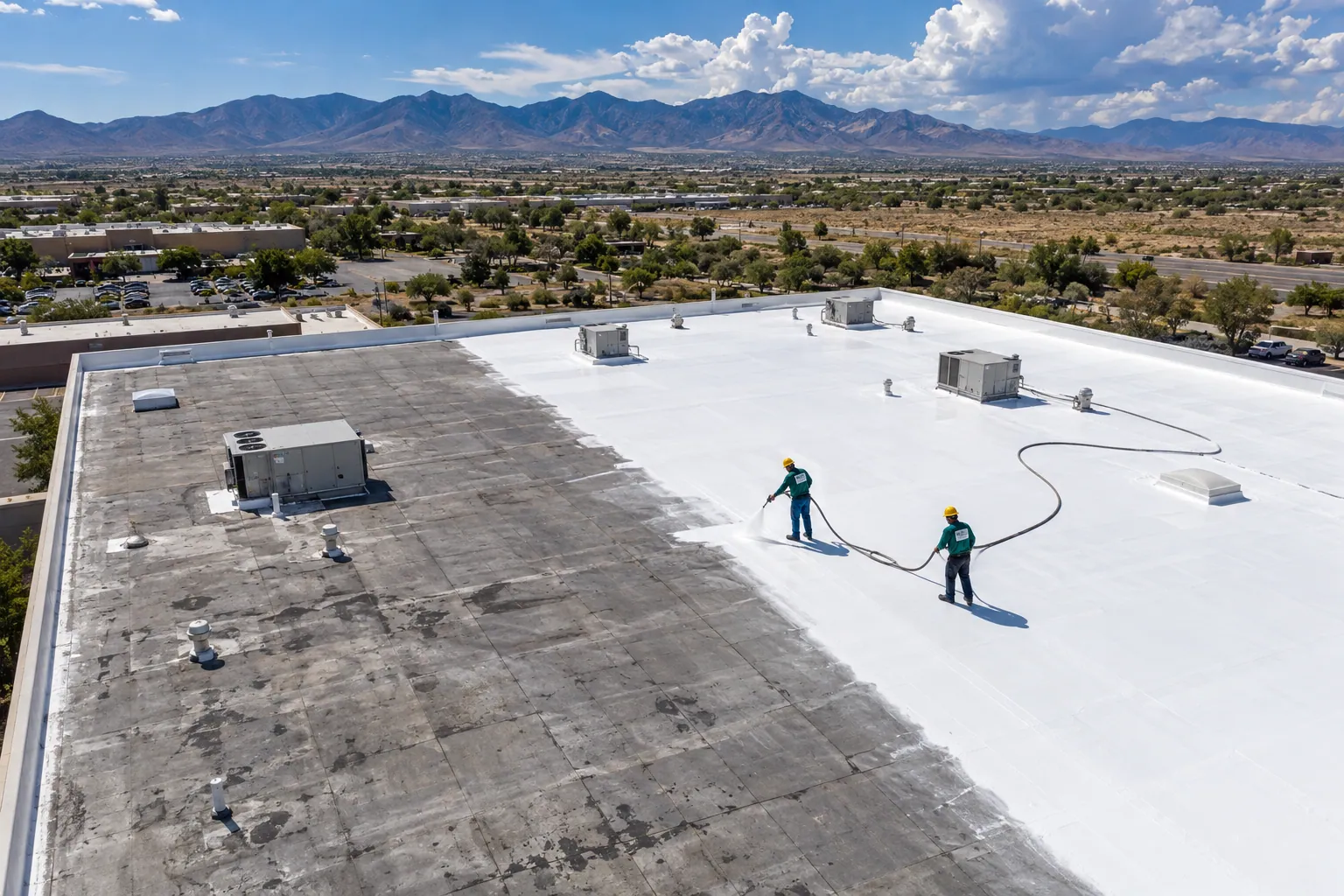
Silicone goes over most flat roofs that are dry underneath. These lists show where a Sierra Vista flat roof stands.
Good Fit
Repair First
Flat roofs in Sierra Vista collect dust, water, and sun. These six details decide the prep before silicone goes on.
Rings of dirt mark low spots where water sat after monsoon storms. Silicone resists that standing water, though large ponds near a blocked drain get the drain fixed first.
Water that gets under the membrane soaks the insulation and stays there. Infrared scans and core cuts find those boards so they come out before any coating seals the moisture in.
Dust and debris from storms pack drain baskets and scuppers, backing water up across the field. Clearing them and checking the outlet flow comes before power washing.
Seams on built-up and single-ply roofs open as the membrane shrinks and ages. Each split gets cleaned, reinforced with fabric, and sealed before the silicone field coat.
Small blisters trap air or moisture between layers. They get cut out, dried, and patched, because coating over a blister only seals the problem in for later.
High-desert dust settles on every flat roof and builds up around rooftop units. Silicone collects dust, which dulls its reflectivity, so a cleaning schedule belongs in the plan.
Silicone work on flat roofs ranges from detail repairs to a full system. Water and moisture findings choose among these four.
| Option | Where It Fits | What Comes First | Later Upkeep |
|---|---|---|---|
| Seam And Detail Silicone | Roofs leaking at seams, curbs, and drains only | Clean, fabric, and seal the problem details | Walk the details twice a year |
| Full Silicone Restoration | Dry flat roofs with ponding rings near drains | Moisture survey, blister repair, power wash | Recoat with silicone only |
| Silicone After Wet-Area Repair | Roofs with isolated wet boards | Cut out wet insulation and patch the membrane | Watch the repaired areas after storms |
| Silicone Over Spray Foam | Foam roofs needing a ponding-tolerant topcoat | Clean foam, repair dents and voids | Recoat before foam shows through |
Silicone earns its keep on flat roofs that hold water. These gains apply once the roof underneath tests dry.
Silicone keeps working where puddles linger near drains after a storm, while acrylic softens and wears under standing water. That makes it the usual choice for flat Sierra Vista roofs.
Moisture in the air cures silicone, so it tolerates cool, humid mornings better than water-based coatings. That opens more workable days in spring and fall at this elevation.
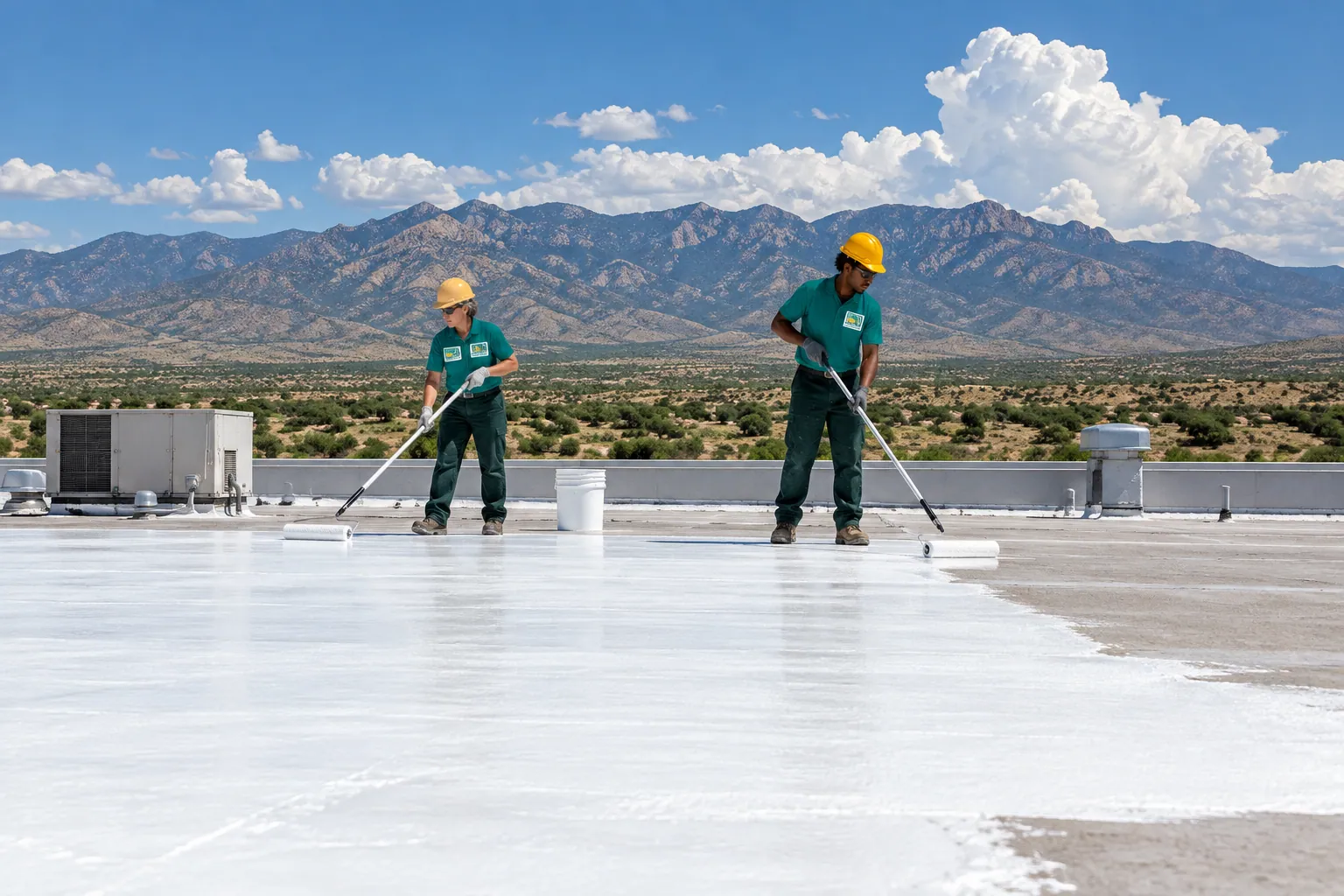
Spray-applied silicone forms one continuous membrane across seams, laps, and patches, so the joints that leaked on the old roof sit under an unbroken surface.
A white silicone surface reflects sunlight and keeps the roof cooler during the summer months. Periodic cleaning keeps dust from dulling that reflectivity.
Call and tell us how long water sits after a storm, where the drains are, and whether stains show on ceilings below.
Call UsThe moisture survey comes before anything else on a flat roof. Then these steps follow in order.
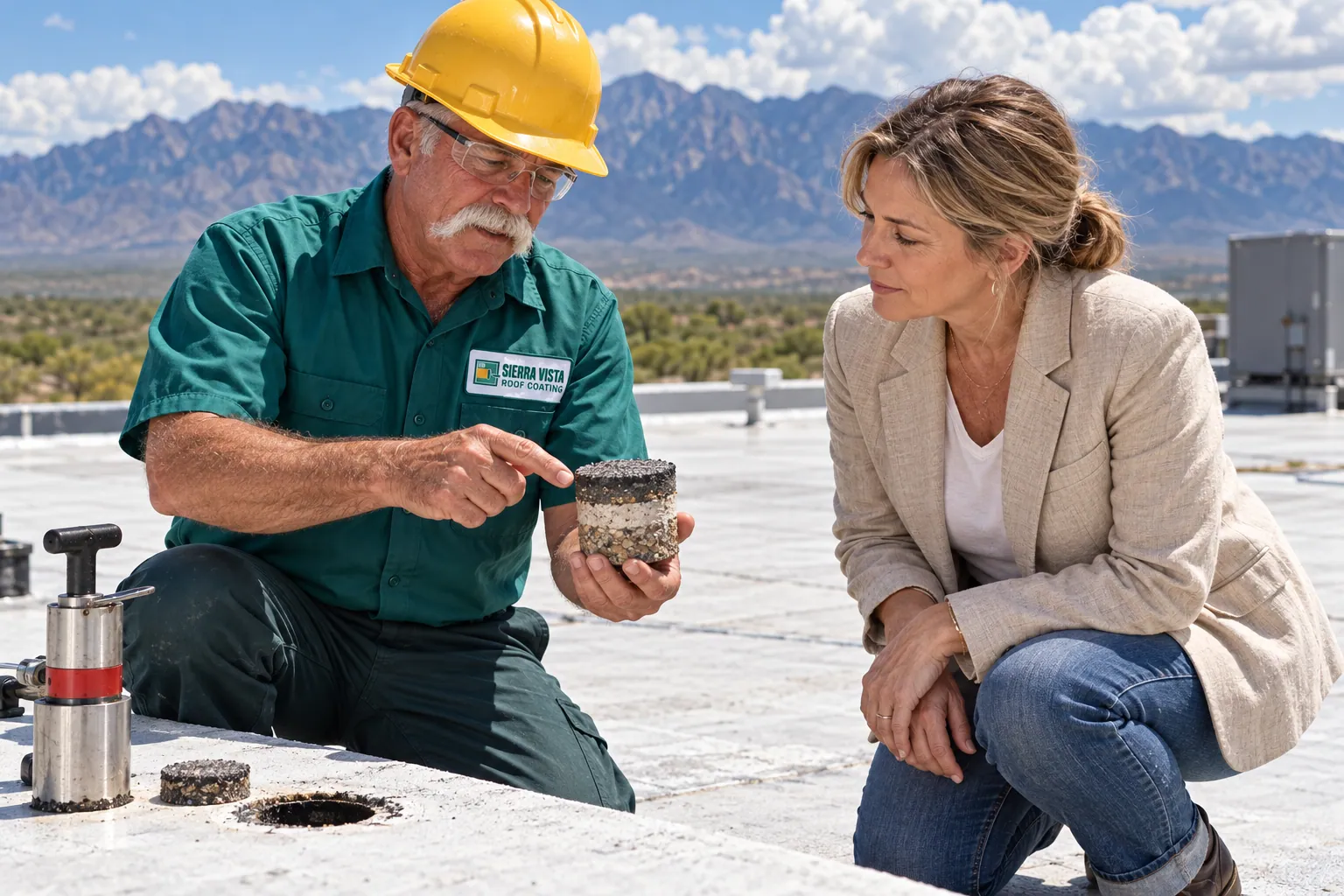
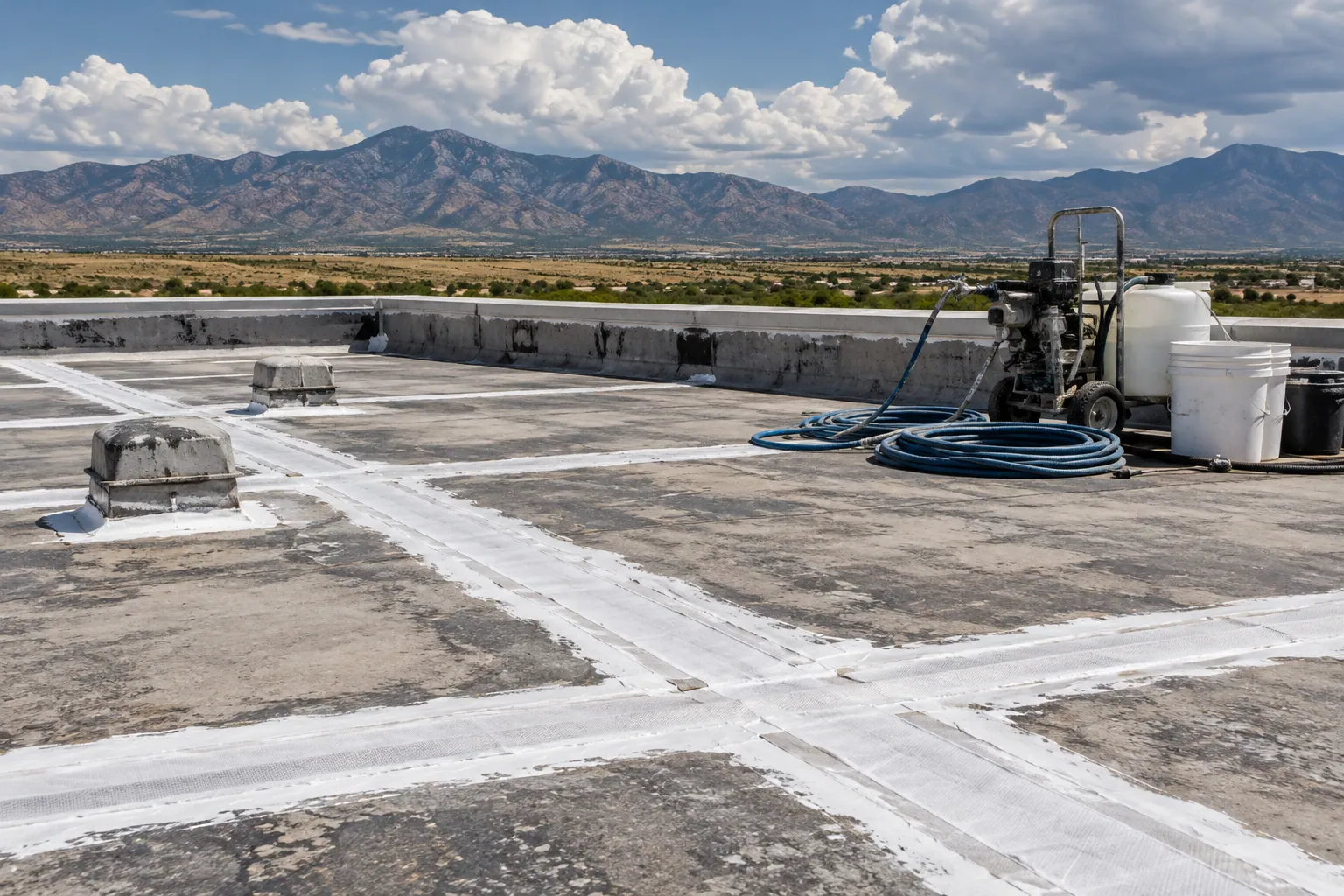
We map ponding rings, test drains, and run an infrared scan or core cuts to find wet insulation. Seams, flashing, and blisters get marked on a roof plan with photos you can keep.
Wet insulation boards come out and get replaced, blisters are cut and patched, and split seams are reinforced. Drains and scuppers are cleared so water leaves the roof again.
Power washing removes dust and loose granules, and the roof dries completely. Primer goes on where the manufacturer calls for it, such as over bleeding asphalt or old coatings.
Seams, curbs, and drains get a base coat first, then the field coat goes on to the specified mils. Thickness is checked with a wet-mil gauge across the roof as each section is sprayed.
Two related coatings for low-slope roofs around Sierra Vista.
Where the roof drains quickly and you want easy recoats with other products later, acrylic is the lower-maintenance pick.
Acrylic roof coating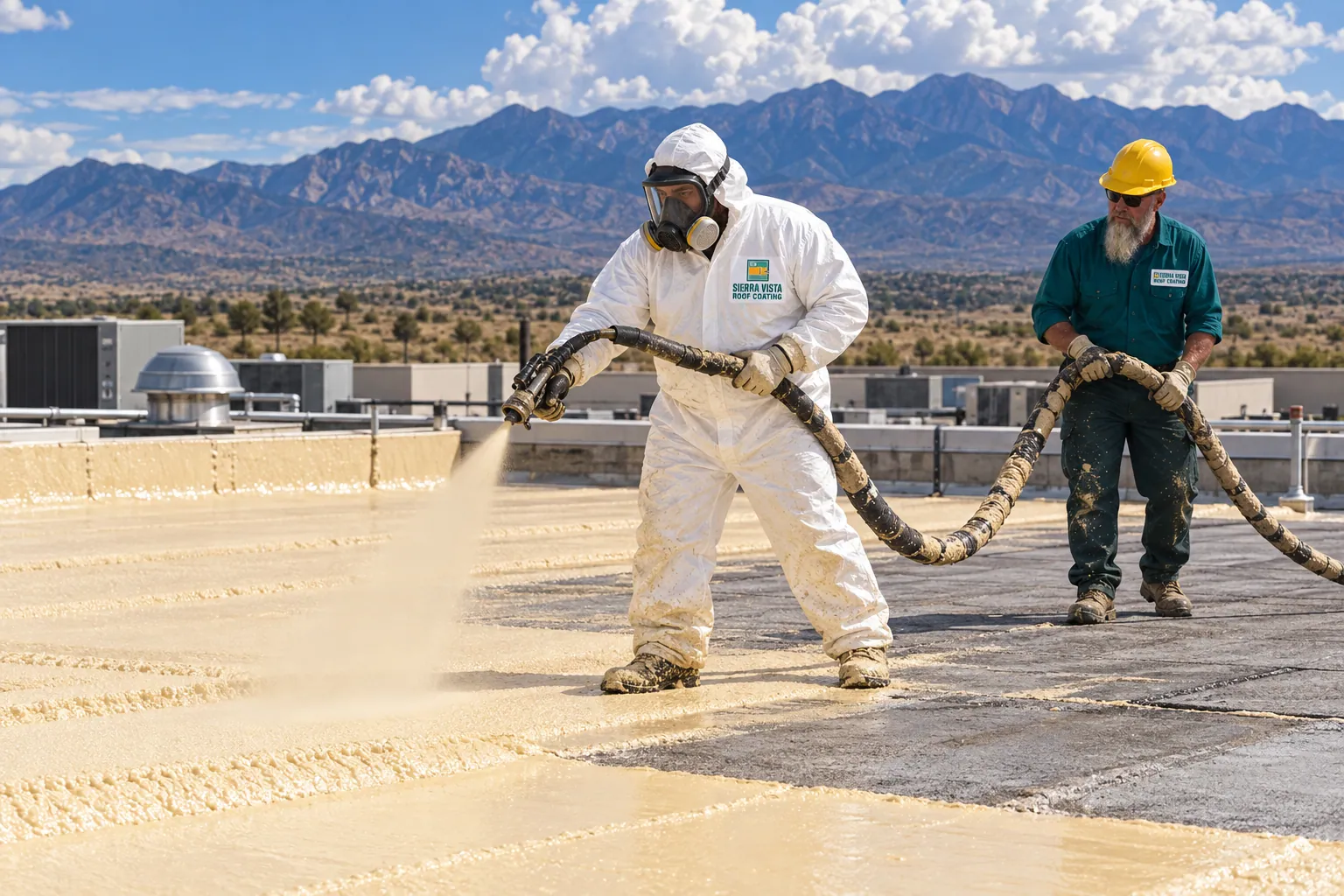
Spray foam under a silicone topcoat adds insulation and fills low spots, a fit for flat roofs that also run hot inside.
Spray foam roofingAnswers about silicone on flat Sierra Vista roofs.
It turns on drainage and how the roof will be recoated later. Silicone holds up where puddles linger near drains and cures in cool, humid mornings, but only silicone sticks to old silicone. Acrylic suits sloped metal that sheds water quickly and stays cleaner, though it needs warm, dry hours to cure.
Yes, silicone is the coating made for that. It keeps working under water that sits for days after a storm. Large ponds caused by a blocked or high drain still get the drain fixed, since standing water adds weight and collects dirt.
Silicone surfaces hold dust, and high-desert dust settles on every roof here. That dirt dulls the white finish and lowers how much sun it reflects. Rinsing the roof during spring and fall walk-throughs brings back most of the reflectivity.
Wet boards come out before silicone goes on. Coating over wet insulation traps the moisture and leads to blisters. When the survey finds only isolated wet areas, those sections are cut out and replaced. When wet insulation spreads across large sections, replacement is the better call.
Generally, coatings other than silicone do not stick to cured silicone, so a silicone roof stays a silicone roof. Plan on silicone recoats when the coating thins. That is worth weighing before choosing silicone for a roof you expect to recoat many times.
Thickness follows the manufacturer's specification for that roof, measured in mils, and it varies with the warranty term the product is rated for. Crews check wet mils while spraying and confirm dry film thickness after cure, with extra build at seams and drains.
Start with a free ballpark estimate for your flat roof, or call and tell us where the water sits.
Want A Call About Your Roof?
Leave a name and number and we will call you back about your roof.
Or call now: (623) 310-0185