Dents In Foam
Hail dents the surface of spray foam roofs and cracks the coating over it. Each dent gets cleaned and sealed before UV reaches the foam.

Palominas roof coating for buildings near the San Pedro River. We check coated roofs after monsoon storms for hail dents, scupper washout, and thin spots, then repair and recoat.

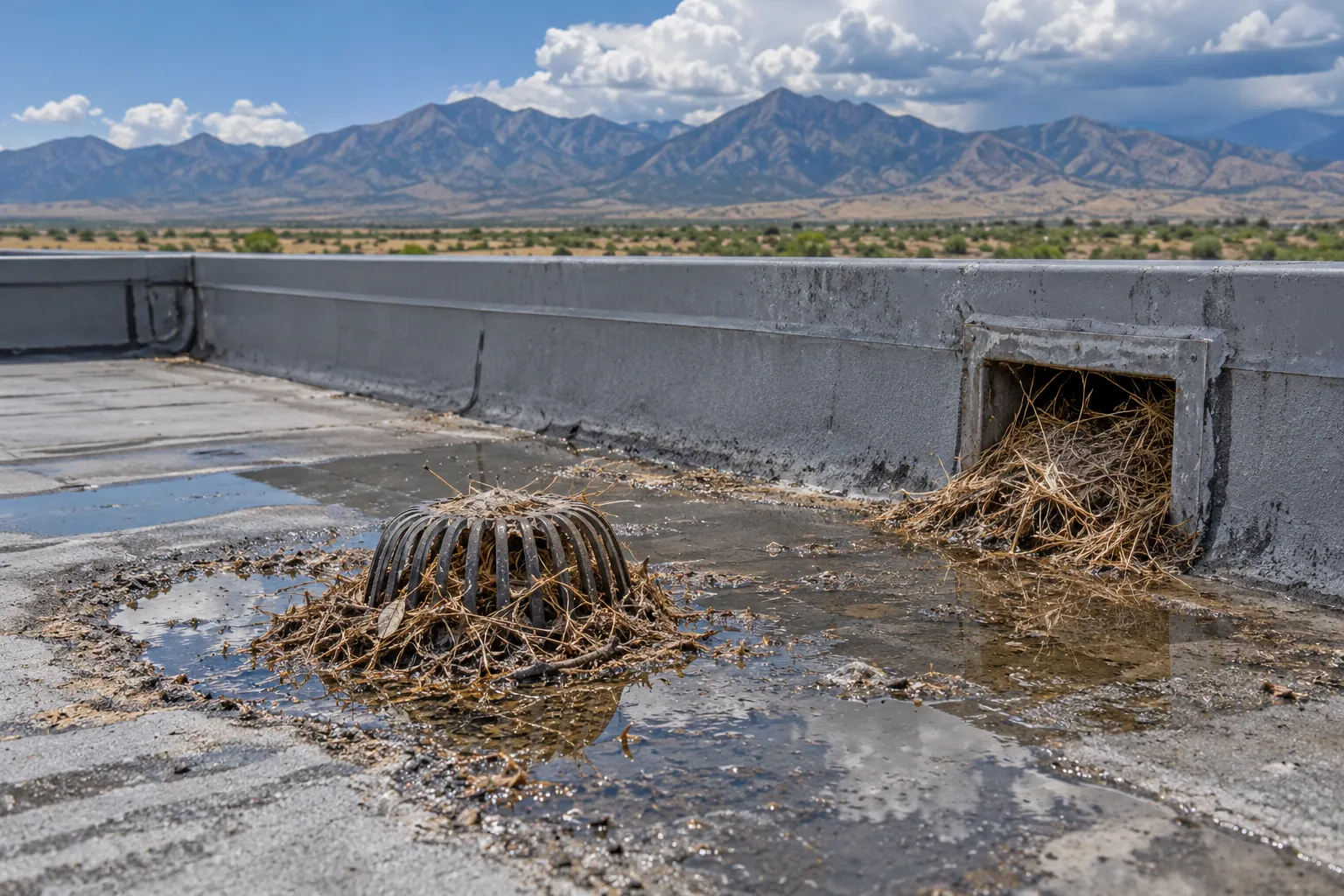
Buildings near the San Pedro River in Palominas see heavy monsoon runoff through their scuppers. The same storms bring hail and downburst winds that dent foam, crack coating, and pack drains with debris.
A walk-through after the season catches that damage while it is small. We clear scuppers, mark dents and thin spots, and repair or recoat before the next storms. Dated photos from each walk build a record of how the roof is holding up.
Monsoon storms do fast damage. These six findings come up on a post-storm roof check.
Hail dents the surface of spray foam roofs and cracks the coating over it. Each dent gets cleaned and sealed before UV reaches the foam.
Heavy runoff carries debris into scuppers and wears the coating at the outlet. Scuppers get cleared, and worn edges get fresh build.
Debris dams across the roof leave fresh rings where water backed up. Clearing the debris and checking the slope keeps them from returning.
Downburst winds lift edge trim and coping, opening the edge to wind-driven rain. Trim gets refastened and sealed into the coating.
Coating wears thinnest at seams, laps, and screw heads. A thickness check after storm season shows where recoating has to start.
Screw heads on metal roofs that show rust after the rains get resealed, since water around a fastener soon reaches the steel below.
Coating and regular checks keep storm damage small. These gains depend on catching it after each season.
A walk-through after monsoon season finds dents, cracks, and clogged scuppers while repairs are small and inexpensive.
Sealing hail dents and keeping the topcoat thick protects spray foam from the sun, which ruins bare foam quickly at this altitude.
Clear scuppers and drains carry storm water off the roof, which keeps fresh ponding rings from forming behind debris.
Thickness checks show when a recoat is coming, so it fits into a late spring or fall window instead of following a leak.
Three systems cover the roofs we see around Palominas.
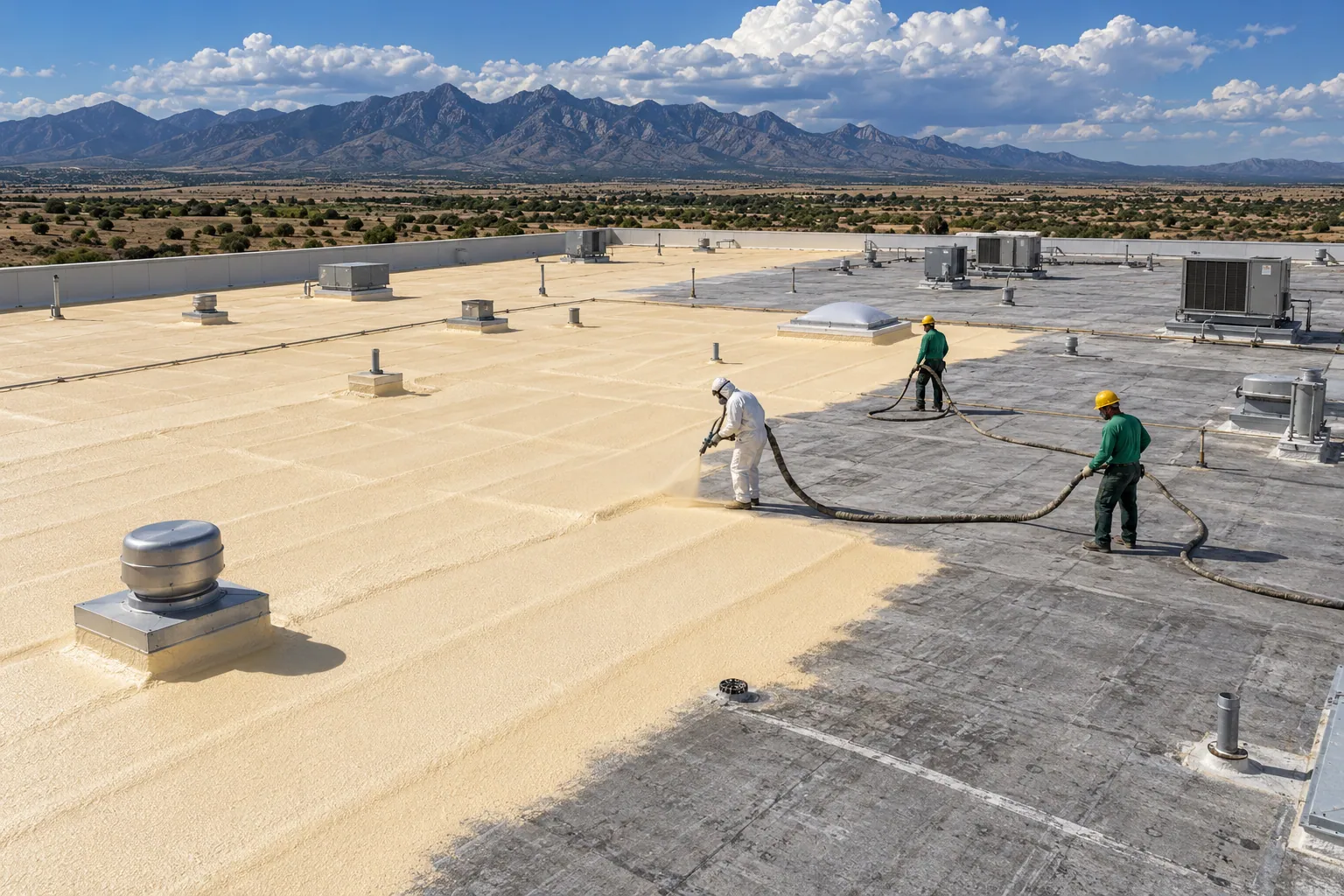
Foam roofs dented by hail get repaired and recoated, keeping the UV topcoat thick over the foam.
Spray Foam Roofing details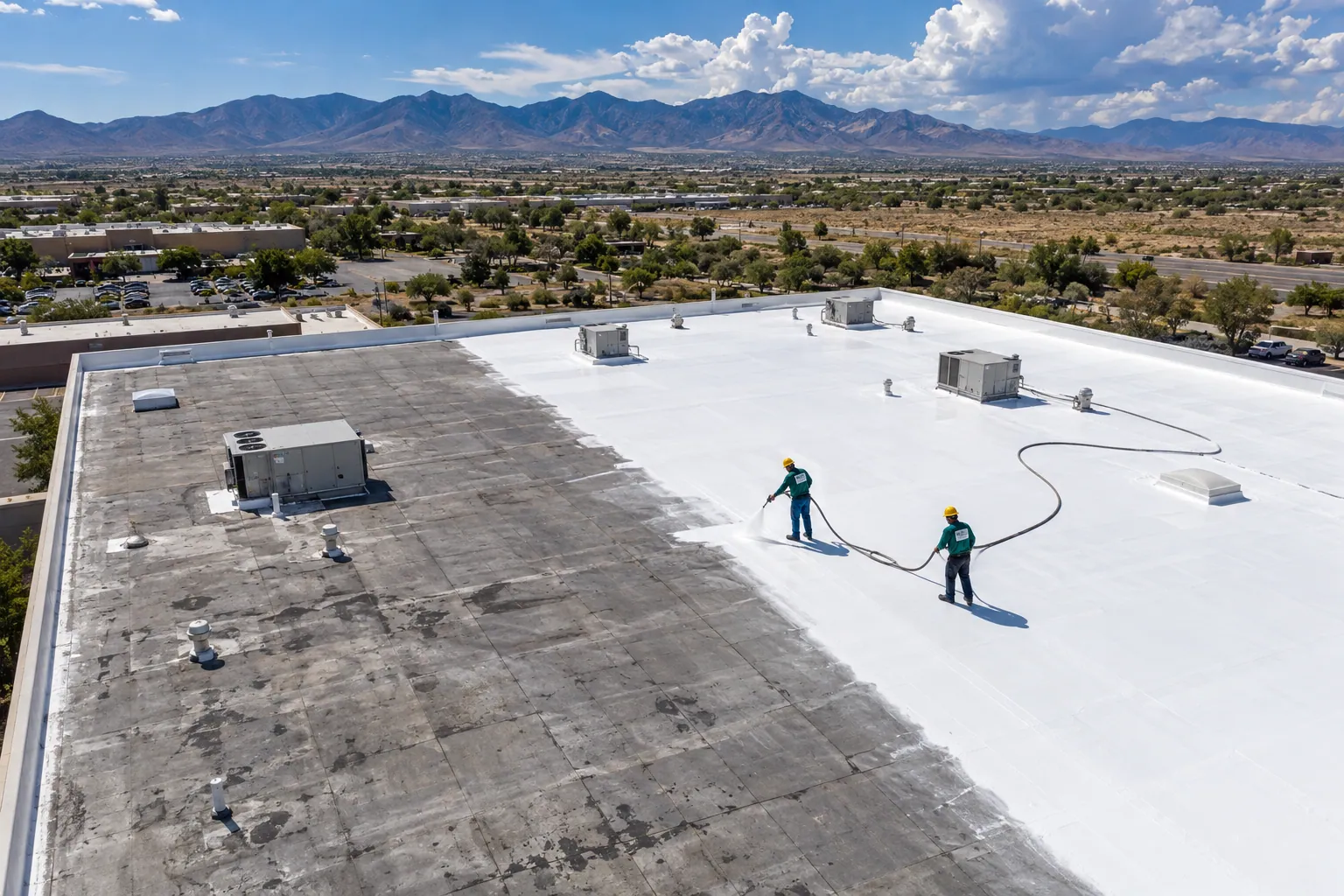
Flat roofs that pond behind clogged scuppers after storms take silicone, which holds up under standing water.
Silicone Roof Coating details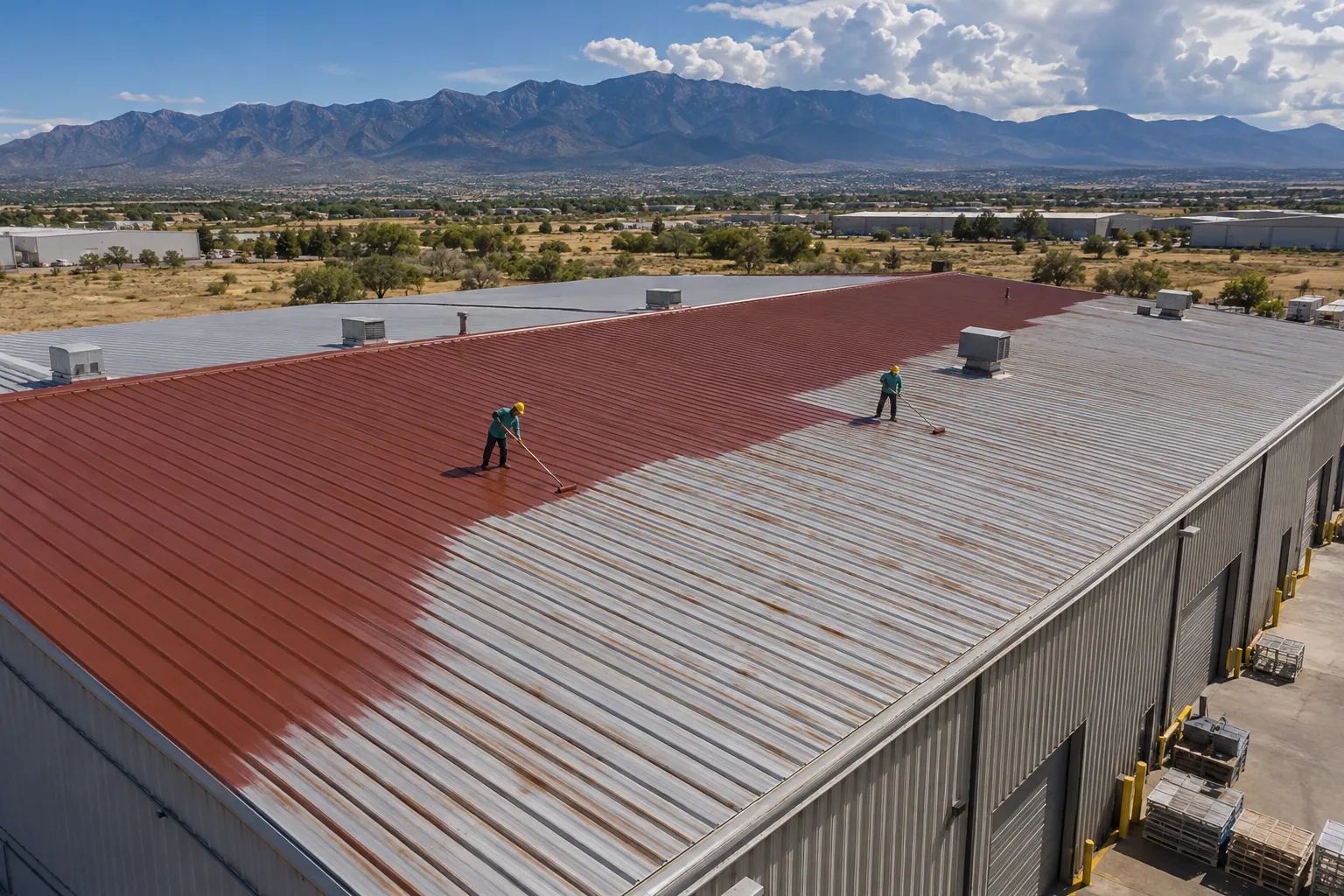
Metal buildings with rust starting at screws after wet seasons get primed, sealed, and coated.
Metal Roof Coating detailsCall and tell us when the storm hit and what you saw, and we will check the roof for dents and thin spots.
Call UsStorm season sets the timing. The work itself follows four steps.
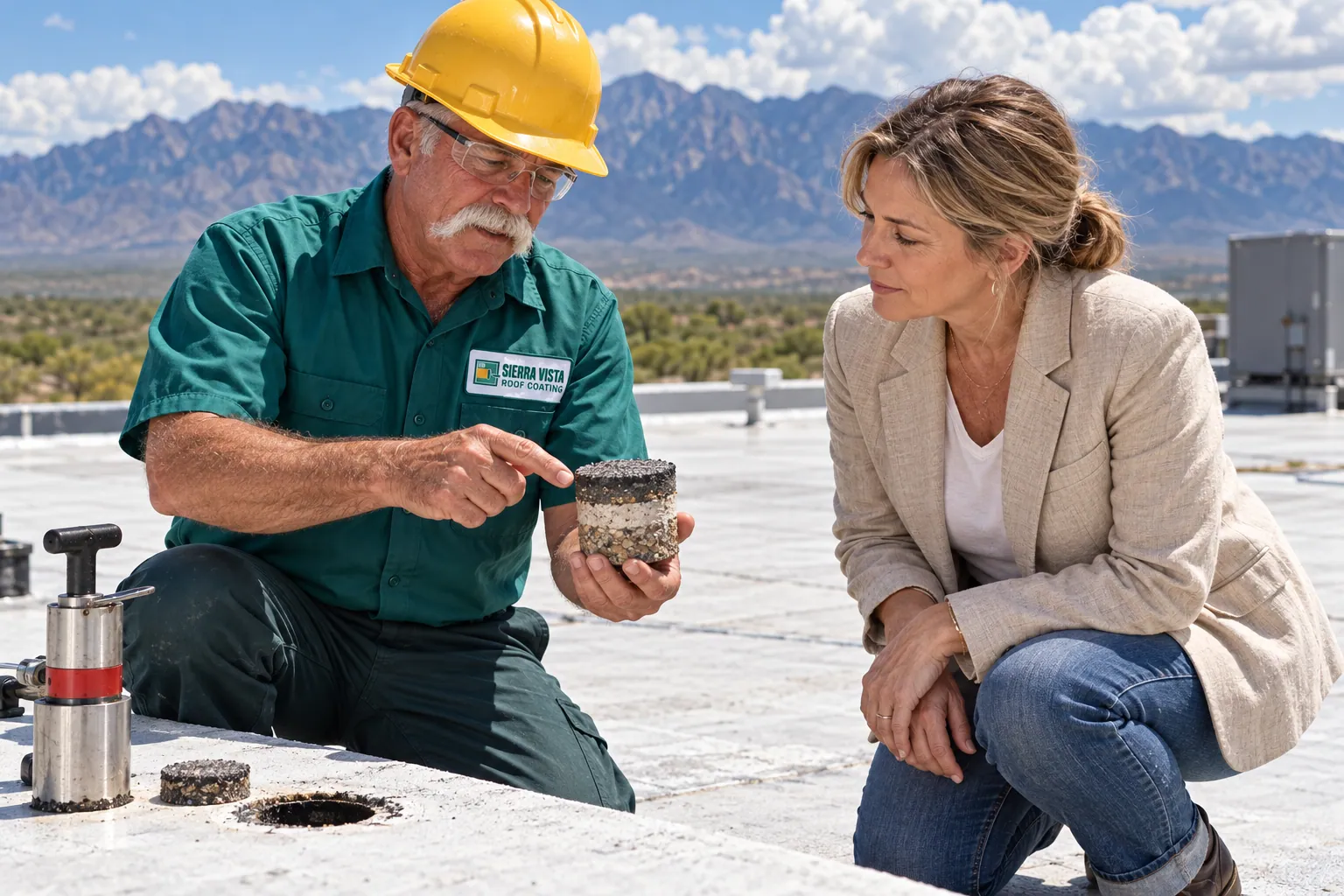

After monsoon season we walk the roof, mark hail dents and cracks, measure coating thickness at laps and screws, and clear scuppers to see how water leaves.
Debris comes out of drains and scuppers, lifted trim is refastened, and the roof is washed so repairs bond to clean surfaces.
Dents and cracks are cleaned and sealed, rusty screws are resealed, and thin spots at laps get detail coating with fabric where joints move.
Areas worn thin get a fresh topcoat to the mil spec, or the whole roof is recoated when thickness has dropped across the field.
Palominas sits on State Route 92 near the San Pedro River, south of Hereford.
Hereford is just north on SR 92, where several steel shops often share one parcel.
Sierra Vista lies northwest on SR 92, with every coating system we apply in use.
Huachuca City sits farther northwest on SR 90, with shared strip roofs over storefronts.
Answers for owners of buildings near the San Pedro River.
Two walk-throughs a year, in spring before monsoon season and in fall after it, keep most coated roofs on track. Clear drains and scuppers, look for cracks or lifting at curbs and parapets, check for hail dents and thin spots, and reseal rusty screw heads on metal roofs.
Palominas is unincorporated, so Cochise County Building Safety covers it. The county excludes commercial projects from its minor-work exemptions, so ask before even small seam and fastener work.
After big storms with hail or strong wind, yes, at least from the ground or a hatch. Look for debris in scuppers, lifted trim, and fresh ponding. The full walk-through can wait for the end of the season.
Any crack through the coating matters on a foam roof, since sunlight starts breaking down the foam underneath. Small dents with the coating intact can wait for the scheduled walk-through and repair.
Yes. When thickness checks show wear only at laps, scuppers, and walkways, those areas get recoated first. A full recoat follows when the field coat thins across the roof.
Fall, after the monsoon ends and before freezing nights, is a good window for most repairs and recoats. Urgent leaks get sealed right away, with the full repair planned for dry weather.
That depends on your policy and the adjuster. We give you dated photos, marked dents, and thickness readings from the post-storm walk, which helps you talk with the insurer. We leave coverage questions to you and your agent.
Monsoon storms bring heavy rain, wind, and debris over a short time, and runoff carries grit and plant material toward the scuppers. Clearing them before and after the season keeps water from backing up behind the parapet.
Start with a free ballpark estimate for repairs or a recoat, or call and tell us what the storms left behind.
Want A Call About Your Roof?
Leave a name and number and we will call you back about your roof.
Or call now: (623) 310-0185