Monsoon Washoff
Afternoon storms from June 15 through September 30 can wash fresh acrylic off seams and into drains. Acrylic work that season starts early and stops well before the clouds build.

Acrylic roof coating in Sierra Vista for sloped metal and roofs that drain fast. We schedule around monsoon storms and cold nights so the coating cures dry.
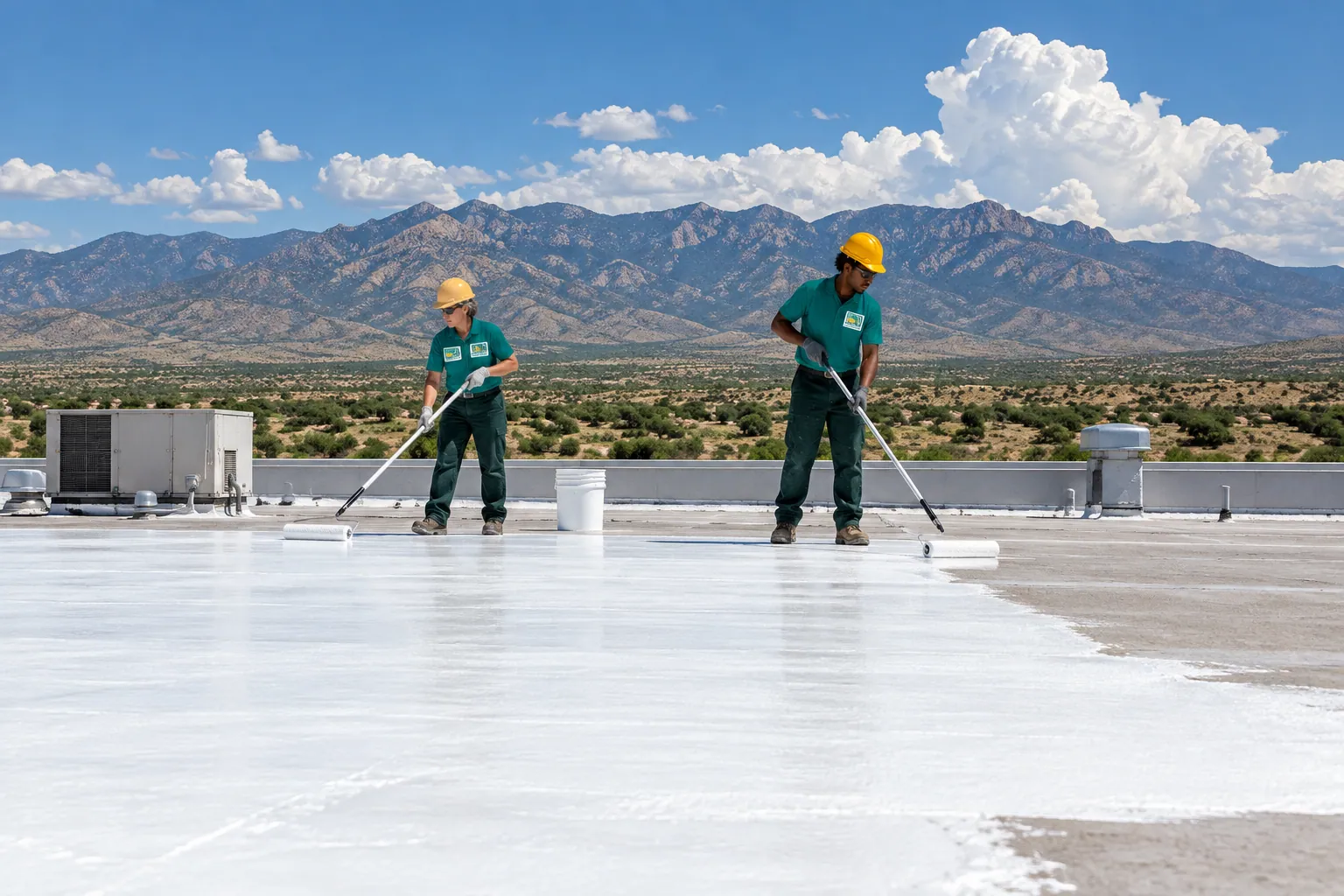
Acrylic needs water to leave the roof and dry weather to cure. These lists show whether a Sierra Vista roof meets both.
Good Fit
Repair First
Acrylic is a water-based coating, so weather during the first hours matters most. These six conditions shape every acrylic job in Sierra Vista.
Afternoon storms from June 15 through September 30 can wash fresh acrylic off seams and into drains. Acrylic work that season starts early and stops well before the clouds build.
At roughly 4,600 feet, winter nights drop below freezing and shorten the daily window for acrylic. Coating has to cure before evening temperatures fall.
Gusty spring afternoons blow dust onto wet coating, leaving a gritty surface. Crews start early in the day and finish sections before the wind picks up.
Acrylic softens and wears under water that sits for days. Low spots near drains are reshaped or treated with a ponding-rated product before the field coat.
Older built-up and modified bitumen roofs can stain a white acrylic coat brown from below. A bleed-blocking primer goes on first where the manufacturer calls for it.
Reinforcing fabric at laps, curbs, and penetrations spans the joints that move. That detail work happens in its own pass before the field coat.
Acrylic shows up in four forms on Sierra Vista roofs. Slope, drainage, and the old surface choose among them.
| Option | Where It Fits | What Comes First | Later Upkeep |
|---|---|---|---|
| Acrylic Over Sloped Metal | Pitched panel roofs that shed water fast | Rust primer, sealed screws, fabric at laps | Recoat when chalking shows |
| Acrylic Over Built-Up Roofs | Low-slope roofs with good drainage | Bleed-blocking primer and seam repair | Rinse and recoat on a schedule |
| Acrylic Recoat | Older acrylic coatings that are thinning | Clean, spot repair, adhesion test | Accepts acrylic or other topcoats |
| Acrylic Over Spray Foam | Foam roofs that drain well | Repair hail dents and clean the foam | Recoat before foam shows through |
Acrylic is the flexible choice for roofs that shed water. These gains depend on dry weather during cure.
Acrylic holds less dust than silicone, and on a sloped roof the rain carries off what does settle. That keeps the white surface reflecting sun for longer between cleanings.
An acrylic roof accepts acrylic or other topcoats later. That keeps your choices open for the next recoat instead of locking the roof into one chemistry.
A white acrylic surface reflects much of the summer sun at this altitude, which keeps the roof cooler and slows UV wear on the panels or membrane underneath.
Rollers and sprayers apply acrylic with low odor, which helps on occupied buildings where rooftop unit intakes draw air for offices and shops below.
Get a ballpark number now so the acrylic work can land in a late spring or fall window, before or after the storms.
Get A Free Ballpark EstimateWeather drives the schedule on acrylic jobs. The four steps below fit into dry, warm stretches.

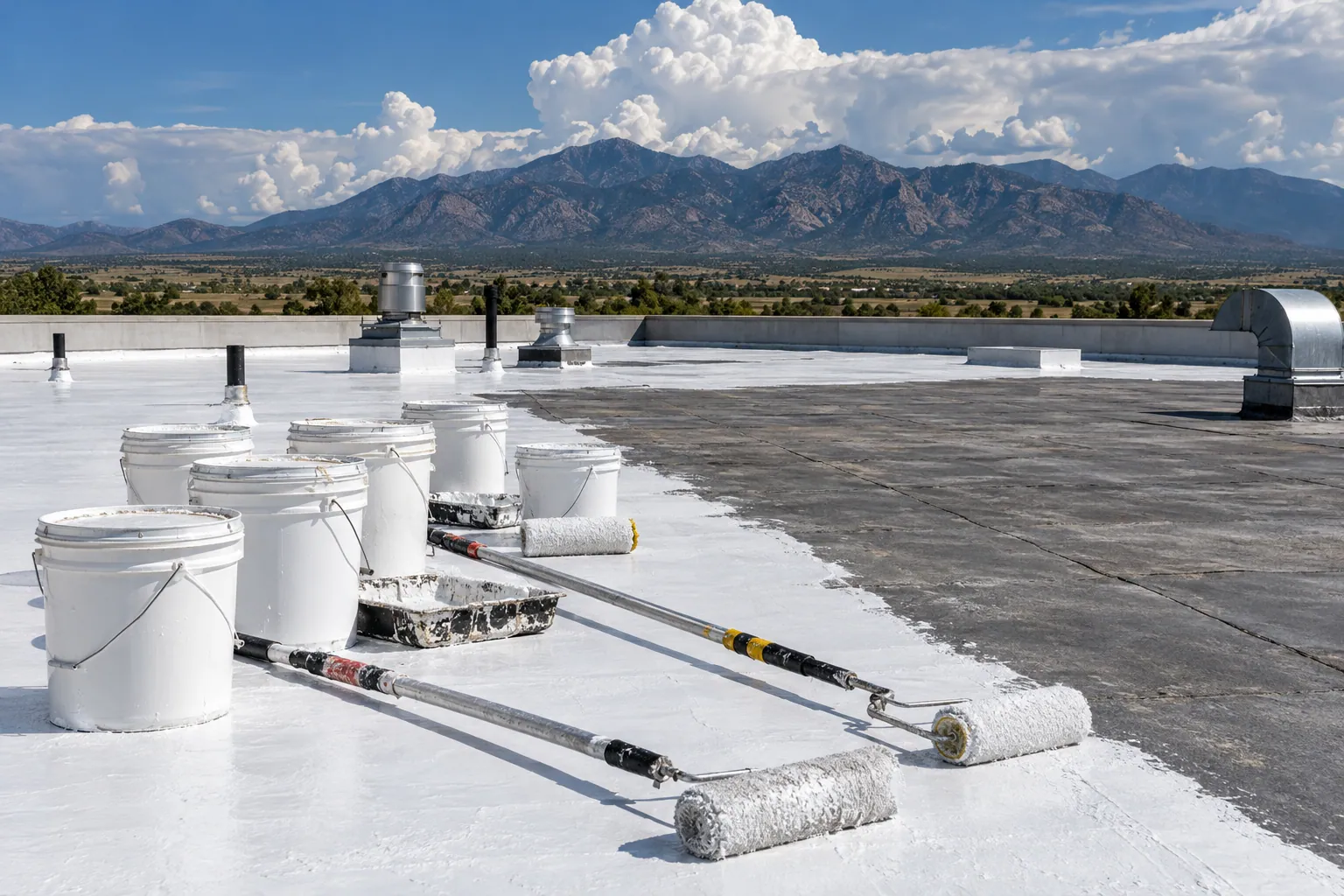
We check how fast the roof drains, look for asphalt bleed and old coatings, and test the insulation for moisture. You also get a recommended season for the work based on those findings.
Pressure washing strips dust and chalk, rust is brushed and primed, and seams and flashing are repaired. Every surface dries completely before primer or coating touches it.
Reinforcing fabric is bedded in acrylic at laps, curbs, drains, and penetrations. This pass cures before the field coat so the joints carry the extra build they need.
Acrylic goes on in two coats in opposite directions, early in dry days, to the manufacturer's mil spec. Each coat cures before evening dew or a storm can reach it.
Two related coatings on Sierra Vista roofs.
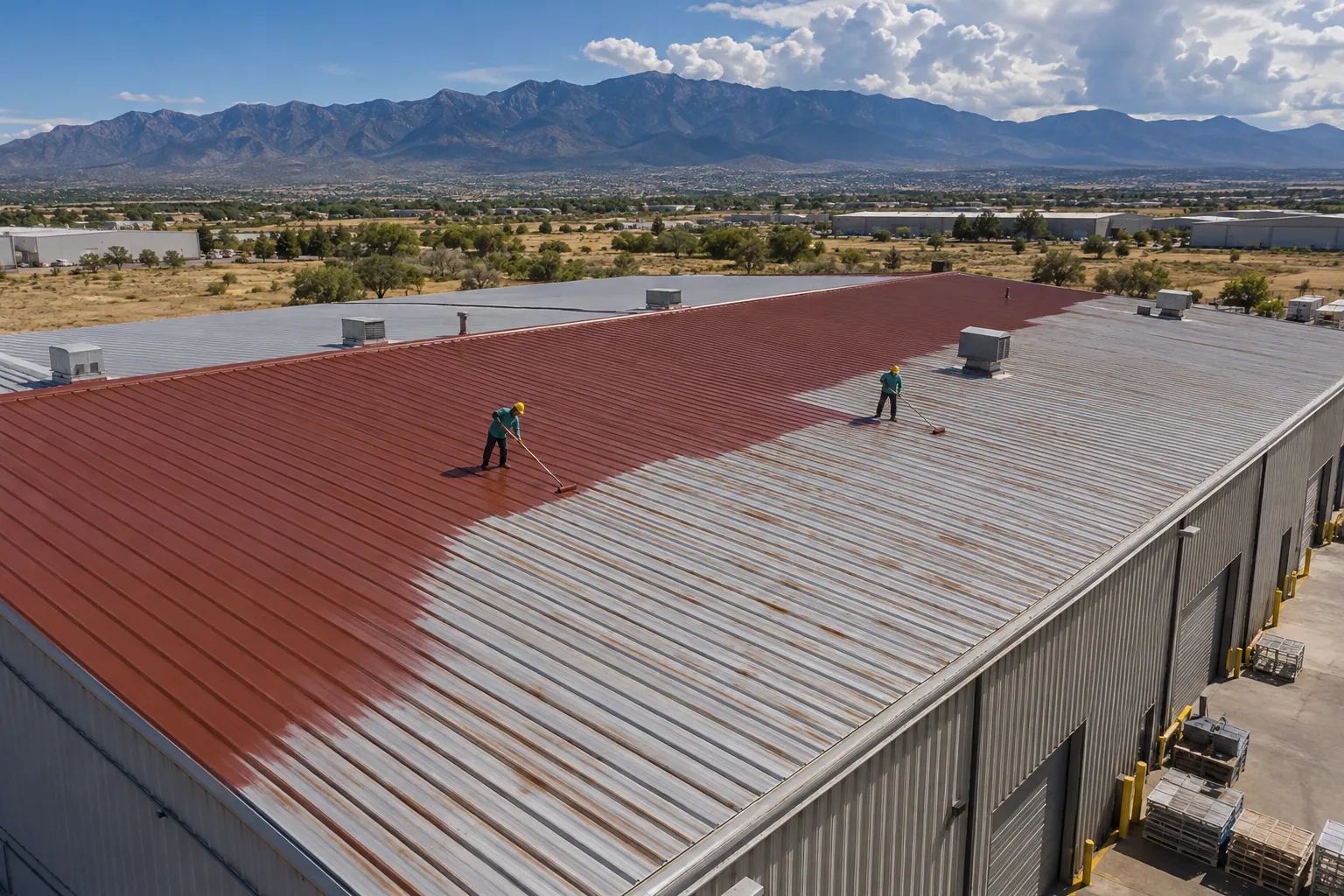
Most acrylic jobs here start on metal, and the metal page covers the rust grading, screws, and lap fabric that come first.
Metal roof coating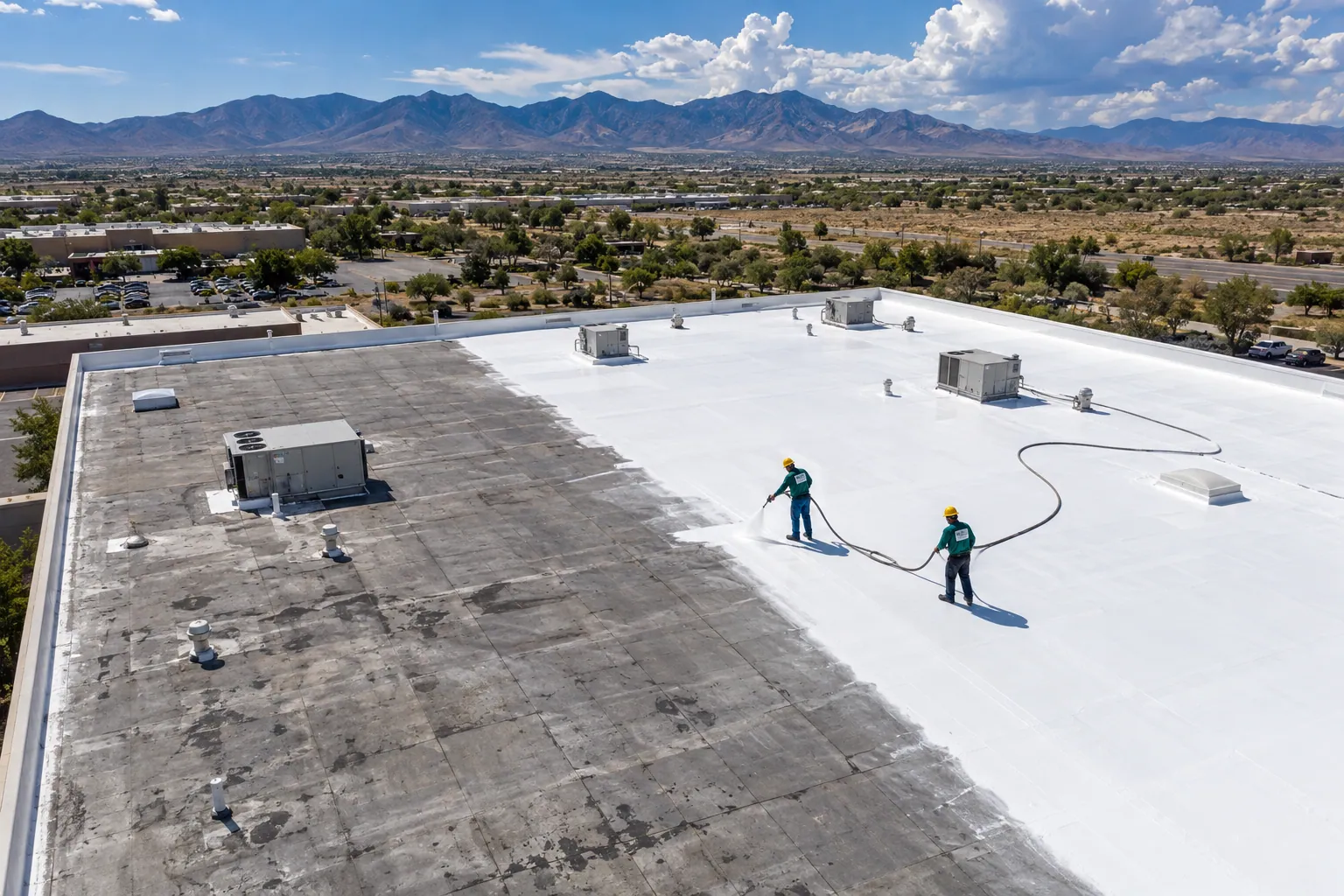
Flat roofs that hold water after storms call for silicone instead, since acrylic softens where puddles stay for days.
Silicone roof coatingAnswers about acrylic coatings and Sierra Vista weather.
Late spring and fall usually give the best acrylic windows. Spring afternoons turn gusty and blow dust onto wet coating, monsoon storms from June 15 through September 30 can wash fresh acrylic off seams, and freezing winter nights at roughly 4,600 feet shorten the daily window.
Warm, dry hours have to pass before rain or dew reaches fresh acrylic, and the exact time comes from the product data sheet and the day's temperature and humidity. Crews start early and check the forecast for storms building in the afternoon.
Yes, when the roof drains well. Acrylic softens and wears under standing water, so flat roofs with ponding rings near drains do better with silicone. Fixing a blocked drain or building up a low spot can make a flat roof workable for acrylic.
Chalking is the powdery surface an aging acrylic coating leaves on your hand. It means the top layer is wearing away under UV, and it is the usual signal to plan a recoat while the coating underneath is still intact.
With the right primer, yes. Oils in older built-up and modified bitumen roofs can bleed through and stain white acrylic. A bleed-blocking primer stops that, and the inspection checks for it with a small test patch.
Recoating means cleaning off chalk and dust, repairing any spots where the coating wore thin at laps or fasteners, and applying a fresh topcoat. Acrylic accepts acrylic or other topcoats, which keeps the next decision open.
Start with a free ballpark estimate now and plan the work for a dry window, or call to talk about timing.
Want A Call About Your Roof?
Leave a name and number and we will call you back about your roof.
Or call now: (623) 310-0185