Backed-Out Screws
Daily heating and cooling works exposed screws loose, and the washers dry and crack under strong sun. Each one gets tightened, or upsized where the hole is stripped, then sealed under the coating.

Metal roof coating in Sierra Vista for warehouses, shops, and pre-engineered buildings. We brush and prime the rust, seal every fastener and lap, then coat the panels.
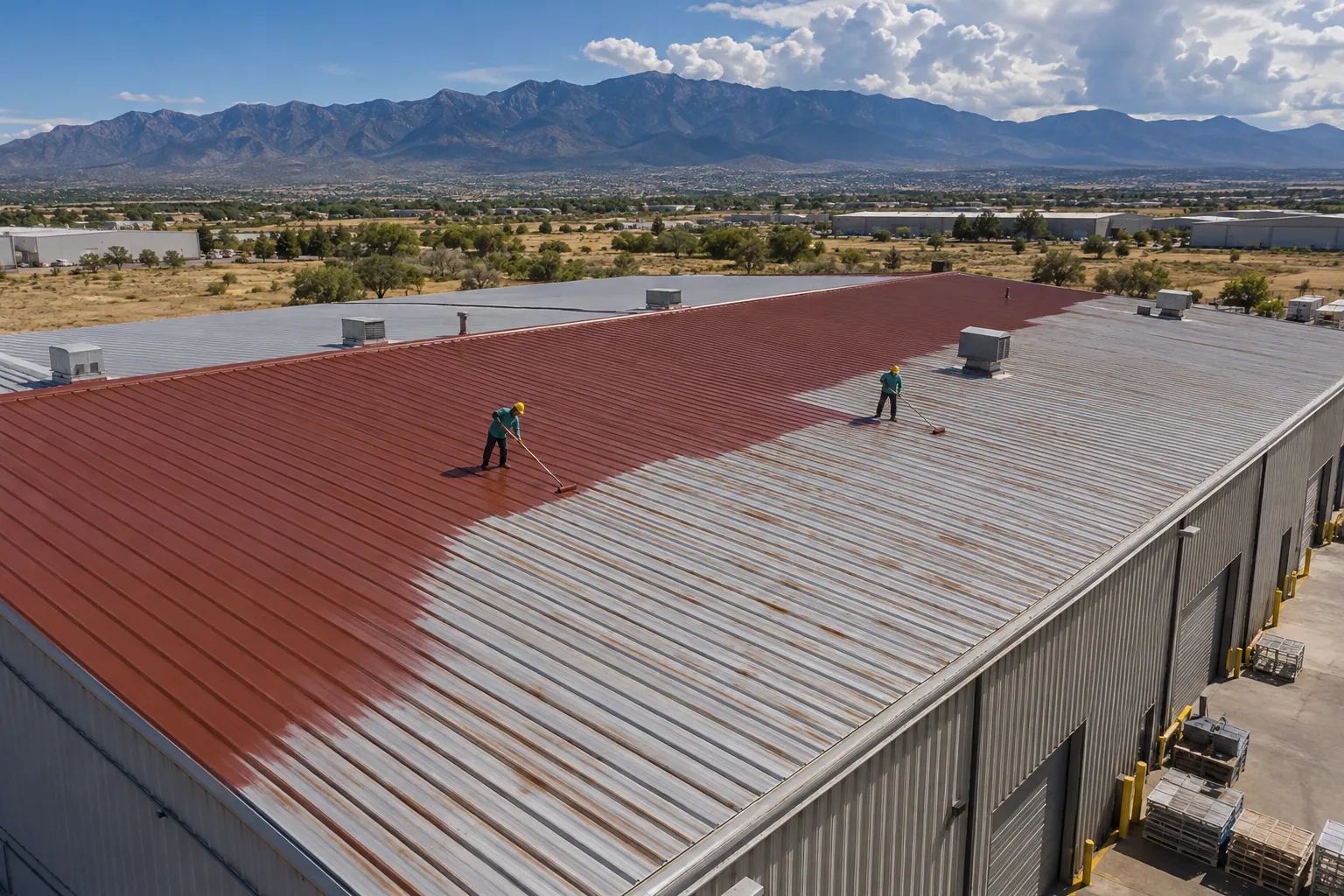
Metal coats well while the steel is still solid. These lists show which side of that line a Sierra Vista metal roof sits on.
Good Fit
Repair First
Pre-engineered buildings around Sierra Vista leak at the same few details. Each one is fixed before the field coat goes on.
Daily heating and cooling works exposed screws loose, and the washers dry and crack under strong sun. Each one gets tightened, or upsized where the hole is stripped, then sealed under the coating.
Side and end laps open slightly as panels move, and wind-driven rain gets pushed into the joint. Reinforcing fabric bedded in coating bridges each lap before the field coat.
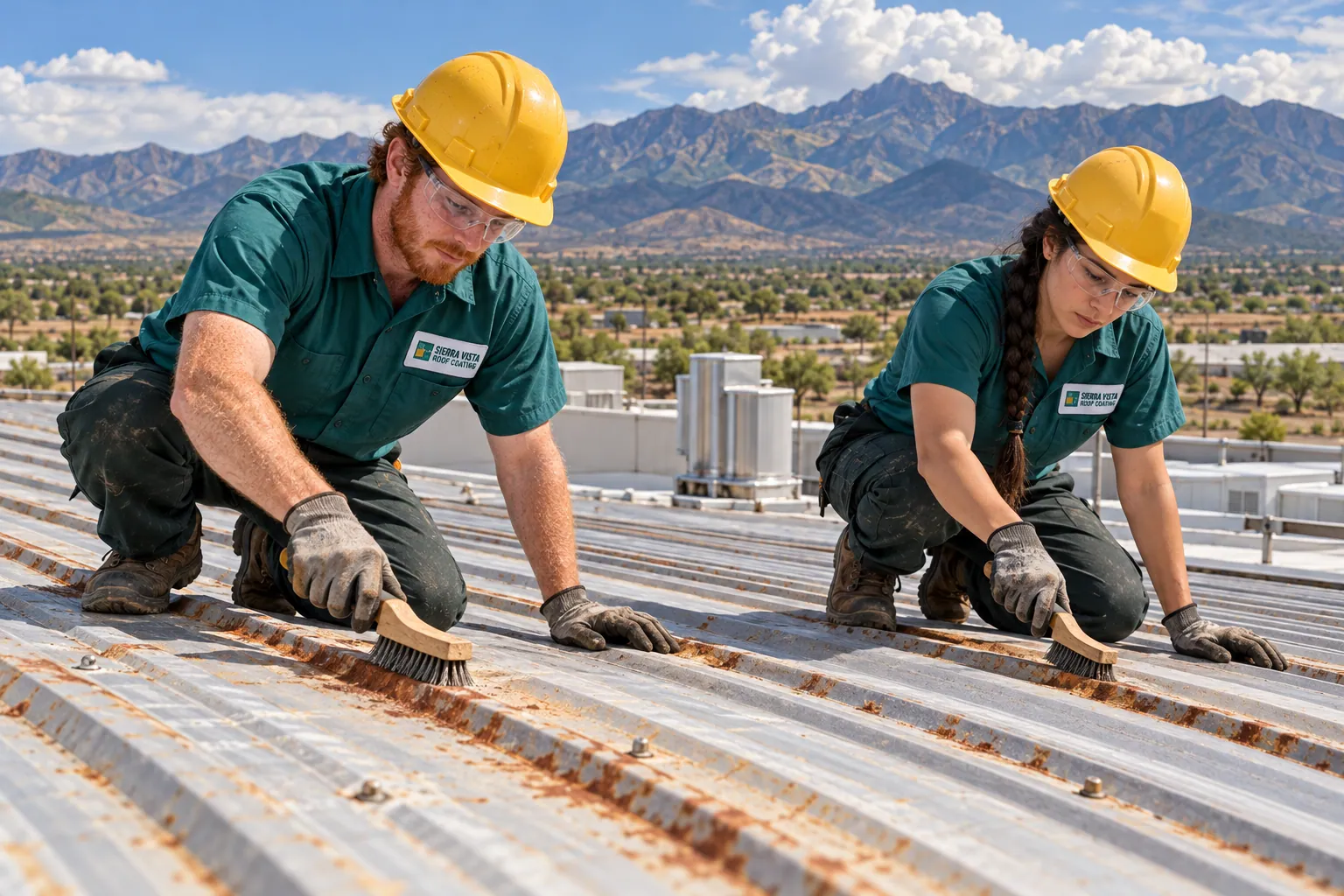
Orange bloom starts at cut edges, screw holes, and end laps where the factory finish wore away. Wire brushing or power tooling takes it down to firm steel for the rust-inhibiting primer.
Closures under ridge caps shrink and crack over time, leaving gaps for wind and blowing dust. Sealant fills those gaps first, so the coating spans a closed joint.
Rooftop unit curbs and vent pipes cut through the panels, and their flashing loosens as the roof moves. These get resealed and reinforced, since they carry the most water.
Water under a metal roof on a cool morning can be condensation rather than a leak. Checking the insulation facing and the timing of drips tells the two apart before coating.
Four ways a metal roof gets coated around Sierra Vista, from a spot fix to a full system. The inspection picks one.
| Option | Where It Fits | What Comes First | Later Upkeep |
|---|---|---|---|
| Fastener And Lap Detail Only | Sound panels with leaks at screws and laps | Tighten or upsize screws, seal, fabric the laps | Recheck screw heads on spring and fall walks |
| Acrylic Restoration | Sloped metal that drains fast | Rust primer, then detail work at laps and curbs | Recoat with acrylic once chalking shows |
| Silicone Over Metal | Low-slope metal sections that hold water | Rust primer plus a primer approved for silicone | Recoat with silicone only |
| Spray Foam Over Metal | Panels needing insulation and a smoother surface | Clean dry panels, intakes covered | UV topcoat recoated before foam shows |
A coating on solid steel stops the rust where it is and closes the leak points. Each gain assumes the panels pass the inspection.
Primer locks down surface rust at screw holes and end laps, and the coating keeps water and oxygen away from the steel, so the bloom stops spreading across the panels.
Screws, laps, ridge caps, and curbs are sealed in one pass, which means the usual metal roof leaks are dealt with at once instead of patched one call at a time.
Bare or faded steel heats fast at this altitude. A white topcoat reflects much of that sun, which keeps the panel surface cooler and slows wear on the sealants underneath.
Tear-off and new panels mean open roofs over stock and equipment. Coating leaves the steel in place, so work moves panel run by panel run while the building stays in use.
Call and tell us where the rust shows, whether screws have backed out, and if the panels have any holes you can see from inside.
Call UsPrep on metal decides how long the coating stays on. These four steps run in this order on every metal roof.
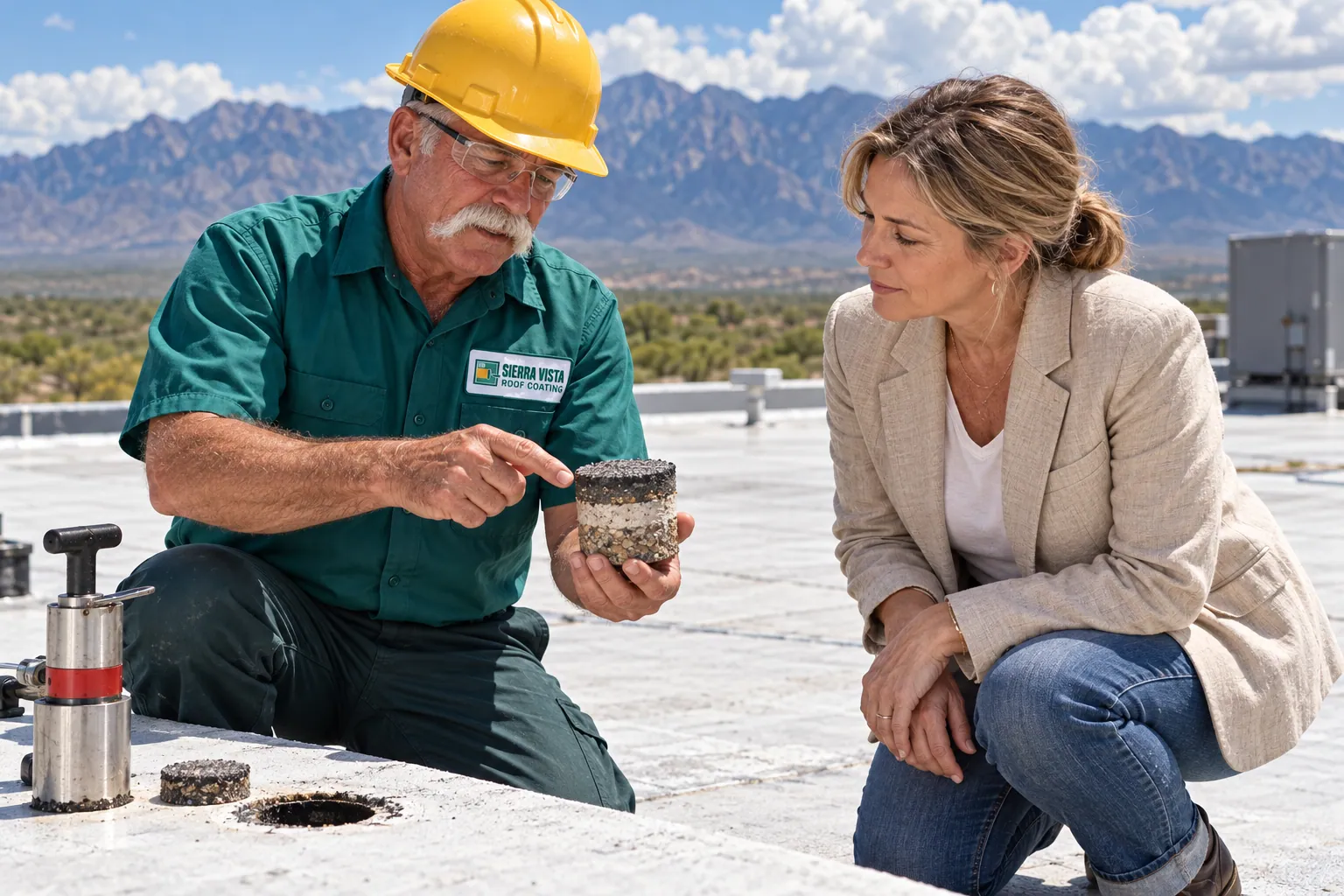
We walk every panel run and grade the rust: surface bloom, scale, or holes. Screws, laps, ridge caps, gutters, and curbs get checked, and anything structural is flagged before we price coating.
Wire brushes and power tools take rust down to firm steel at screw holes and laps. A pressure wash then clears chalk, dust, and loose paint, and the panels dry before primer.
Rust-inhibiting primer goes on the treated areas. Loose screws are tightened or upsized and sealed, ridge caps and curbs get sealant, and reinforcing fabric is bedded over every side and end lap.
The field coat goes on in passes to the manufacturer's mil spec, with extra build at fasteners where thin spots show first. A wet-mil gauge checks thickness as each run is finished.
Two other coatings come up on Sierra Vista metal roofs, depending on slope and water.
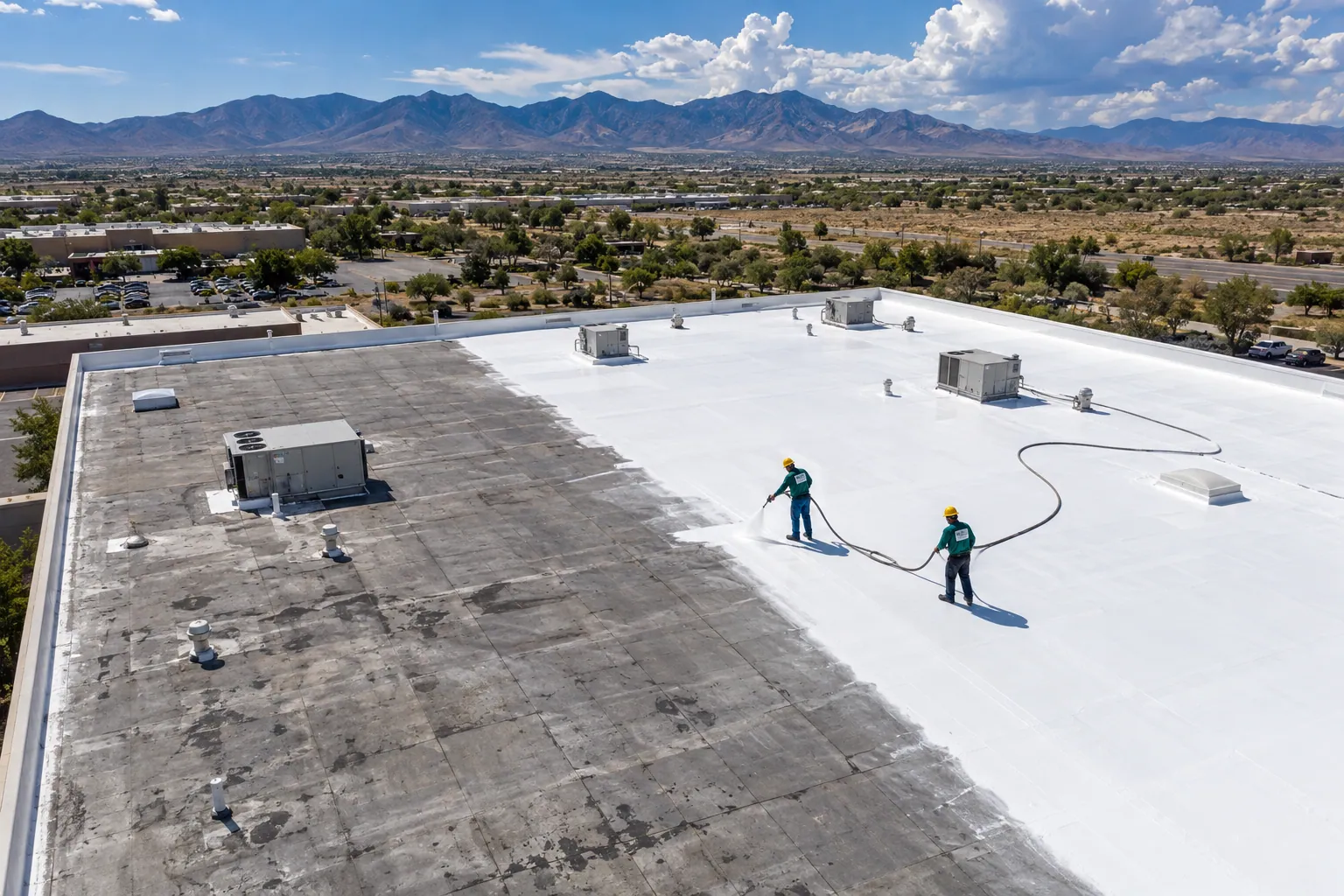
Low-slope metal sections where water sits after storms take silicone, because it holds up under ponding that softens other coatings.
Silicone roof coating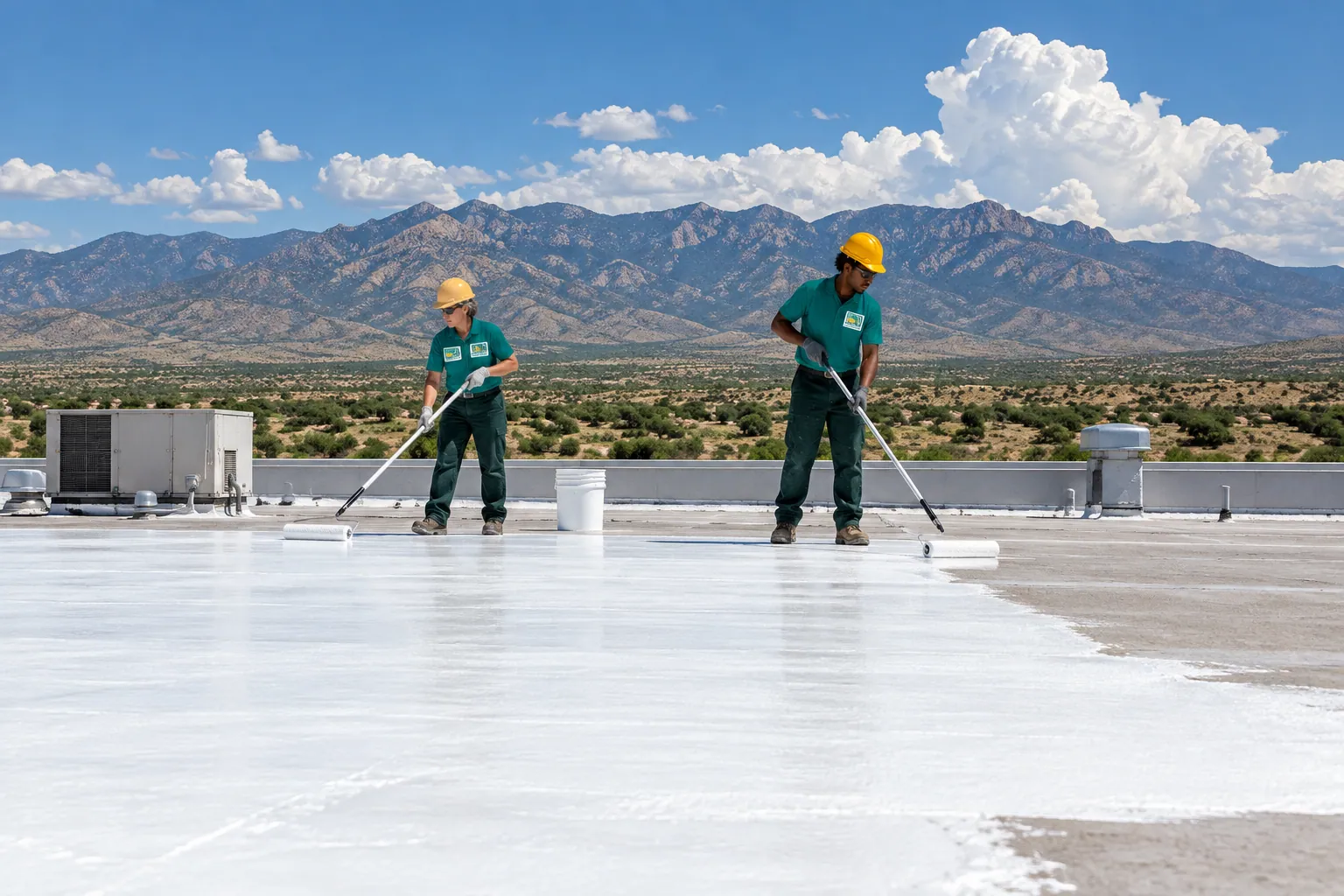
Pitched metal that sheds water fast is a good match for acrylic, which stays cleaner on a slope and accepts acrylic recoats later.
Acrylic roof coatingAnswers about rust, screws, and laps on metal buildings around Sierra Vista.
Yes, while the rust stays on the surface and the panels still have solid steel. Rust bloom gets wire-brushed or power-tooled, then a rust-inhibiting primer goes on before any topcoat. On pre-engineered buildings, loose screws are tightened or upsized and sealed, laps get fabric, and ridge caps and curbs get sealant first.
Only the ones that are stripped, rusted through, or missing their washers. Most screws on a metal roof just need tightening and sealing under the coating. Where a hole has wallowed out, a larger-diameter screw bites into fresh steel. Every screw head then gets extra coating build.
A coating on the outside of the panels seals leaks, while condensation forms on the underside when warm, moist air meets cold steel. If drips show on cool mornings with no rain, the insulation and vapor retarder under the roof are the place to look, and we check that during the inspection.
Acrylic suits most pitched metal roofs because water runs off quickly and the surface stays cleaner. Silicone fits low-slope metal where water lingers near the eaves or gutters. Spray foam makes sense when the building also needs insulation and a smoother surface.
Panels with holes get replaced with matching panels or patched with sheet metal fastened over the opening, sealed, and covered with fabric before the coating. A few holed panels are routine. When rust has spread through purlins or many panels, coating stops making sense and a new roof is the honest answer.
Yes, most metal coatings are white or light colored, so a faded or rust-streaked roof turns a uniform color. Tinted coatings exist in a limited range of colors. Tell us during the inspection if a specific color matters for the building or for review by a city.
Start with a free ballpark estimate for your metal building, or call and describe the rust and leaks you see.
Want A Call About Your Roof?
Leave a name and number and we will call you back about your roof.
Or call now: (623) 310-0185