Five Coating Systems

Roof Coating Services In Sierra Vista

Roof coating services in Sierra Vista for metal, flat, foam, and shingle commercial roofs. The roof already on your building points to the coating that fits it.

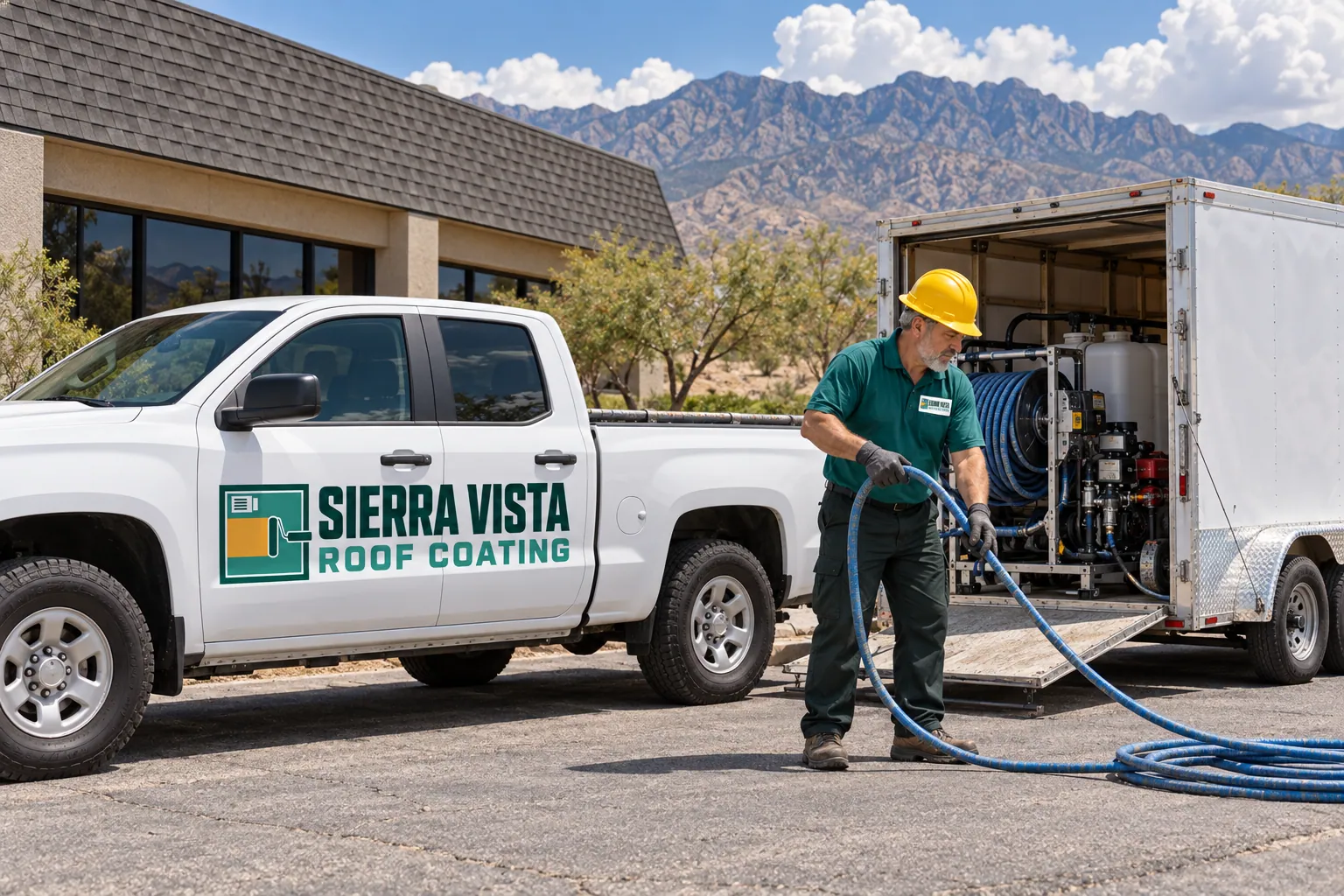
Roofer pulling spray hose from a trailer-mounted coating rig beside a work truck

Which Coating Fits Your Roof

Each card names the roof it fits and the conditions that must hold before coating starts.

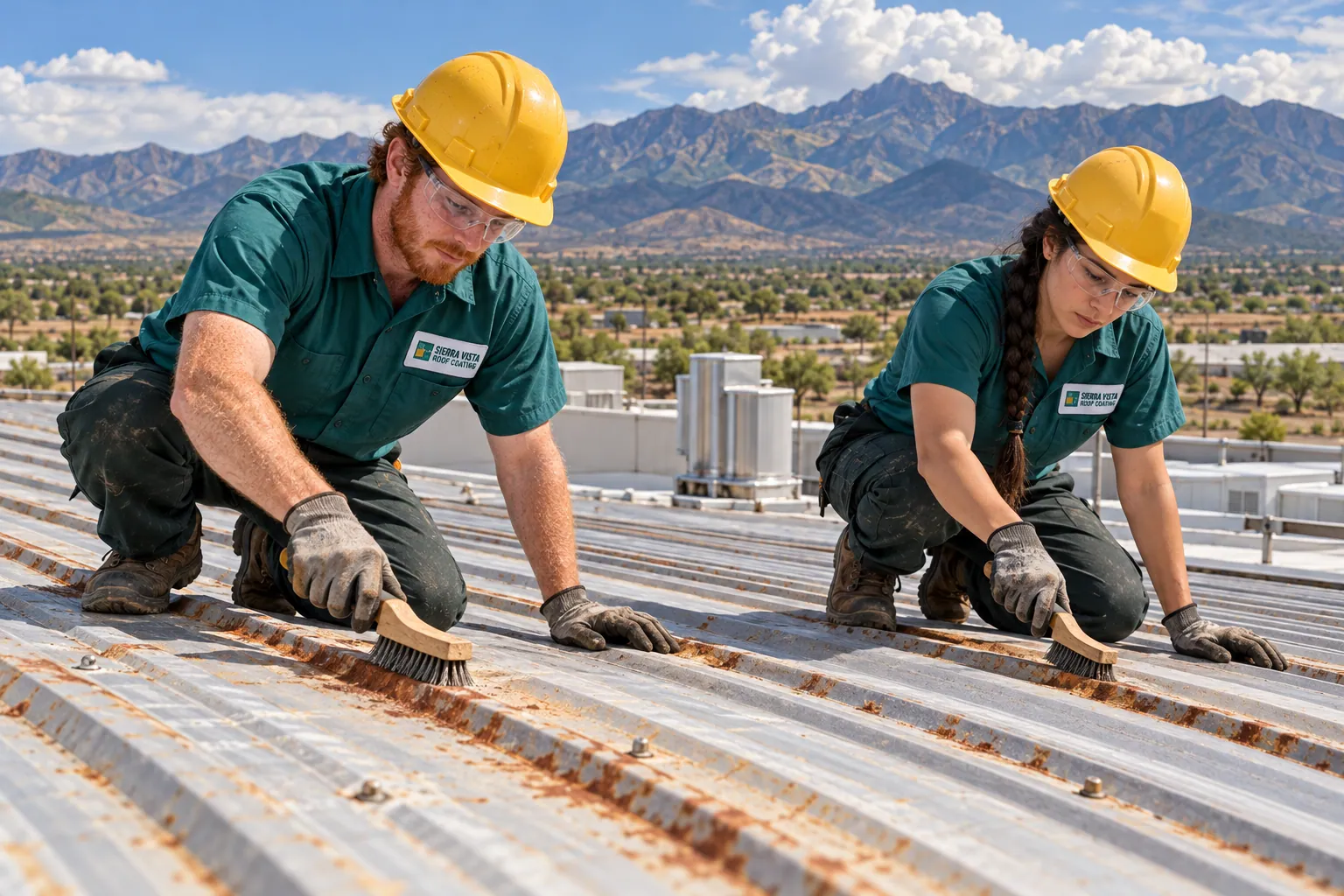
Roofers wire-brushing rust from metal panels

Metal Roof Coating

Steel panel roofs on warehouses, shops, and pre-engineered buildings, once the rust is graded and every screw and lap is sealed.

Ready To Coat When

  • Panels have no rust holes
  • Purlins and framing are intact
  • Screw washers can be resealed or replaced
About metal roof coating
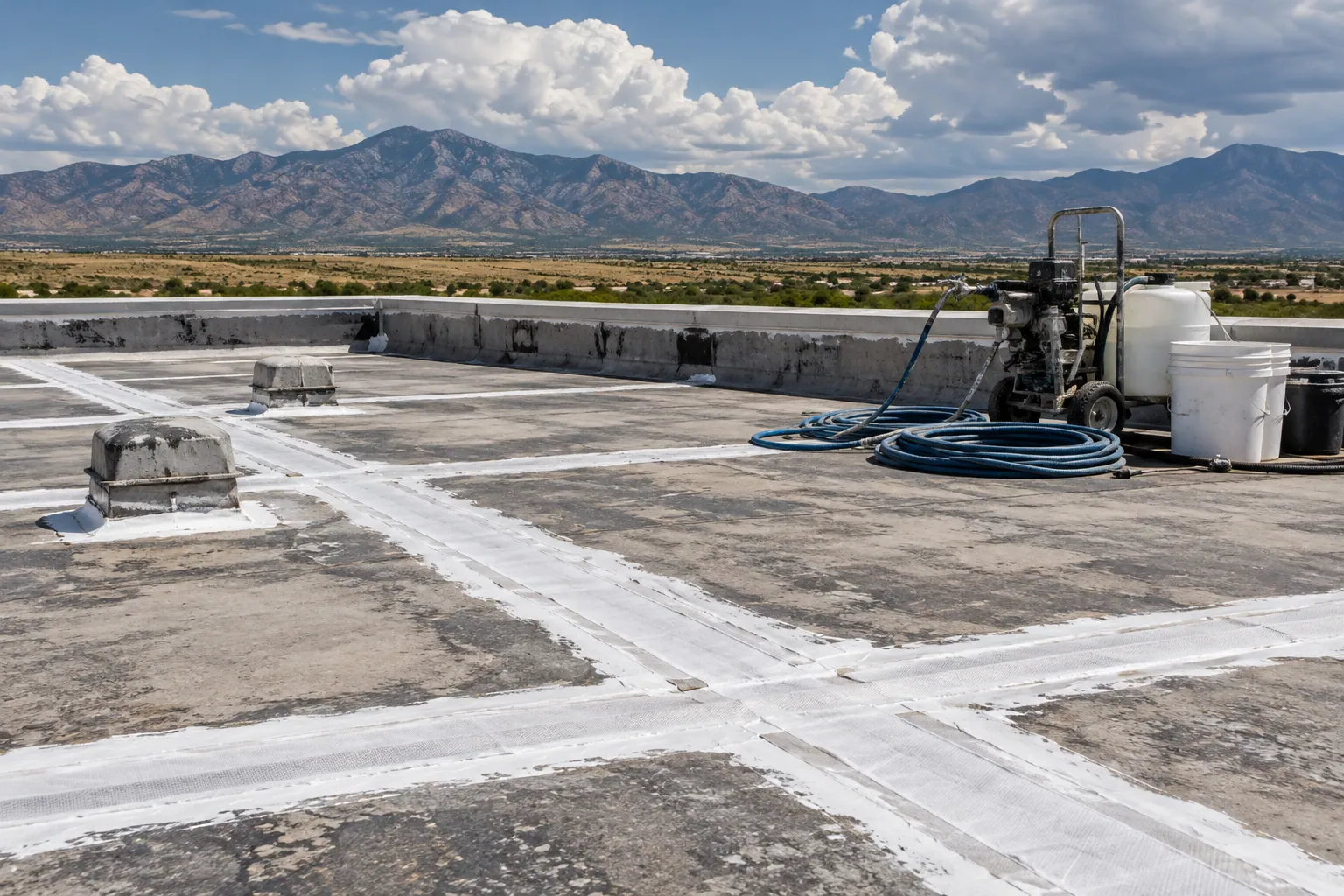
Seams striped with base coat on a flat roof

Silicone Roof Coating

Built-up, modified bitumen, and single-ply flat roofs where water lingers near drains after monsoon storms.

Ready To Coat When

  • Core cuts come back dry
  • Drains and scuppers flow freely
  • The roof stays silicone at recoat time
About silicone roof coating
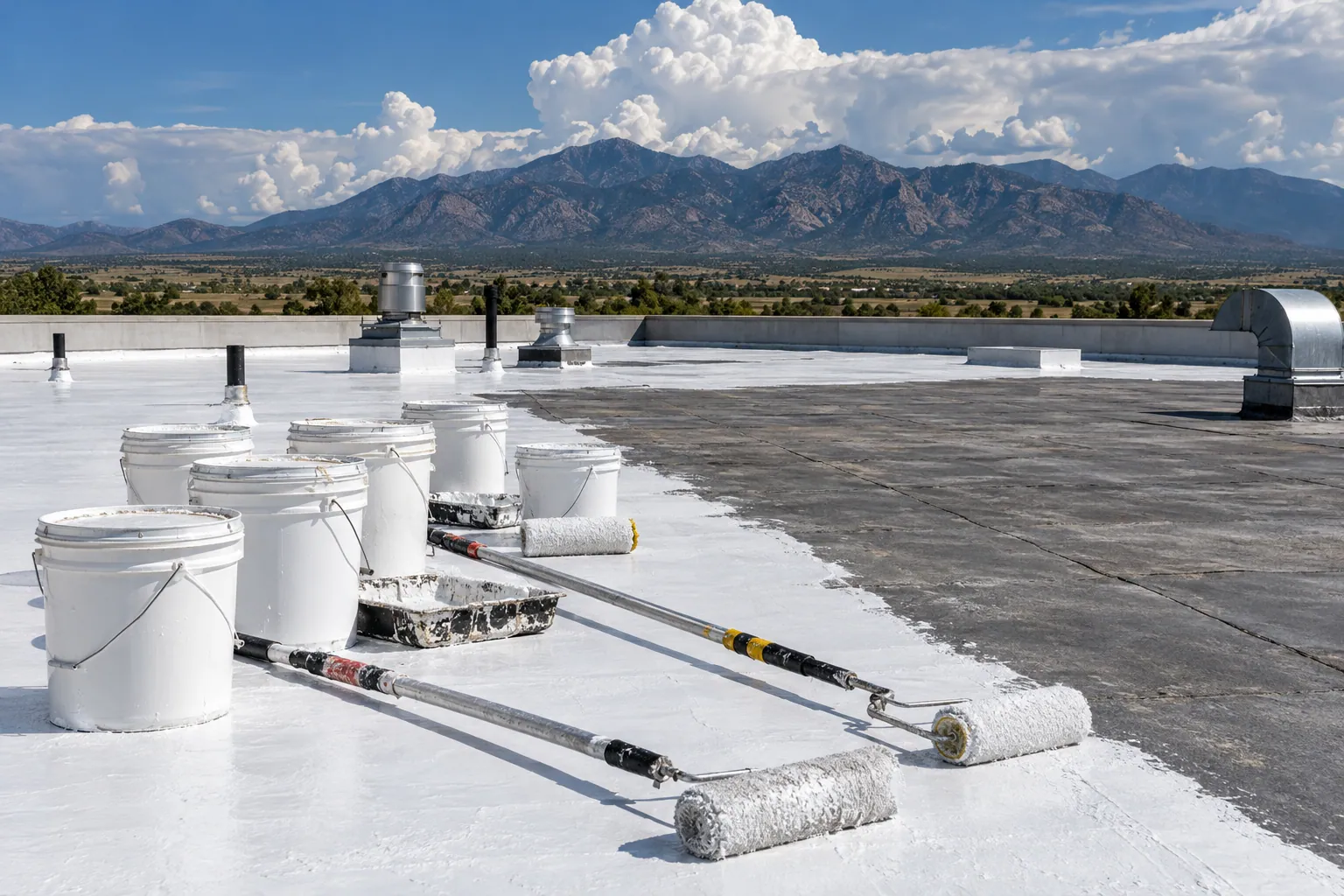
Acrylic coating buckets and rollers staged on a roof

Acrylic Roof Coating

Pitched metal and low-slope roofs that drain within hours, coated in late spring or fall when dry, warm hours line up.

Ready To Coat When

  • No ponding lasts past a day
  • Old asphalt is primed against bleed
  • A dry weather window is open
About acrylic roof coating
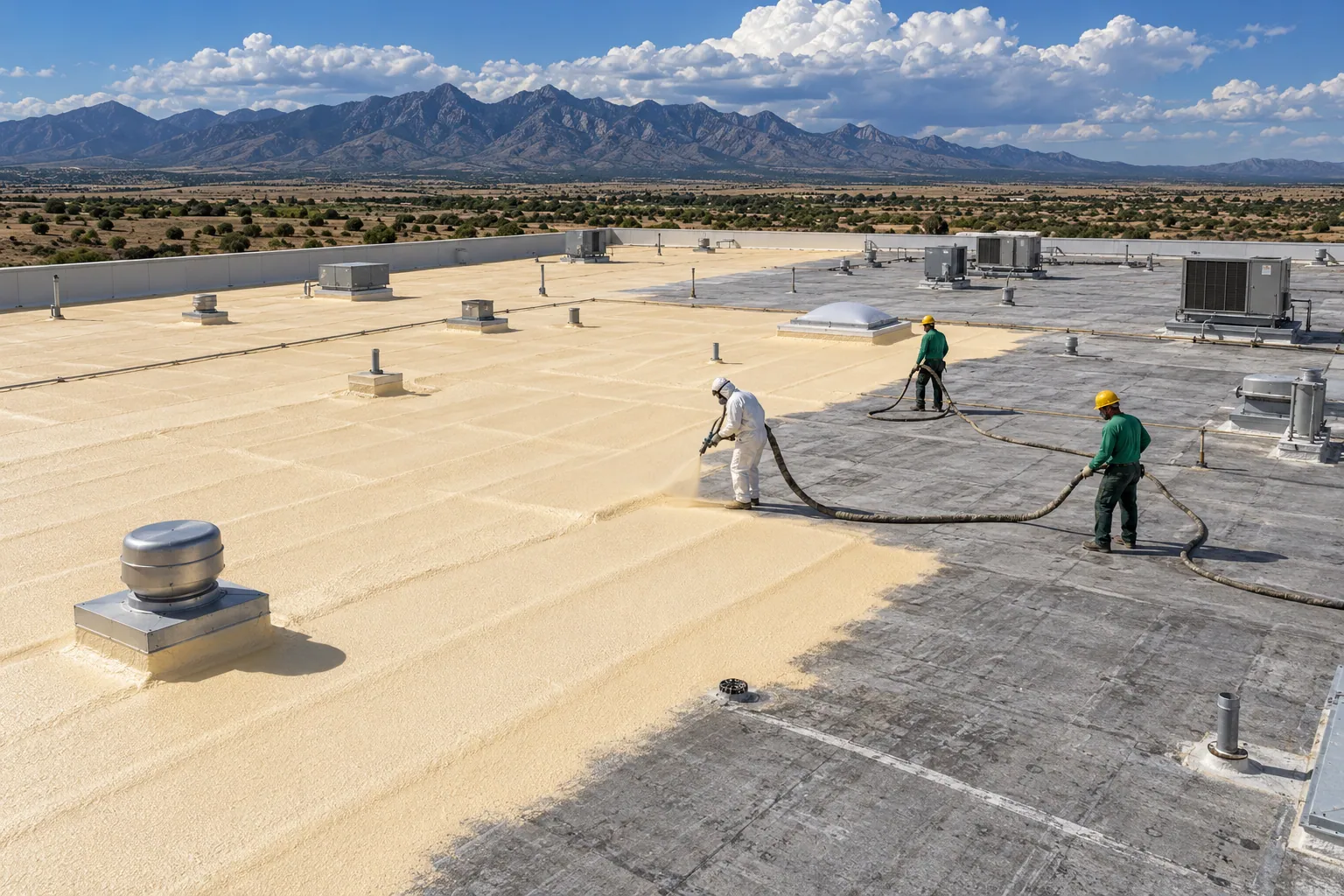
Fresh spray foam on a flat roof

Spray Foam Roofing

Dry flat or metal roofs that also need insulation, finished with a UV-resistant topcoat that gets recoated on schedule.

Ready To Coat When

  • The old roof tests dry throughout
  • Intakes and neighbors can be shielded
  • Topcoat recoats fit the budget
About spray foam roofing
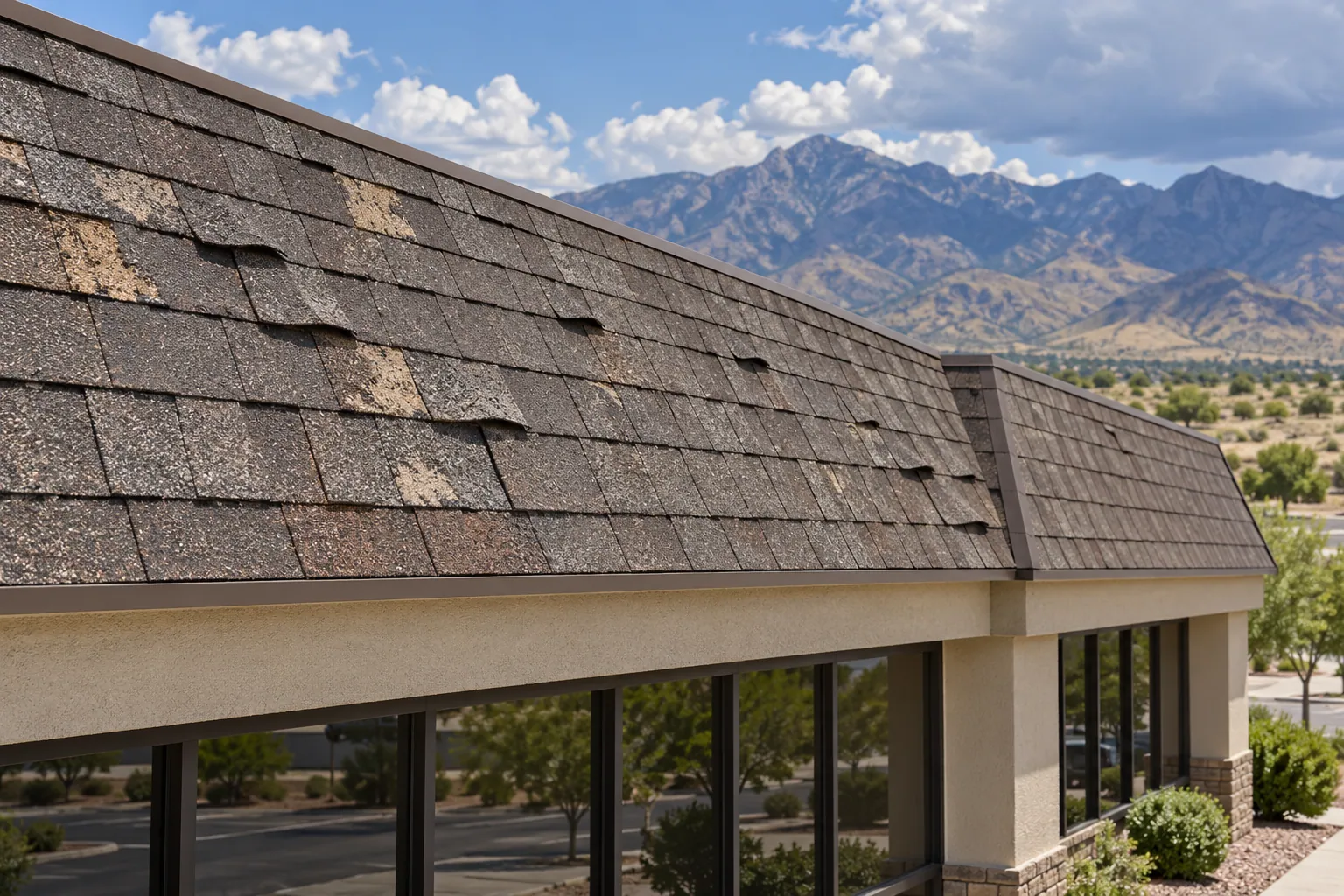
Worn shingles on a commercial mansard

Shingle Roof Coating

Commercial mansards and steep slopes where shingles still lie flat with most granules, using a coating listed for asphalt.

Ready To Coat When

  • Tabs show no curling
  • Granules still cover the slope
  • The decking feels firm
About shingle roof coating

Which System Fits Which Roof

A quick comparison of the five systems on the details owners ask about most.

SystemBest RoofPonding WaterCure NeedsRecoat With
Metal coatingSteel panel roofsSheds fast on pitchDry panels, primer curedThe same system
SiliconeFlat roofs with low spotsHolds up where puddles lingerTolerates cool, humid morningsSilicone only
AcrylicSloped or fast-draining roofsSoftens under standing waterWarm, dry hours before dewAcrylic or other topcoats
Spray foamDry roofs needing insulationTapered toward drainsDry surface, low windIts UV topcoat
Shingle coatingCommercial mansardsSteep slope sheds waterDry shingles, mild weatherA listed shingle coating

Not Sure What Is On Your Roof?

Call and describe what you see from the ladder or hatch, and we will tell you which system to look at first.

Call Us

Every Coating Job, Step By Step

The system changes, but the order of work stays the same on every roof we coat.

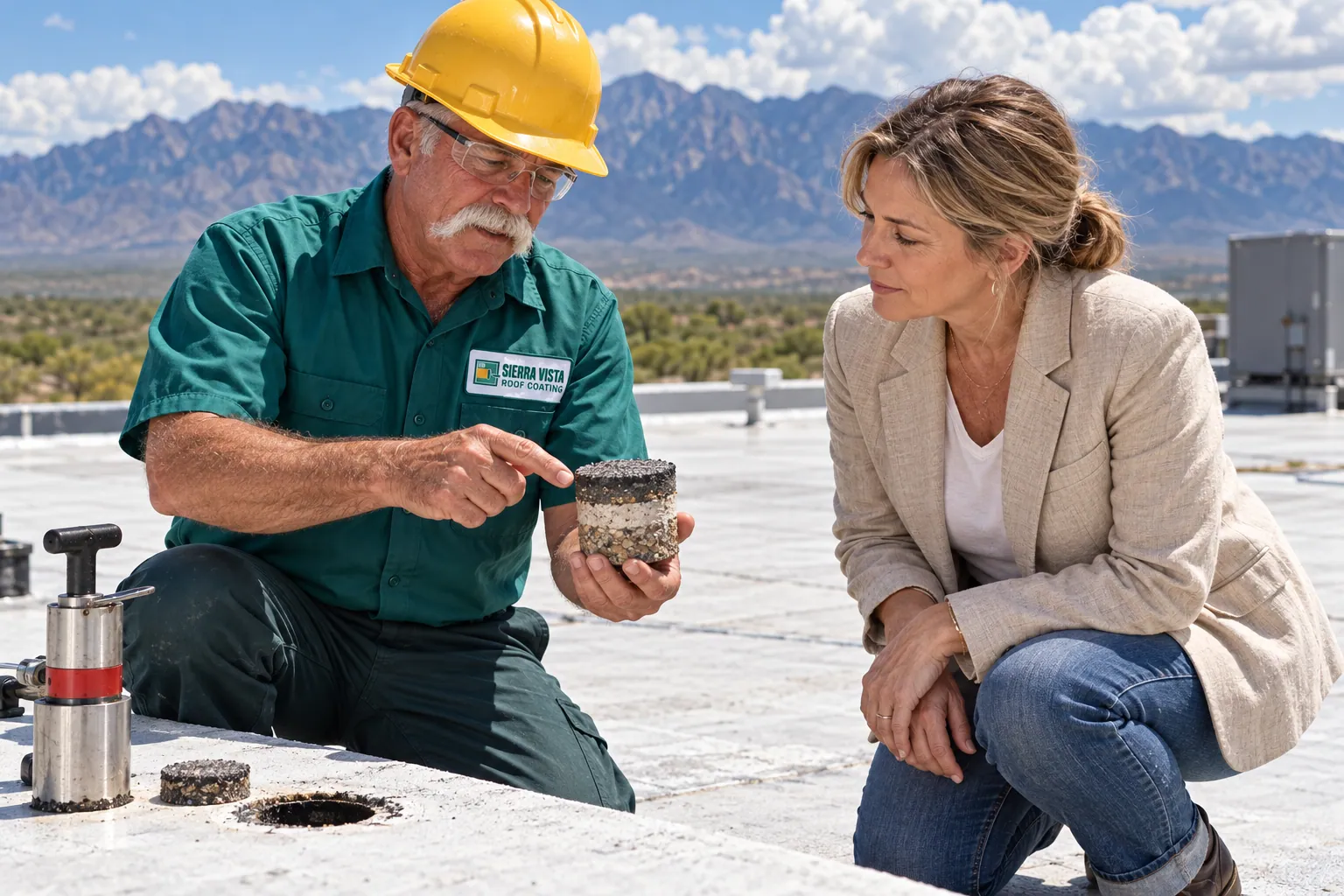
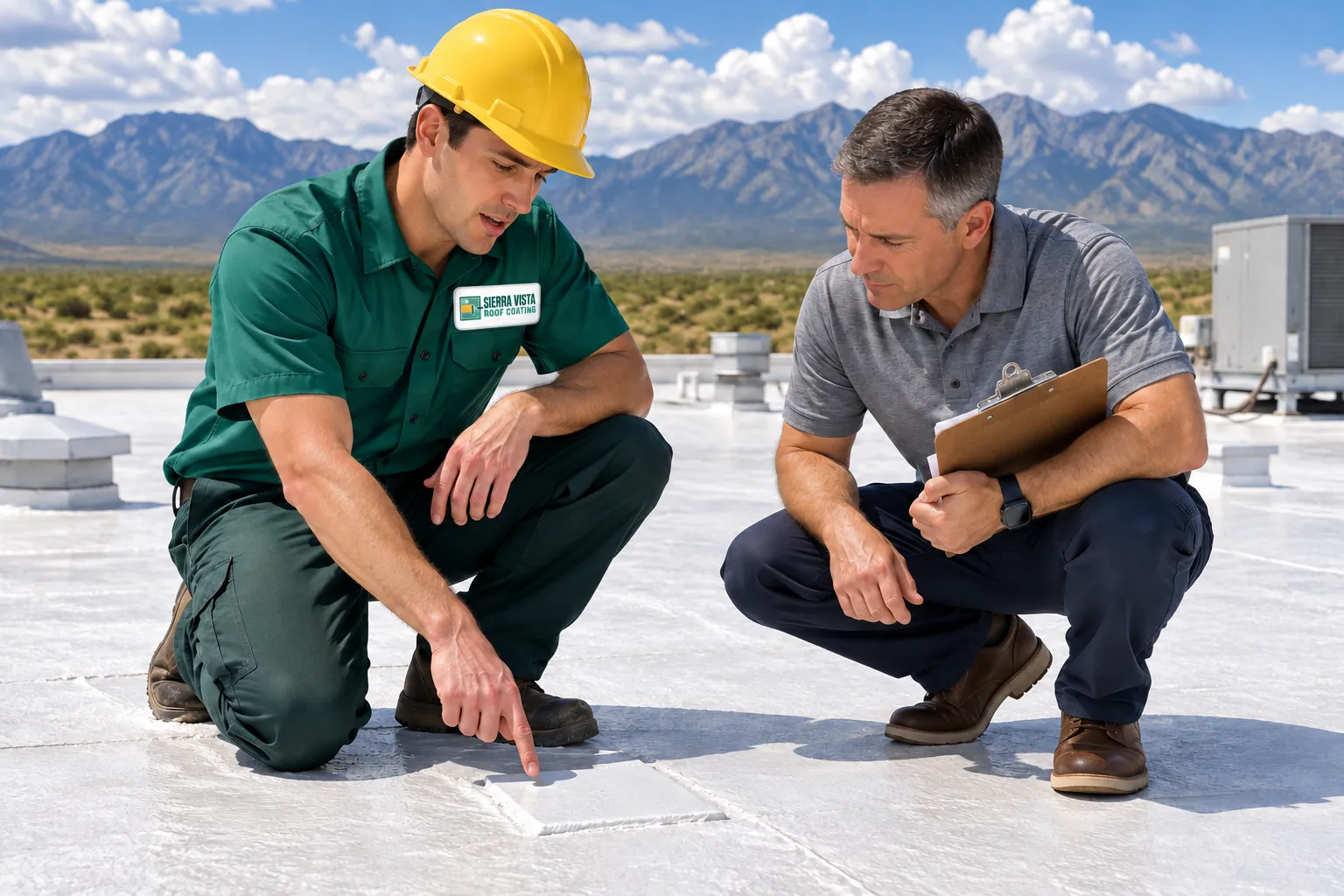
Roofer explaining a core sample to a building owner on a flat roofRoofer kneeling with a property owner, pointing at a seam on a coated roof
  1. Inspect Your Roof

    First comes a roof walk with photos, a moisture survey, and checks of seams, curbs, drains, and flashing. That tells us which system the roof can take, if any.

  2. Fix What Is Failing

    Wet insulation, blisters, rusted panels, loose screws, and open seams are repaired, because a coating covers the surface and seals in whatever sits under it.

  3. Clean And Prime

    Dust, chalk, and loose material come off with a power wash. After drying, primer goes on wherever the coating manufacturer calls for it, and an adhesion pull test confirms the bond.

  4. Coat To The Mil Spec

    Coverage rate, number of coats, and extra build at fasteners and laps all come from the manufacturer's specification. Thickness is gauged wet during work and confirmed dry after cure.

Questions About Roof Coating Services In Sierra Vista

Answers that apply across all five systems.

How Thick Should A Roof Coating Be?

Thickness should match the coating manufacturer's specification, measured in mils, where one mil is a thousandth of an inch. Crews check wet mils with a gauge during application and confirm dry film thickness after cure. Heavy single passes can sag or cure poorly, so the spec usually calls for more than one coat.

How Long Does A Commercial Roof Coating Last?

Service life follows the dry thickness applied and the manufacturer's rated term for that system, and a thicker build lasts longer under the high-desert sun. Plan a recoat when inspections show thinning, chalking, or substrate showing at fasteners and laps.

Which System Costs Least To Keep Up?

Upkeep depends more on roof condition and drainage than on the product. Acrylic keeps recoat choices open, silicone handles ponding but collects dust, and foam needs its topcoat renewed. Spring and fall walk-throughs keep every system cheaper to maintain.

Can Two Systems Go On One Building?

Yes, and it happens often. A metal warehouse with a flat office section can take acrylic on the pitched panels and silicone on the flat roof. Each area gets the system its slope and drainage call for.

Do You Repair Roofs Without Coating Them?

Repairs come before every coating, and some roofs only need repairs for now. When seams, flashing, or a few fasteners are the whole problem, we fix those and tell you when coating would make sense later.

What Roofs Are Past Coating?

Roofs with wet insulation across large sections, soft decking, rust through the panels, or curled and missing shingles are past coating. Those buildings need repair on a larger scale or a new roof, and we say so plainly.

Get A Free Estimate For Any Coating System

Start with a free ballpark estimate for your roof, or call and describe the building and its roof.

Call Us (623) 310-0185