Parapet Caps
Tall false-front parapets shed water onto the roof behind them, and cracked caps let it into the wall. Caps get sealed before the roof is coated.

Tombstone roof coating for parapet storefronts on Allen Street and other visible roofs. We bring color samples and roof photos to the city before choosing a coating.
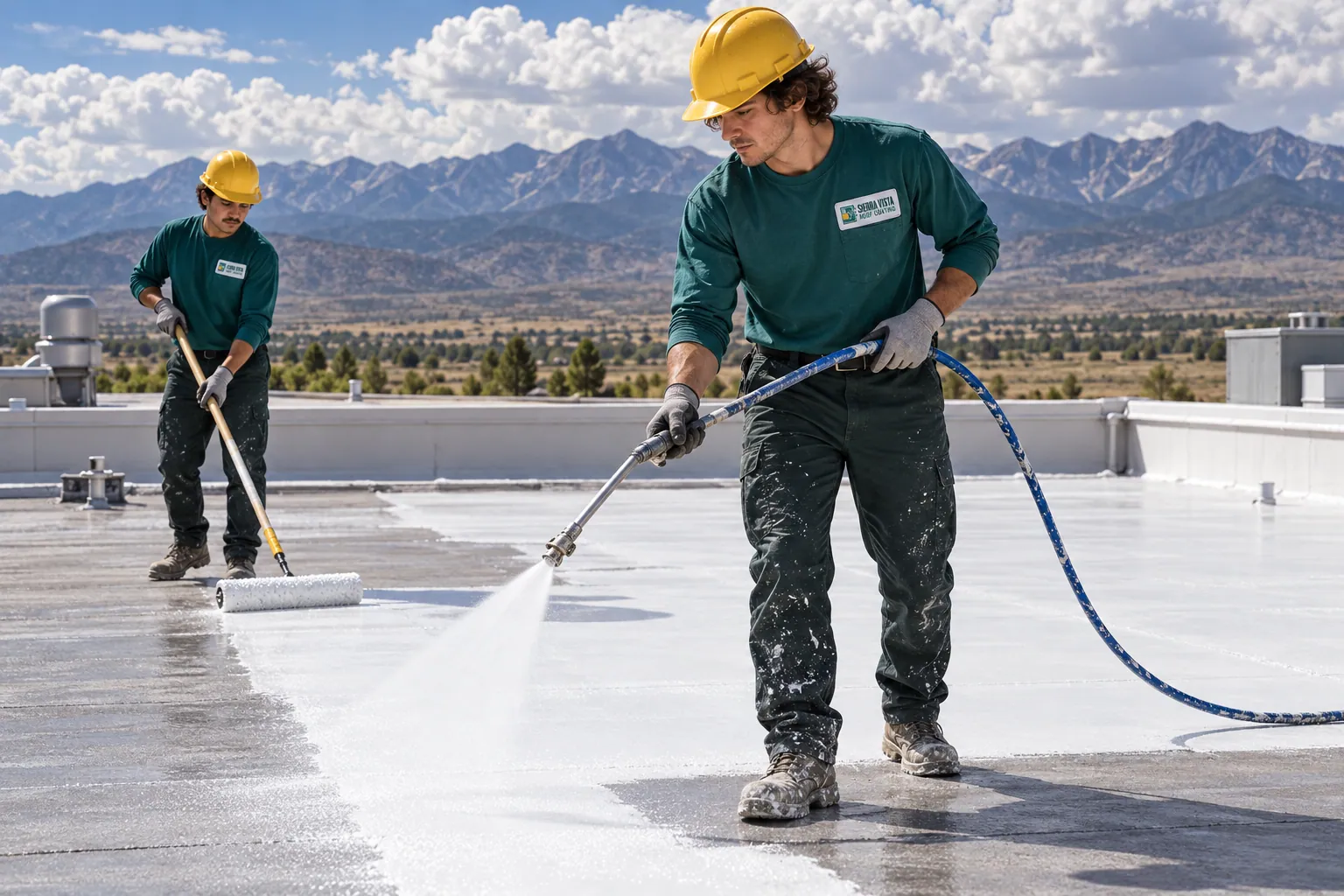
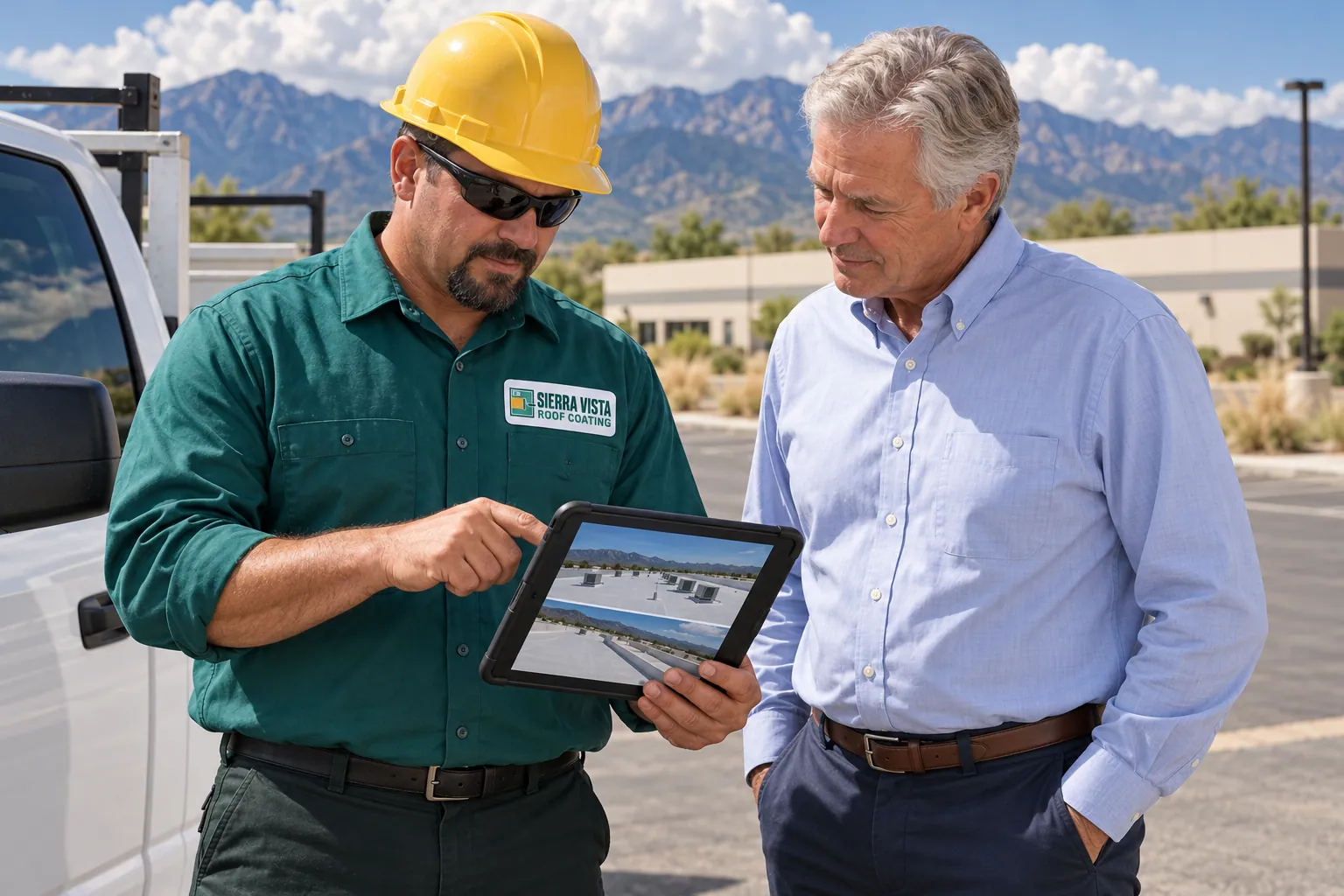
Tombstone is a National Historic Landmark, and its Historic District Commission reviews exterior changes in the district. On a roof, color and material visible from the street matter most.
A flat roof hidden behind a storefront parapet draws less attention than a pitched roof facing Allen Street, though the city decides. We pick coating color and sheen with that review in mind.
Older storefronts here combine flat roofs, tall parapets, and visible slopes. These six details shape the coating plan.
Tall false-front parapets shed water onto the roof behind them, and cracked caps let it into the wall. Caps get sealed before the roof is coated.
Pitched roofs that face the street show their color to everyone walking Allen Street. Those surfaces need a color the city has seen first.
Flat roofs behind parapets drain through openings in the wall. Debris blocks them, and water backs up against the parapet until the scupper is cleared.
Older buildings carry decades of repairs, often in mixed materials. Adhesion tests show which layers stay and which have to come off first.
Stains along an inside wall below a parapet usually trace to the cap or the wall flashing. Those leaks get fixed at the source before coating.
A bright white coating on a visible pitched roof may draw questions in the district. Lighter tints and lower-sheen finishes give options to discuss.
On a Tombstone storefront, coating protects the roof without changing how the building reads from the street. These gains apply once review is settled.
A coating on a flat roof hidden behind a parapet seals the roof while the storefront people see stays the same.
Caps, back walls, and the joint where roof meets wall are sealed in the same job, closing the water paths into older walls.
Choosing color and sheen before work starts avoids having to recoat a visible roof that the city asks to change.
Reflective coatings on flat roofs behind parapets keep summer heat off older buildings that often have little roof insulation.
Two systems fit most Tombstone storefront roofs, chosen by drainage and visibility.
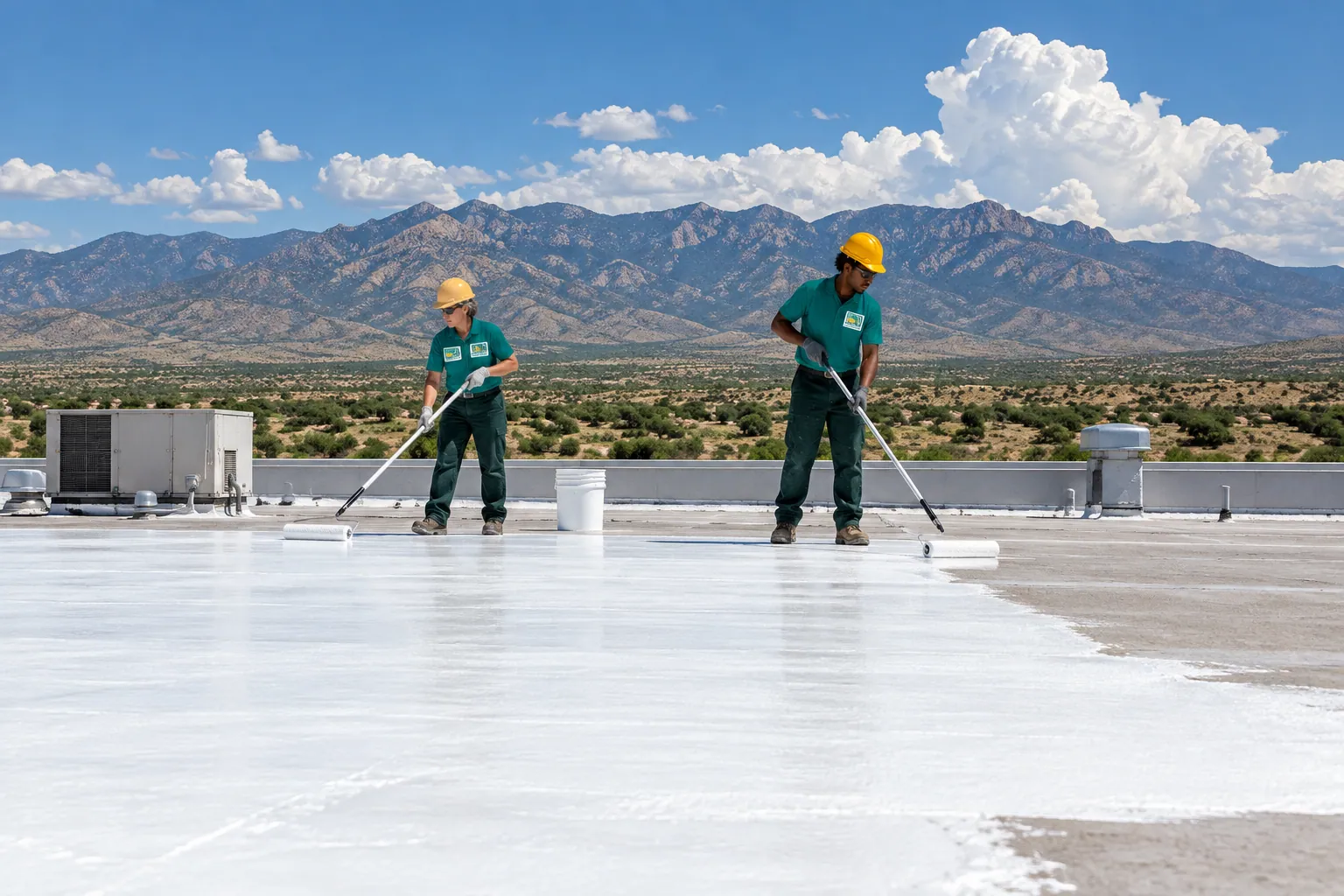
Acrylic comes in more tints and suits visible slopes and well-drained flat roofs, where a color other than bright white helps in review.
Acrylic Roof Coating details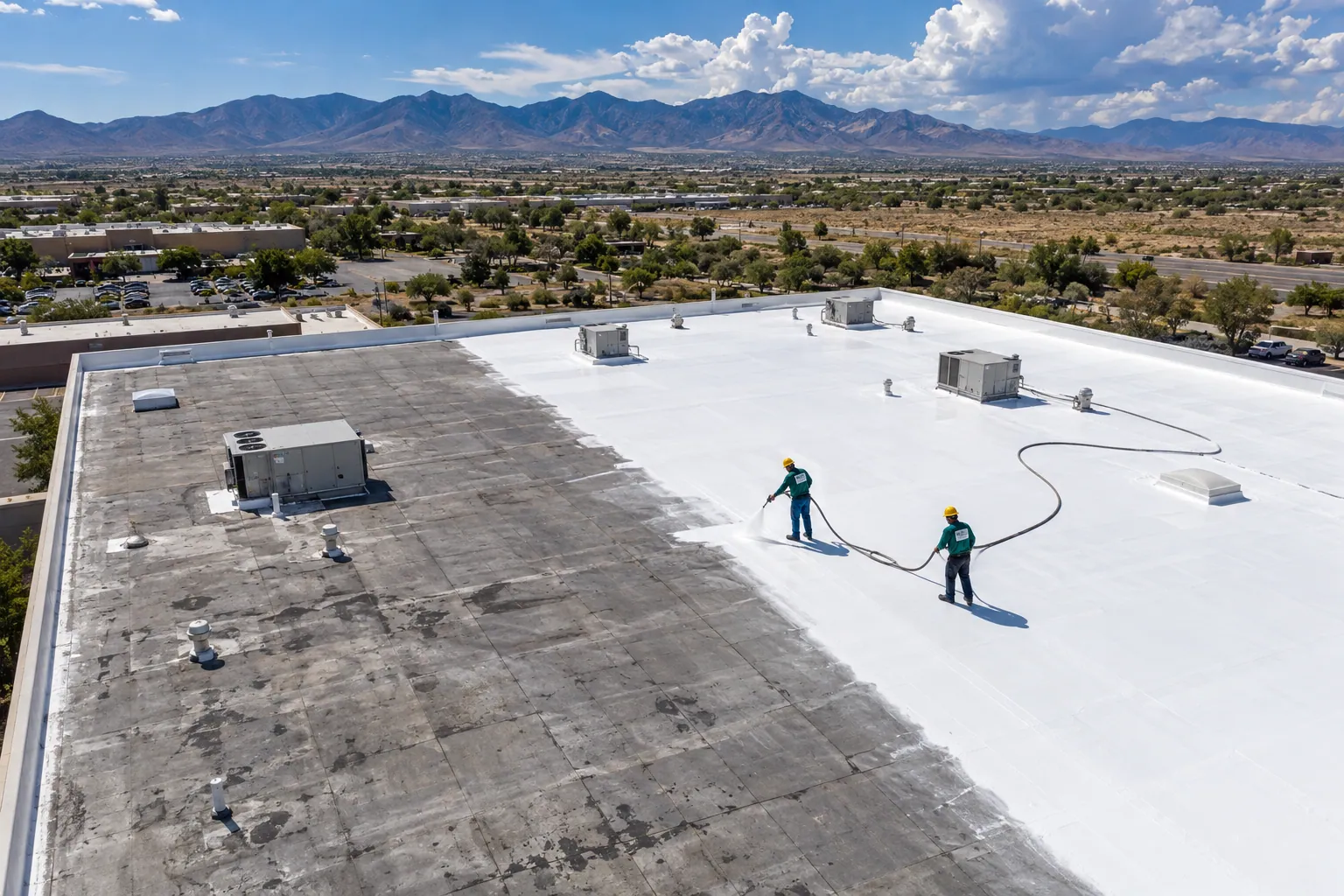
Flat roofs hidden behind parapets that hold water near scuppers take silicone, since standing water stays out of sight but on the roof.
Silicone Roof Coating detailsSchedule a free inspection and we will photograph the roof from the street and bring color samples for the city.
Schedule Free InspectionCity review comes before materials are ordered. After that, the steps follow the usual order.
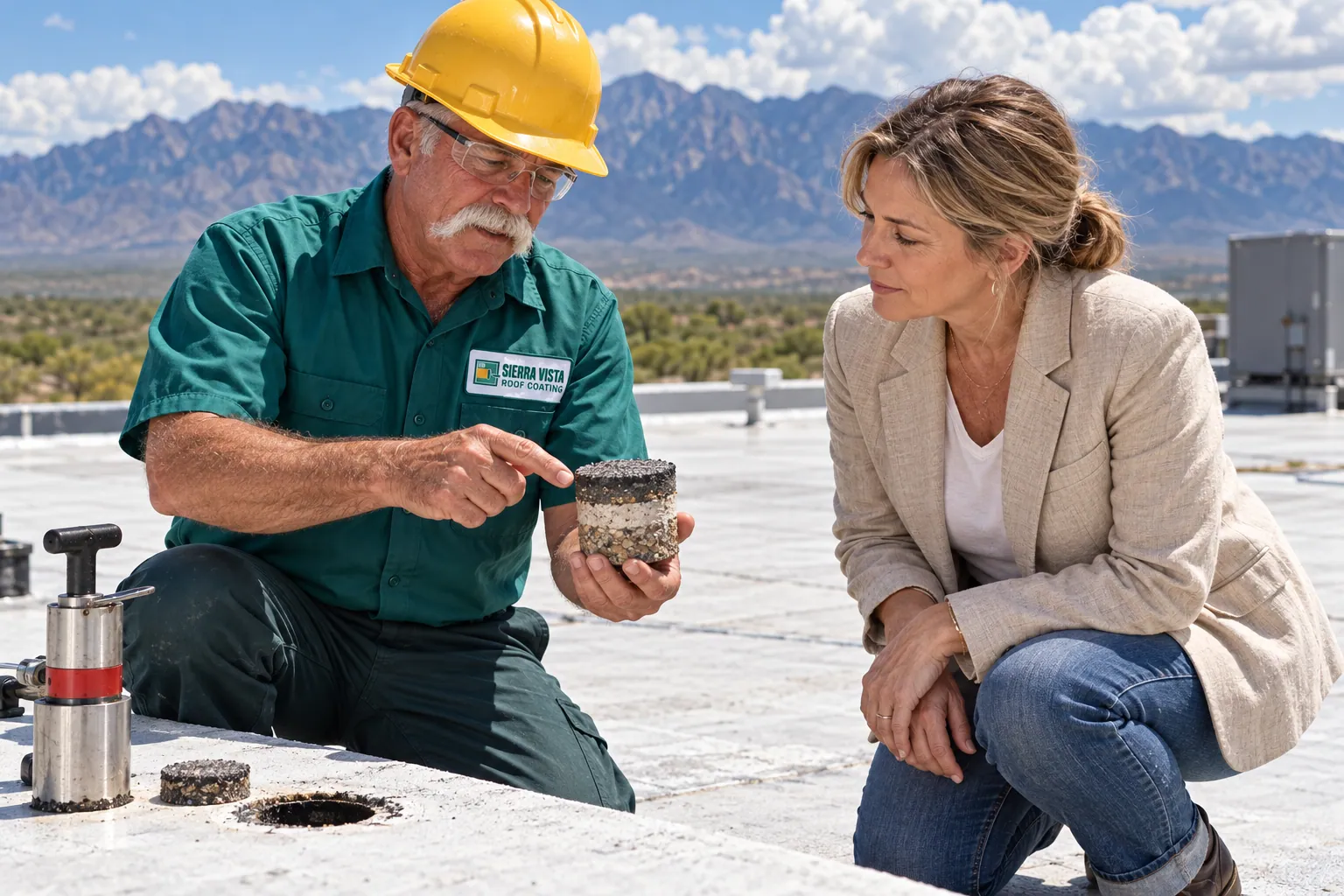
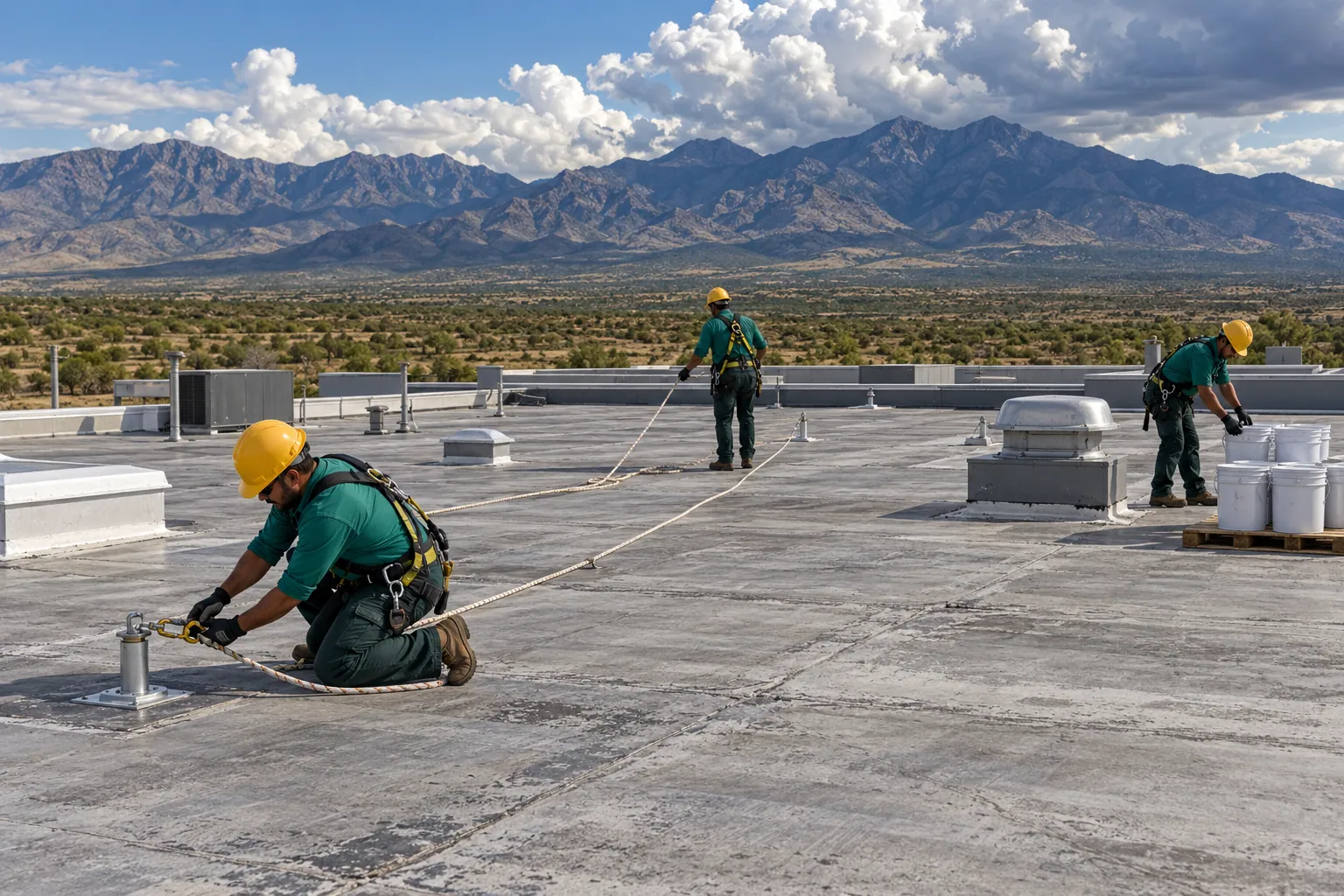
We walk the roof, test the insulation, check caps and scuppers, and photograph the roof from the street. Those photos show which surfaces anyone can see.
Color samples and roof photos go to Tombstone staff before a coating is chosen. Work on visible surfaces waits for that answer.
Parapet caps are sealed, scuppers cleared, loose patches removed, and the roof washed and dried. Primer goes on where the coating maker calls for it.
The approved color goes on to the specified thickness, with extra build where the roof meets the parapet. Photos at each stage go into your records.
Tombstone sits northeast of Sierra Vista, reached by State Route 90 and State Route 80.
Sierra Vista lies southwest by SR 90, where we coat metal, flat, foam, and shingle roofs.
Whetstone is west along SR 82, with metal shops near the SR 90 junction.
Benson is north on SR 80, home to large warehouses near Interstate 10.
Answers for owners of storefronts and visible roofs in Tombstone.
Yes, with city review first if people can see the roof from the street. The Historic District Commission reviews exterior changes. A bright white coating on a pitched roof facing Allen Street may draw questions, while a flat roof behind a parapet draws less. Bring color samples and roof photos to city staff first.
The City of Tombstone handles building permits for properties in the city, with historic district review for exterior changes in the district. We help assemble the roof photos and coating details the city asks to see.
White reflects the most sun, and many coatings come in light grays, tans, and other tints. Acrylic usually offers the widest range. Tinted coatings reflect less heat than white, which is worth weighing on a roof the city sees.
We seal parapet caps, back walls, and the flashing where the roof meets the wall, since those details let water into older walls. Structural masonry work on the parapet itself is a job for a mason.
Yes. Equipment is staged off the busy sidewalks where possible, ladders and hoses are kept clear of entrances, and the noisiest steps are planned for quieter hours. Tell us when your business sees the most foot traffic.
Each layer gets an adhesion test. Patches that stay firmly attached can be coated over after cleaning. Layers that lift or crack come off, and the membrane under them is repaired before coating.
Tinted coatings sometimes carry a higher material cost and come in fewer products than standard white. The difference is usually small next to prep and labor, and the inspection estimate lists the color option separately.
We adjust before work starts. Color, sheen, or the extent of coating on a visible slope can change after review, and materials get ordered only after the city's answer, so a change costs time rather than a second coat.
Schedule a free inspection with street photos and color samples, or call to talk through the review.
Want A Call About Your Roof?
Leave a name and number and we will call you back about your roof.
Or call now: (623) 310-0185