Moisture In The Old Roof
Wet insulation under foam stays trapped for good. Core cuts and infrared scans confirm the old roof is dry, and wet sections come out first.

Spray foam roofing in Sierra Vista adds insulation over an uneven deck and seals it under a UV-resistant coating. We check that the old roof is dry first.
Foam bonds only to a dry, clean surface, and it needs a coating on top. These lists show whether a roof is ready.
Good Fit
Repair First
Spray foam sticks to what it lands on. These six conditions decide whether it goes on and how it stays protected.
Wet insulation under foam stays trapped for good. Core cuts and infrared scans confirm the old roof is dry, and wet sections come out first.
Exposed polyurethane foam breaks down in sunlight. At this altitude, bare foam darkens and turns powdery fast, so every foam roof gets a UV-resistant coating over it.
Monsoon hail can dent the foam surface and crack the coating. Dents get cleaned and sealed, and walkways and high-traffic areas can carry embedded granules.
Overspray droplets drift on the wind and stick to whatever they hit. Rooftop unit intakes, cars, and walls get covered, and spraying stops when wind picks up.
Edges get extra thickness, and the surface tapers at drains so water still reaches them. Scuppers and drain bowls get sealed into the new surface.
The topcoat wears thinner every year under sun. A recoat belongs on the calendar once thickness drops, well before bare foam shows through.
Foam work around Sierra Vista falls into four kinds of jobs. The condition of the old roof picks the one that fits.
| Option | Where It Fits | What Comes First | Later Upkeep |
|---|---|---|---|
| New Foam Over The Existing Roof | Dry built-up, metal, or single-ply roofs | Moisture survey, clean, cover intakes | Recoat the topcoat on schedule |
| Foam After Removing Wet Areas | Roofs with isolated wet sections | Cut out and replace wet insulation | Watch repaired areas after storms |
| Foam Roof Recoat | Existing foam with a thinning topcoat | Clean, repair dents and voids | Next recoat before foam shows |
| Foam Over Metal Panels | Metal buildings needing insulation | Clean, prime, tighten loose screws | Inspect coating at panel edges |
Foam adds insulation and waterproofing in one system. These gains hold as long as the topcoat is kept up.
Spray foam adds insulation above the deck without opening the building, which helps roofs over offices and shops that run cooling most of the summer.
Foam builds up where the deck sags or the old roof dips, so water moves toward the drains instead of sitting in rings across the field.
Sprayed foam forms one surface across the old seams, curbs, and penetrations, which removes the joints where most flat roofs leak.
When the old roof tests dry, foam goes right over it, keeping tear-off debris off the job and the interior closed during the work.
Call and tell us when the foam was last coated, where hail hit, and whether bare foam shows anywhere on the roof.
Call UsFoam goes on fast, so most of the work happens before and after the spray rig runs. Four steps, in order.
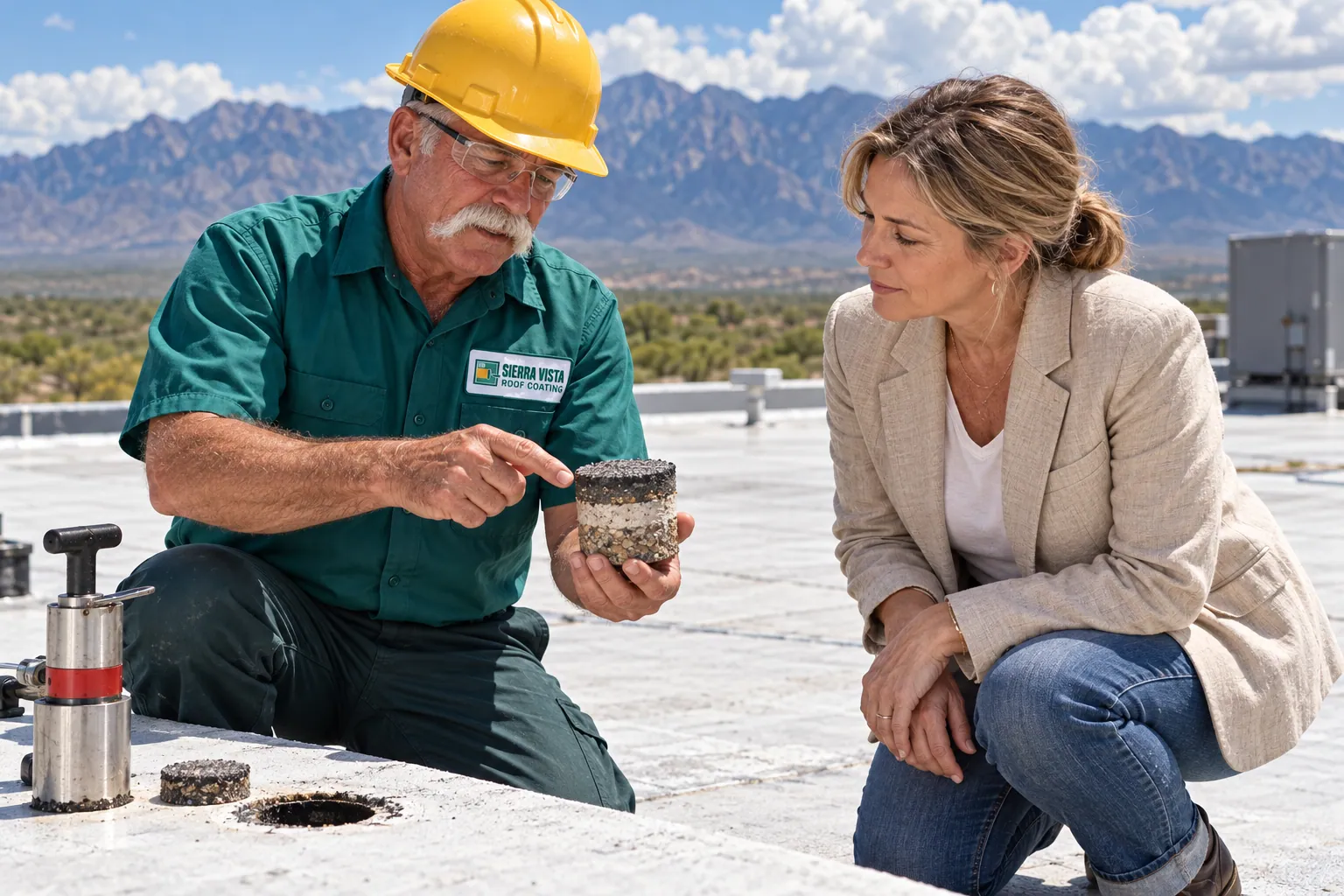
We test the existing roof for moisture, check the deck, and measure how water drains. On foam roofs already in place, we probe coating thickness and look for hail dents and bare spots.
Wet sections are removed and replaced, the surface is cleaned and dried, and rooftop unit intakes, walls, and nearby cars are covered against overspray before the rig starts.
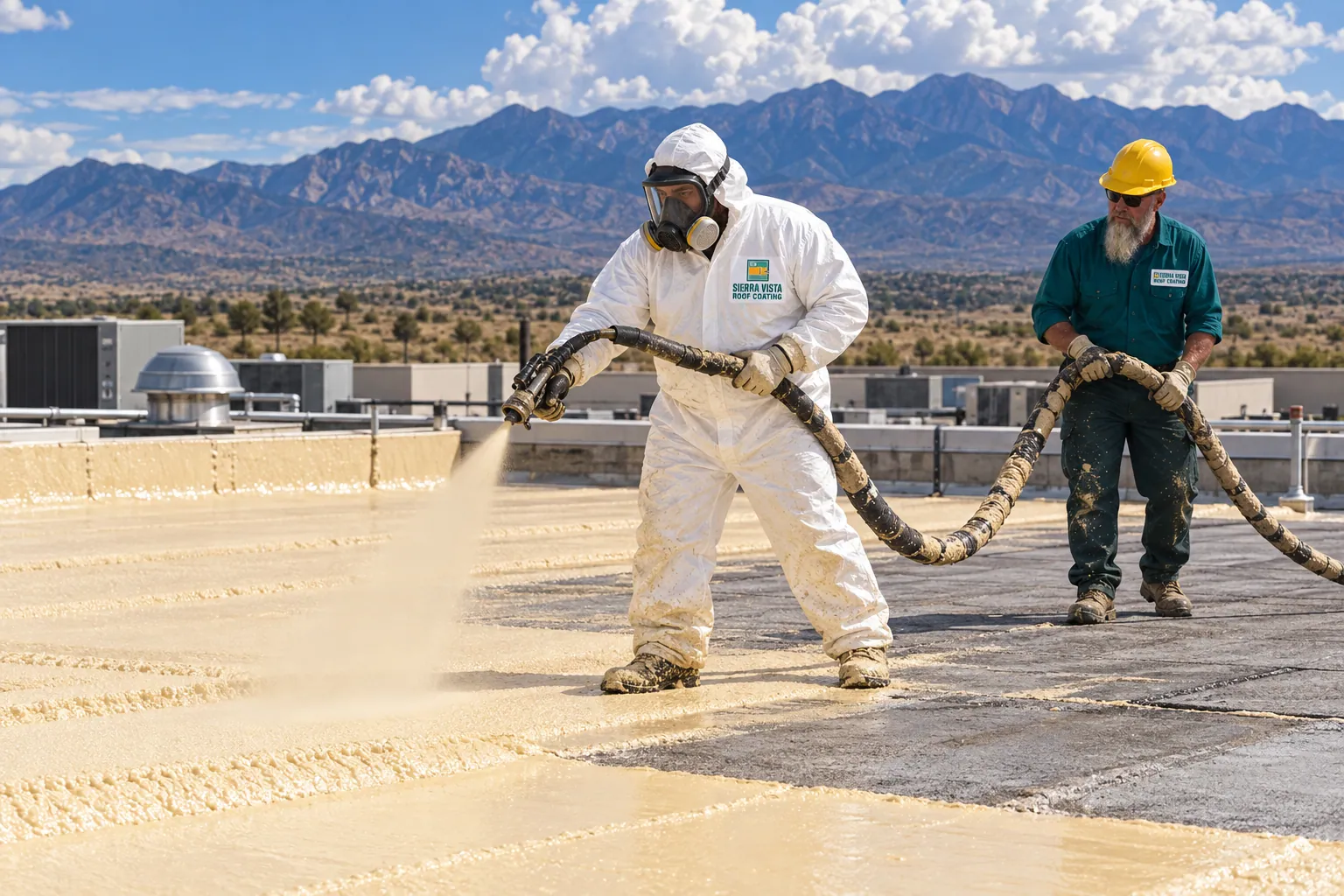
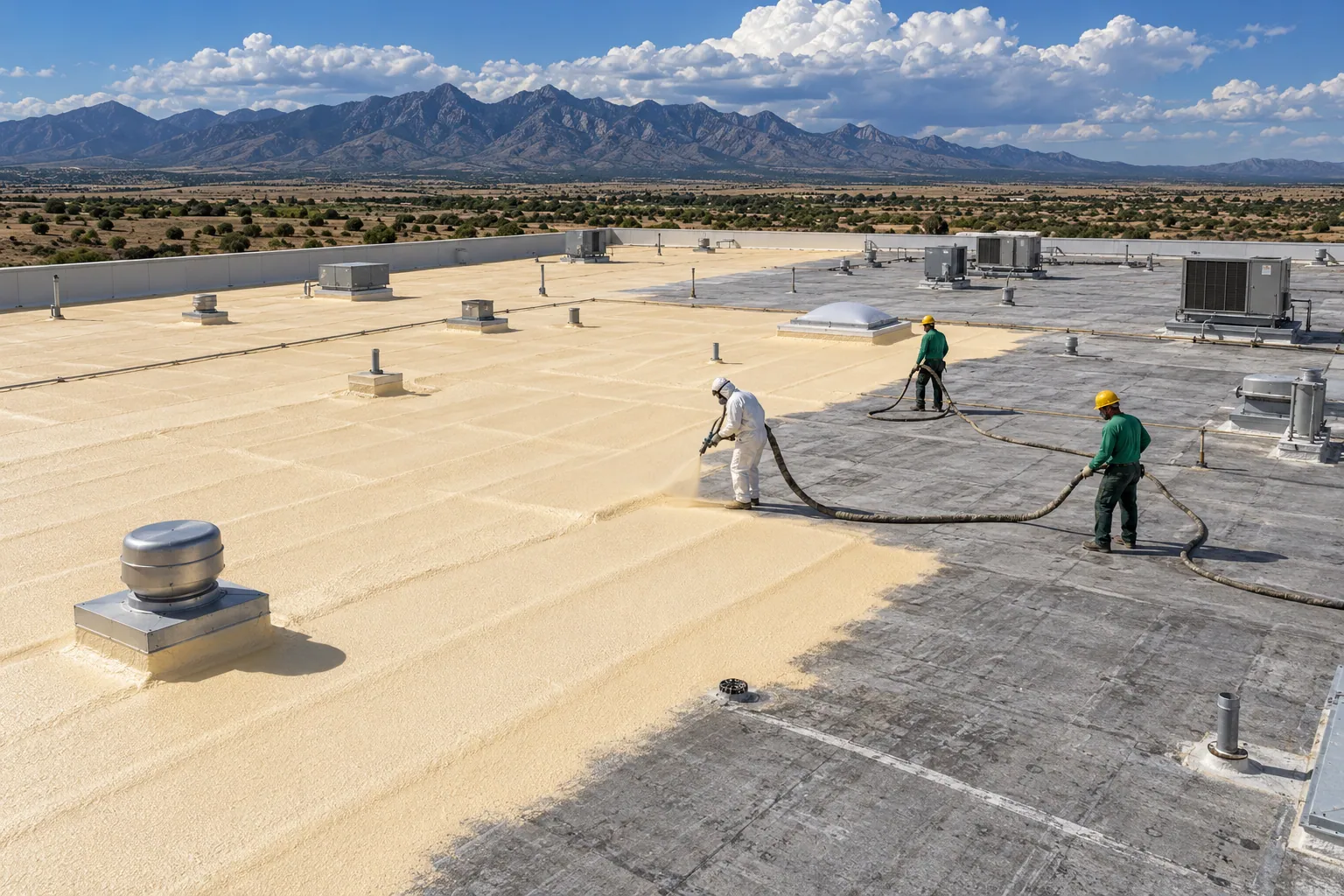
Foam goes on in passes to the planned thickness, built up at edges and tapered toward drains. Spraying pauses when wind speed rises, since drift carries foam where it should not land.
A UV-resistant coating goes over every foot of foam, at the manufacturer's mil spec. Granules can be embedded on walkways and around equipment where foot traffic and hail add wear.
Two topcoats used over spray foam in Sierra Vista.
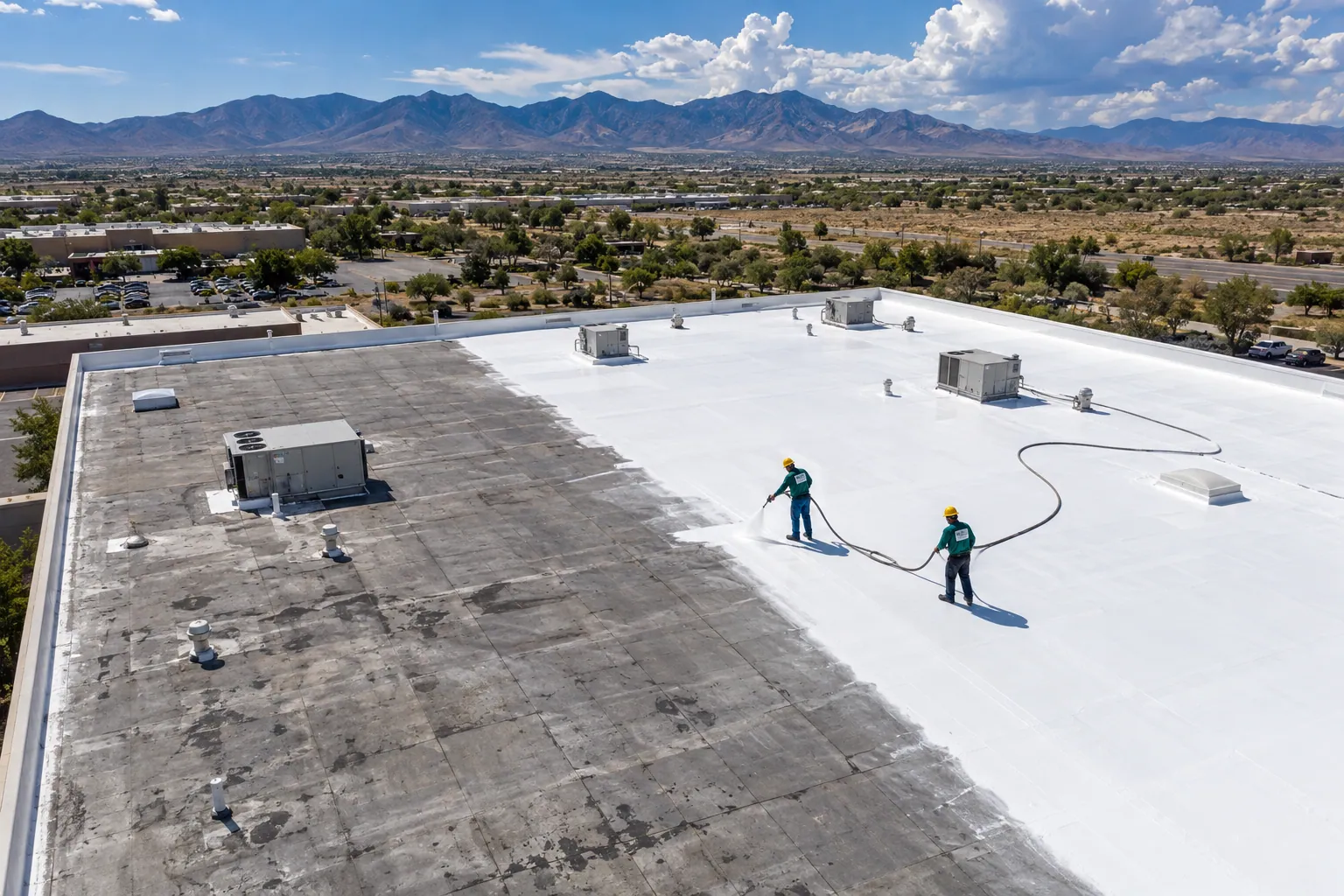
Silicone is the common topcoat for foam on flat roofs where water lingers, since it holds up under ponding.
Silicone roof coating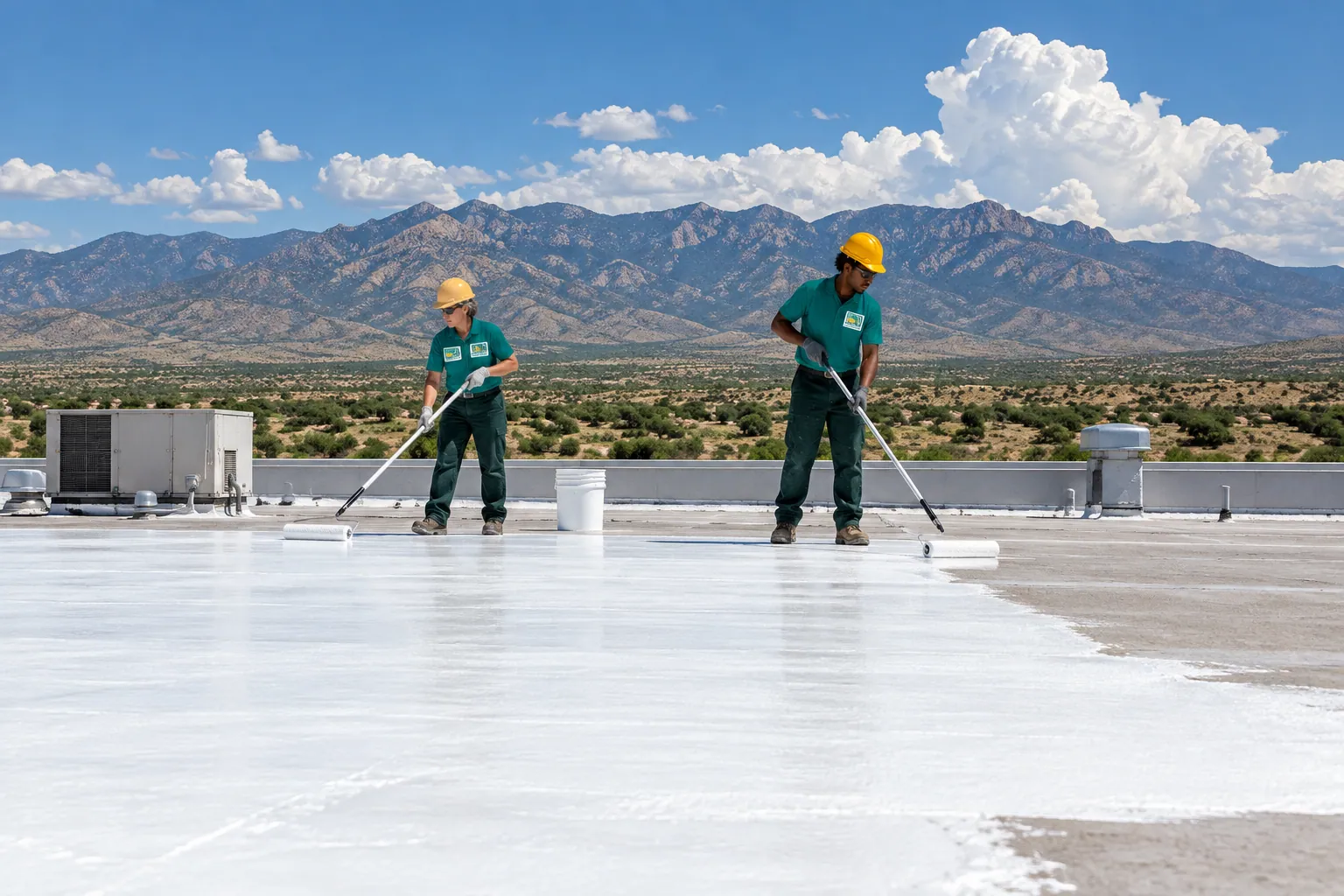
Acrylic topcoats foam on roofs that drain well and keeps recoat choices open, timed around monsoon storms.
Acrylic roof coatingAnswers about foam roofs and their coatings in Sierra Vista.
Exposed polyurethane foam breaks down in sunlight, so every spray foam roof needs a UV-resistant coating on top. At this altitude, bare foam darkens and turns powdery fast. The coating seals the foam, and keeping it thick enough is what keeps the foam working.
Monsoon hail can dent the foam surface and crack the coating over it. Small dents get cleaned and sealed during maintenance. Embedded granules on walkways and high-traffic areas help the surface take hits and foot traffic.
Plan a recoat once the coating thickness wears down, well before exposed foam shows. Spring and fall walk-throughs check for thin spots, chalking, and dents. Recoating then costs far less than repairing foam that sat bare under the sun.
Yes, foam bonds to clean, dry metal panels after loose screws are tightened and rust is primed. It adds insulation, covers the screws and laps, and leaves a smooth surface for the topcoat. Edges and gutters need careful detailing.
Foam and some coatings give off odor while they cure, so rooftop unit intakes are covered and work is planned around occupied spaces. We talk through air intakes, doors, and work hours during the inspection.
Only the wet parts. When core cuts and scans show dry insulation, foam goes right over the existing roof. Wet insulation comes out first, because foam sprayed over moisture traps it, and widespread wet areas point to replacement instead.
Start with a free ballpark estimate for a foam roof or a recoat, or call to talk about the roof you have.
Want A Call About Your Roof?
Leave a name and number and we will call you back about your roof.
Or call now: (623) 310-0185