Loose Screws On Older Buildings
The oldest building on the parcel usually has the most backed-out screws and cracked washers. Those get tightened, upsized, and sealed first.

Hereford roof coating for steel shops and storage buildings spread across open acreage. We inspect every roof on the property, then coat them one building at a time.
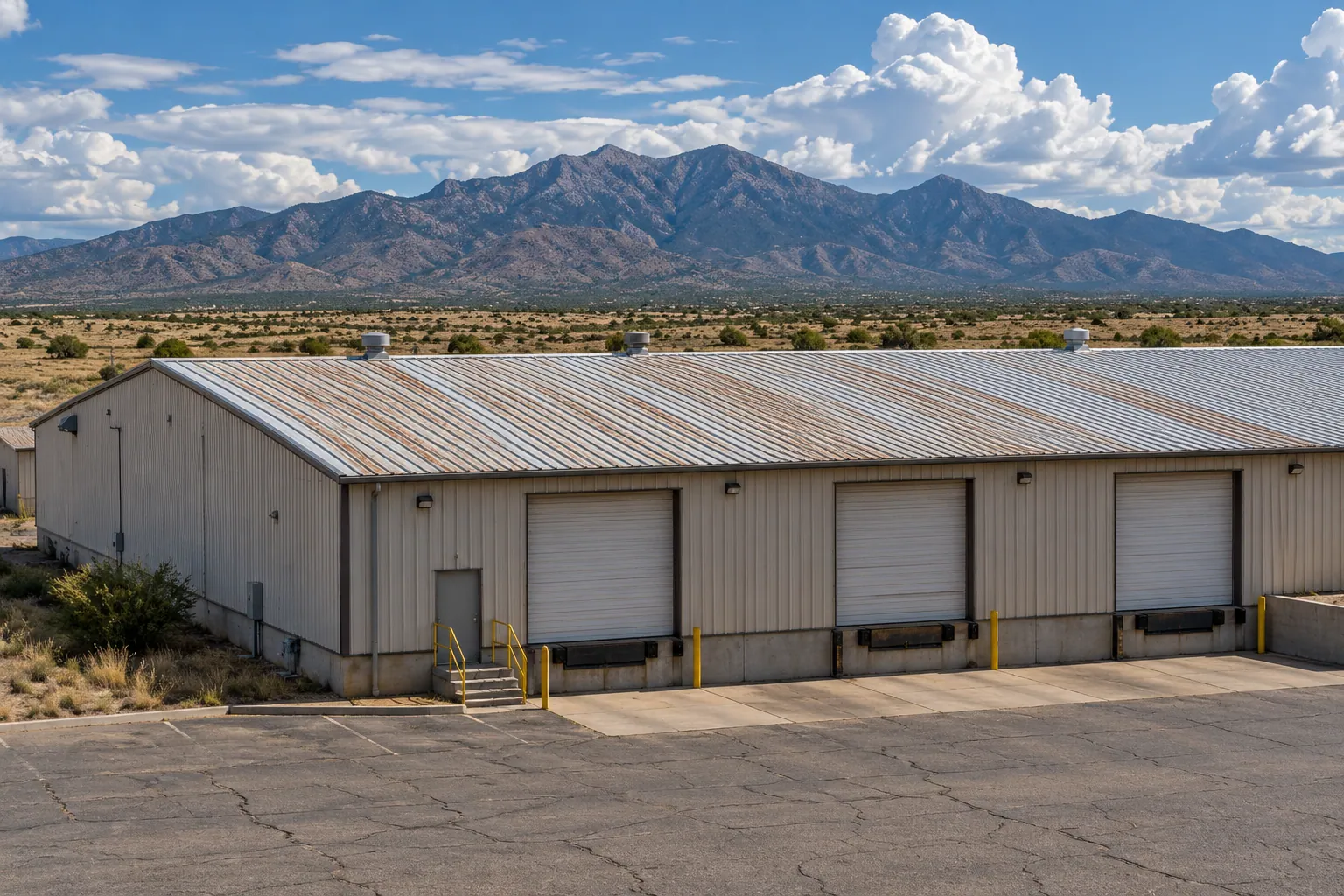
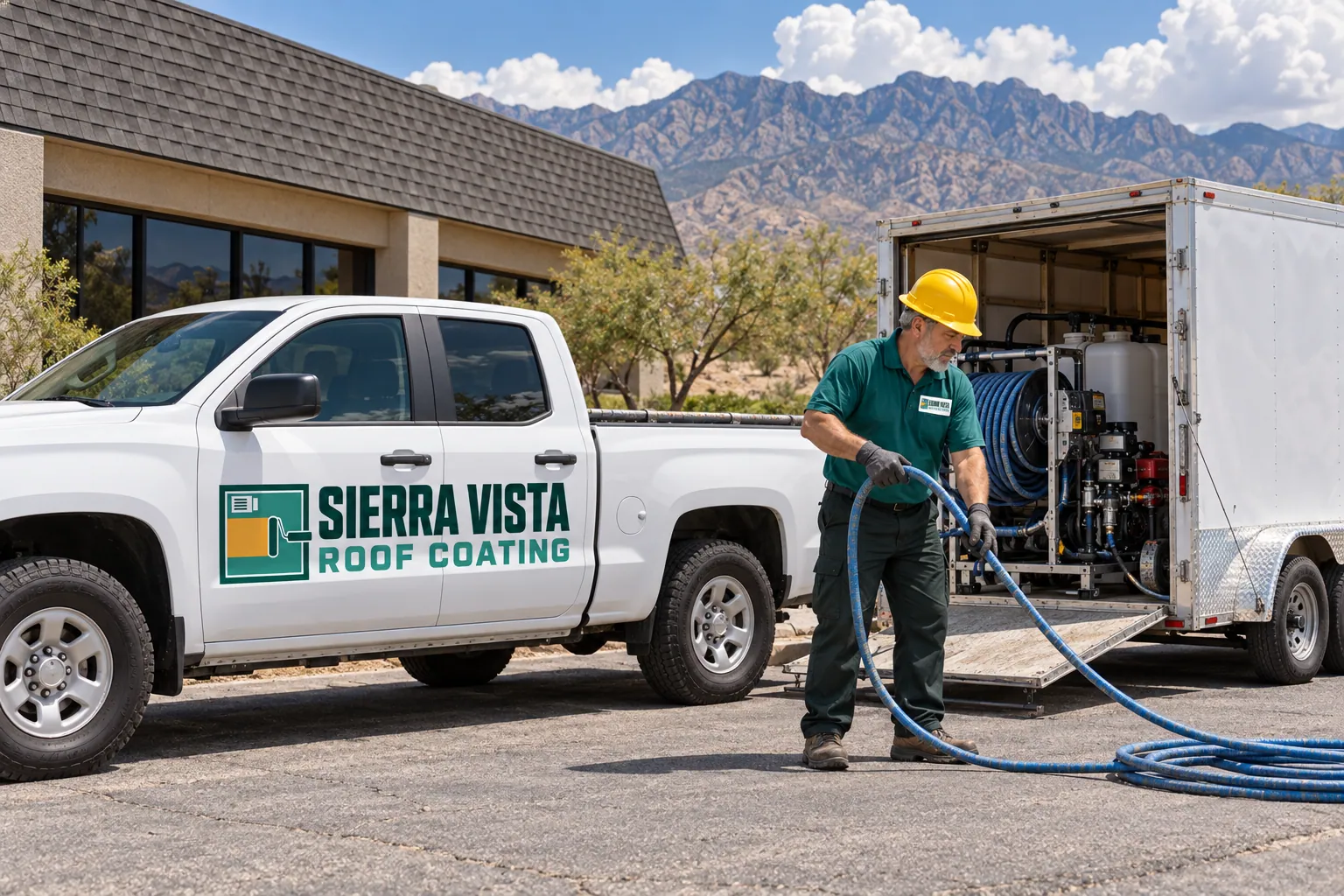
Properties around Hereford often carry a main steel shop plus storage buildings and equipment covers spread across the acreage. Each roof has aged at its own pace.
One inspection walk covers every roof on the parcel, and each building gets its own condition grade. Coating then goes building by building, starting with the roof that leaks over the most valuable space.
Detached steel buildings on open ground share a few problems. These six come up across a Hereford property.
The oldest building on the parcel usually has the most backed-out screws and cracked washers. Those get tightened, upsized, and sealed first.
Eaves and gutters on shops with no downspouts hold water and rust first. Holed sections are replaced before any coating.
Unpaved ground turns soft after monsoon rain, and lifts need firm footing. Lift paths and pads are planned during the inspection.
Shops carry roof vents, exhaust fans, and evaporative coolers on curbs. Curb flashing and drip spots get resealed so water stays out of the steel.
Open acreage leaves eaves and rakes exposed to gusts, and trim works loose. Edge trim gets refastened before the field coat.
Some shops already carry spray foam with a worn topcoat. Thin spots and hail dents get repaired, then the foam is recoated.
Coating several buildings in one plan keeps every roof on the same schedule. These gains depend on dry insulation in each building.
One inspection grades each building, so recoats and repairs follow a single schedule instead of separate calls for each shop.
Screws, laps, and curbs on every roof get the same detail work, closing the usual metal leak points property-wide.
White topcoats reflect sun off the steel, keeping heat down in shops and storage buildings that run without much insulation.
Lifts and the spray rig are set up once and moved between buildings, which keeps setup time down on a spread-out property.
Two systems cover most steel shops around Hereford.
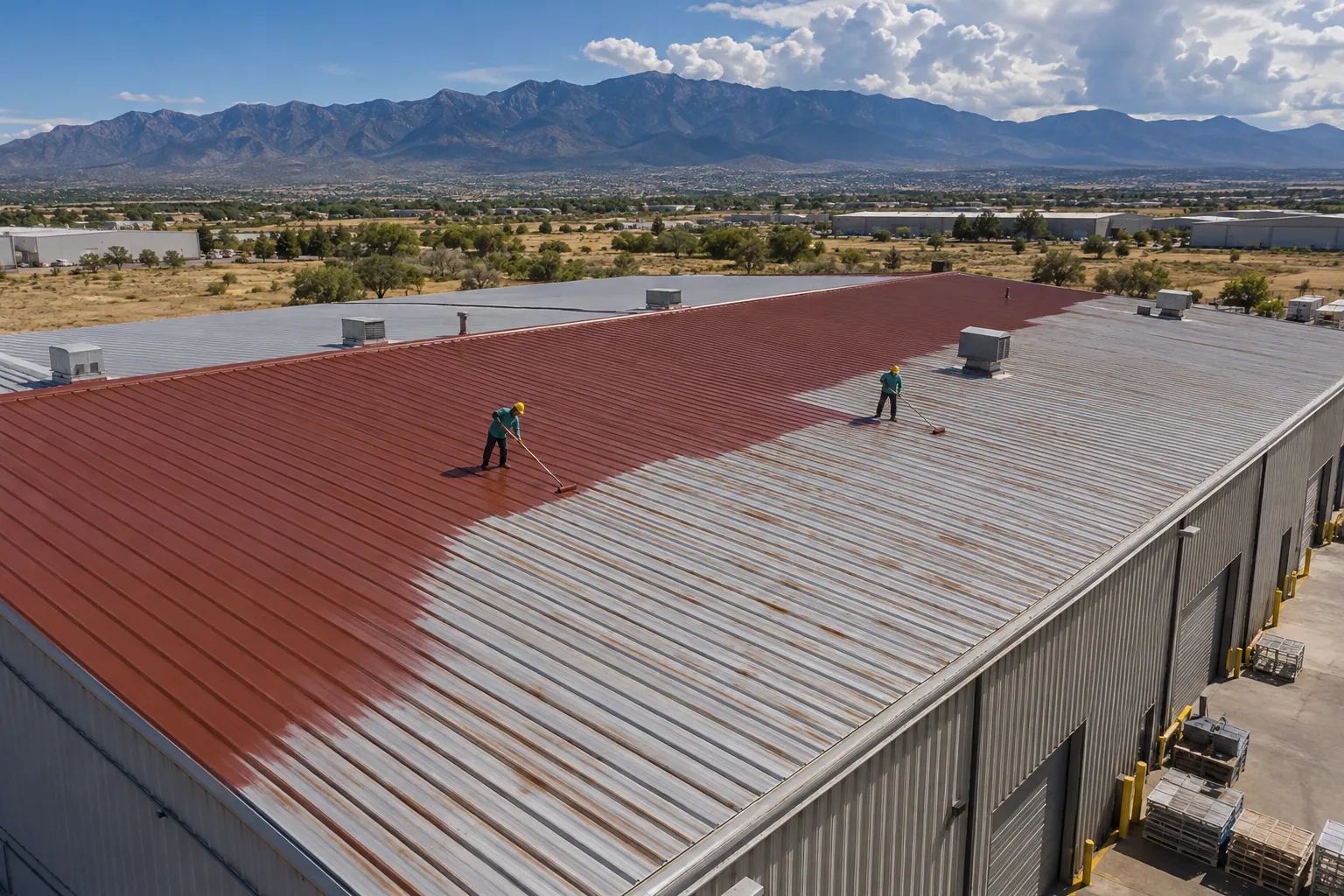
Most shops here get rust grading, primer, sealed screws, and fabric over the laps, then a reflective topcoat.
Metal Roof Coating details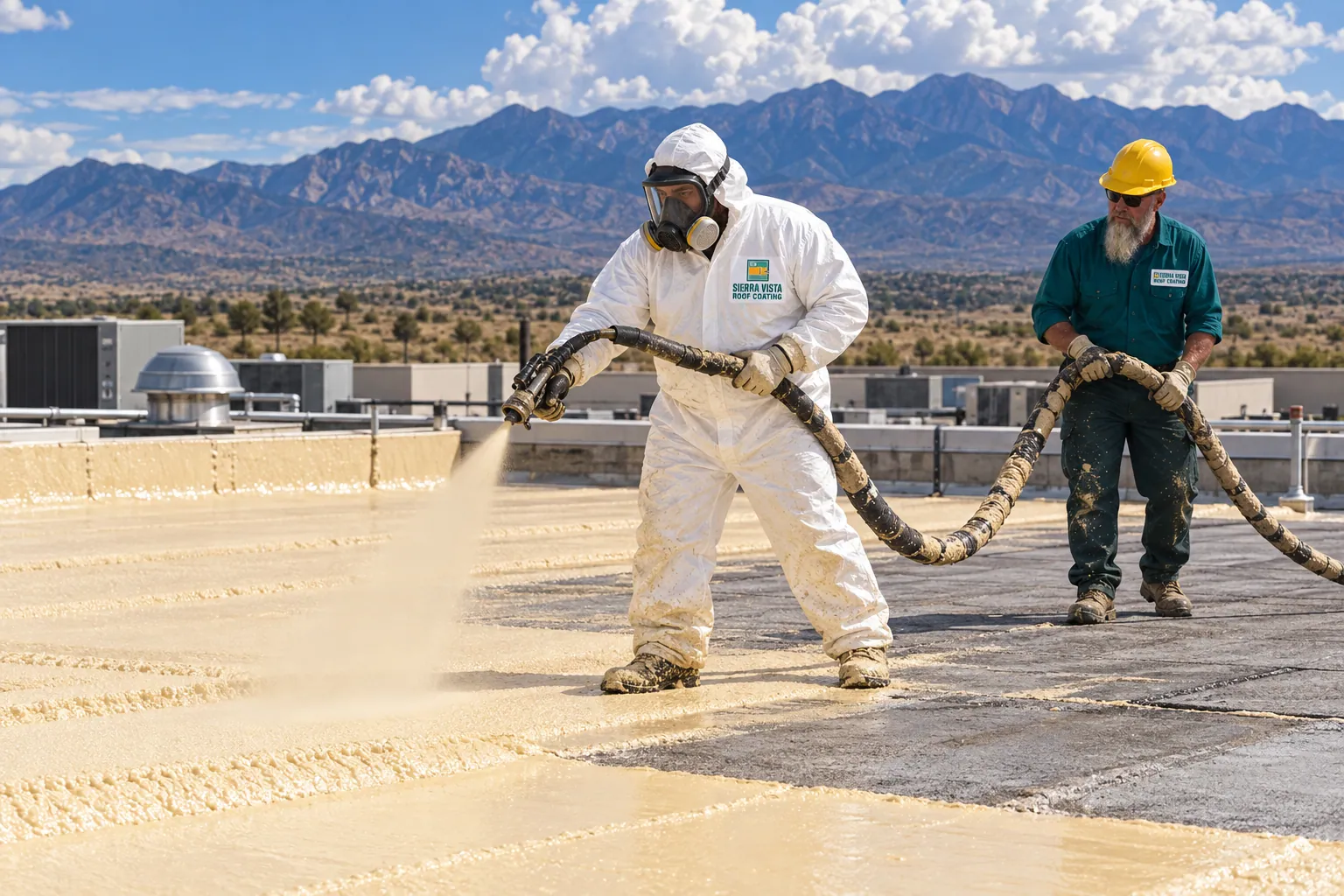
Shops that run hot or need insulation can take spray foam over the steel, sealed with a UV-resistant topcoat.
Spray Foam Roofing details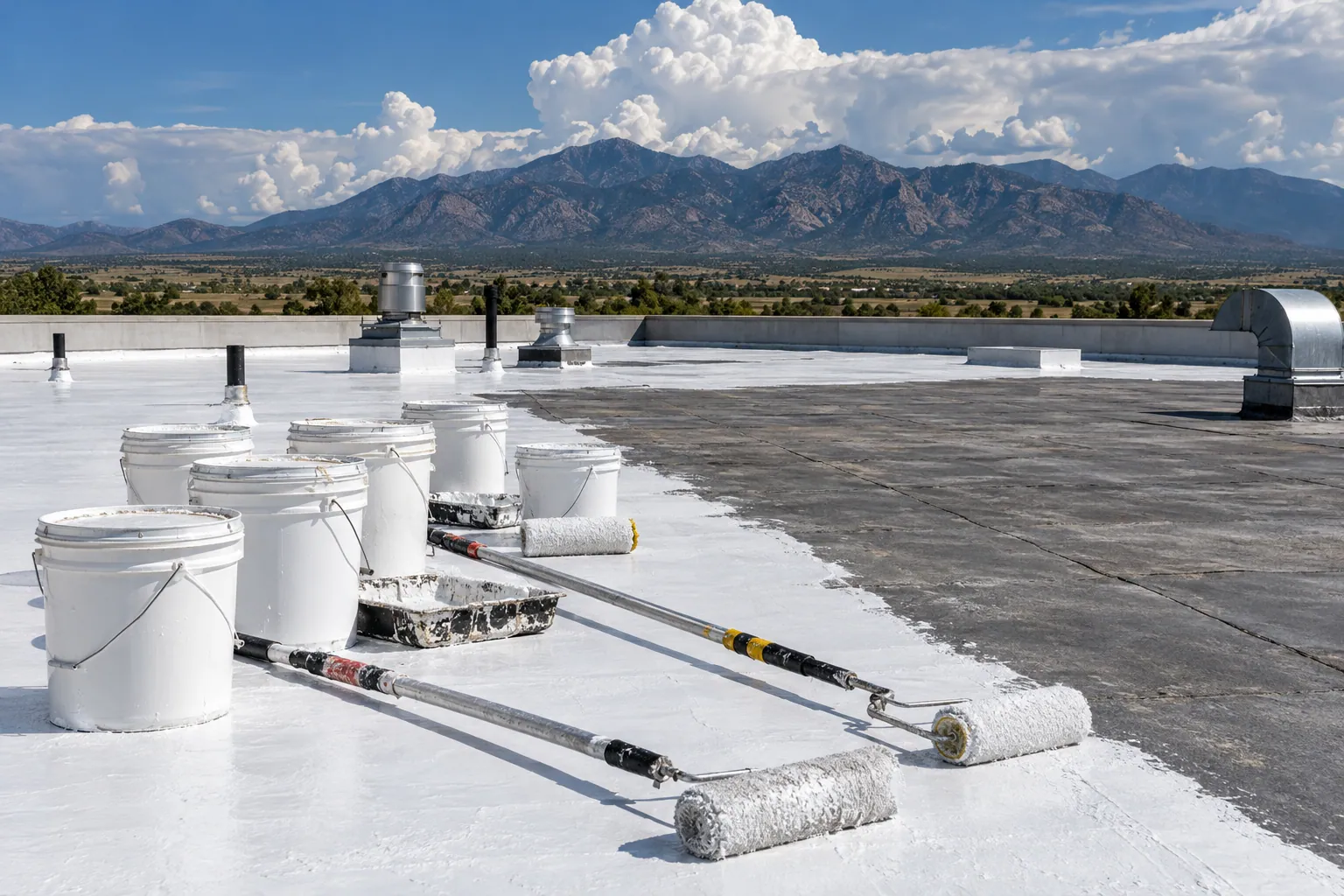
Pitched storage buildings that shed water fast take acrylic over primed panels, with recoats that can use acrylic or other topcoats later.
Acrylic Roof Coating detailsGet a ballpark number for the main building first, then we will walk every roof on the property during the inspection.
Get A Free Ballpark EstimateA spread-out property runs as one job with several roofs. The steps repeat for each building.
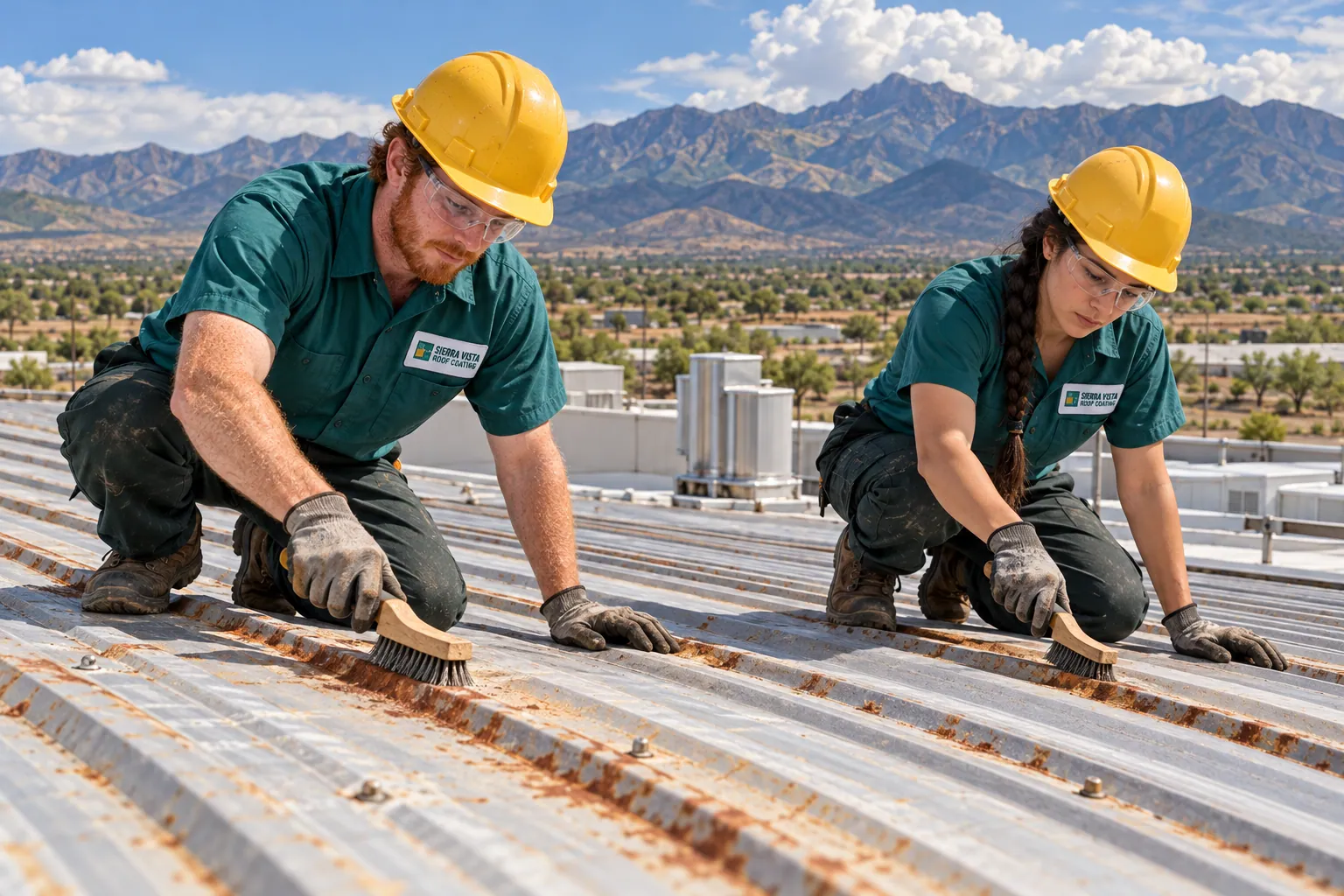
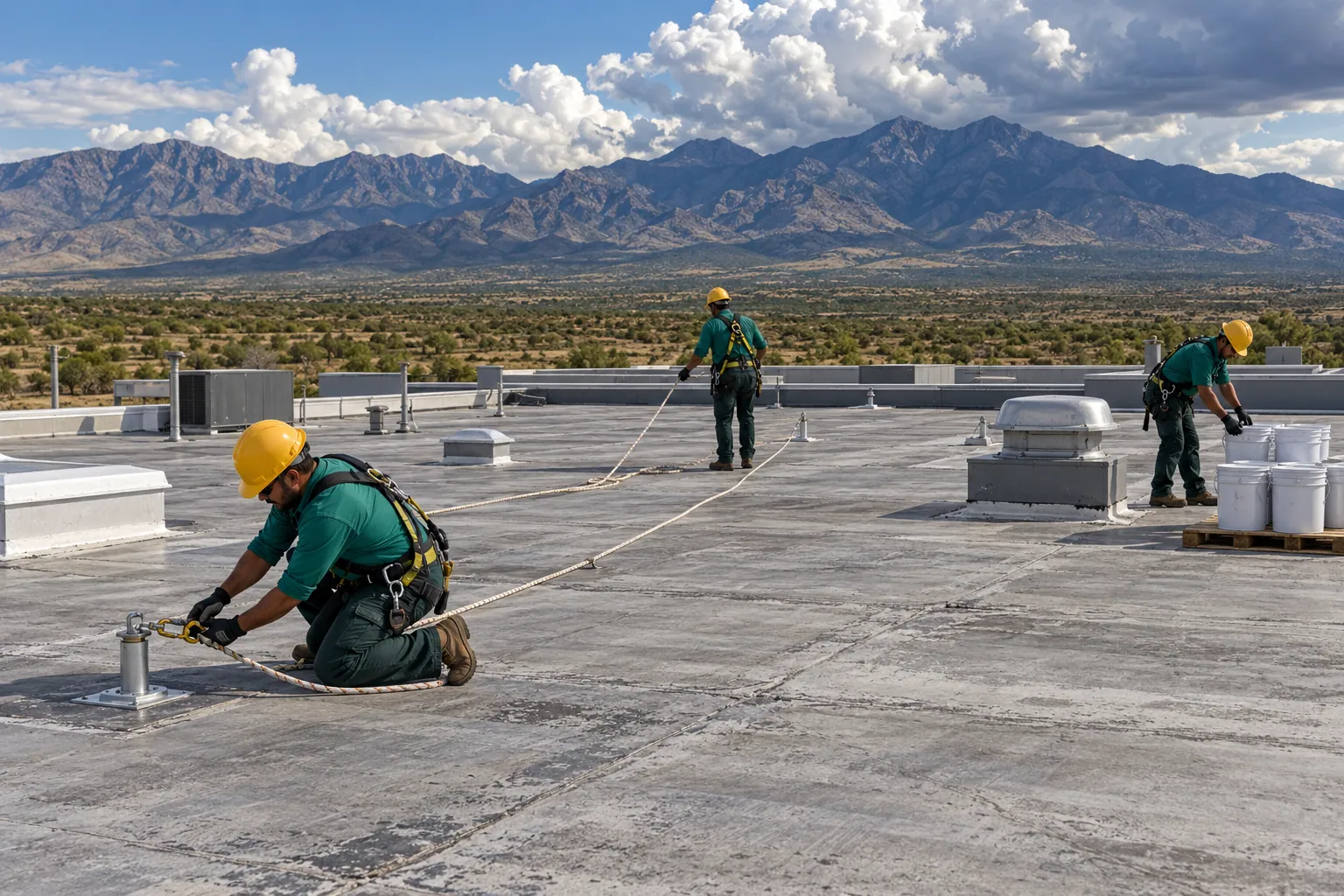
One visit covers every roof on the parcel: rust grade, screws, laps, curbs, and moisture for each building, plus ground conditions for lifts. You get a ranked list by building.
Buildings are ordered by what sits under each roof and how badly it leaks. Lift paths, rig staging, and work days are set around how you use the property.
Rust is brushed and primed, holed sections replaced, screws sealed, and laps fabricked one building at a time. Each roof is washed and dried before coating.
Each roof gets its topcoat to the mil spec before the crew moves to the next building, so no roof sits half-finished while work continues elsewhere.
Hereford lies southeast of Sierra Vista along State Route 92.
Palominas is farther south on SR 92 near the San Pedro River, where roofs need checks after monsoon hail.
Sierra Vista is northwest on SR 92, with offices, clinics, and warehouses we coat.
Tombstone lies to the north, with storefront roofs that go through historic review.
Answers for owners of shops and storage buildings around Hereford.
Hereford is unincorporated, so Cochise County Building Safety handles permits. The county excludes commercial projects from its minor-work exemptions, so ask even when a job covers only seams and fasteners.
Yes. The inspection grades every roof, and you choose which ones to coat now. Buildings that wait get their worst leak points sealed so they hold until their turn comes.
Lift paths are planned on the firmest ground, with pads where needed, and work waits a few days after heavy rain. We walk the ground during the inspection and note any spot where a lift cannot go.
They can. Coolers drip and overflow onto the roof, and that water sits at the curb. Drain lines get routed to the edge, and the curb gets resealed and coated with extra build.
Usually, since staging, lifts, and the spray rig get set up once for the whole property. The inspection lays out costs by building so you can decide how many to include.
We say so. A shop with rusted-through panels, failed purlins, or a soaked interior needs new panels or a new roof, and coating the others still makes sense while that one is planned.
Open-sided covers over equipment rust at the same screws and laps as the shops, but leaks under them matter less. We note their condition and let you decide whether they join the plan now or later.
That depends on roof size, rust grade, and weather, and the inspection gives a day count for each building. Small storage buildings often take a short stretch of days, while the main shop takes longer because of its prep.
Start with a free ballpark estimate for your main building, or call to talk through every roof on the parcel.
Want A Call About Your Roof?
Leave a name and number and we will call you back about your roof.
Or call now: (623) 310-0185